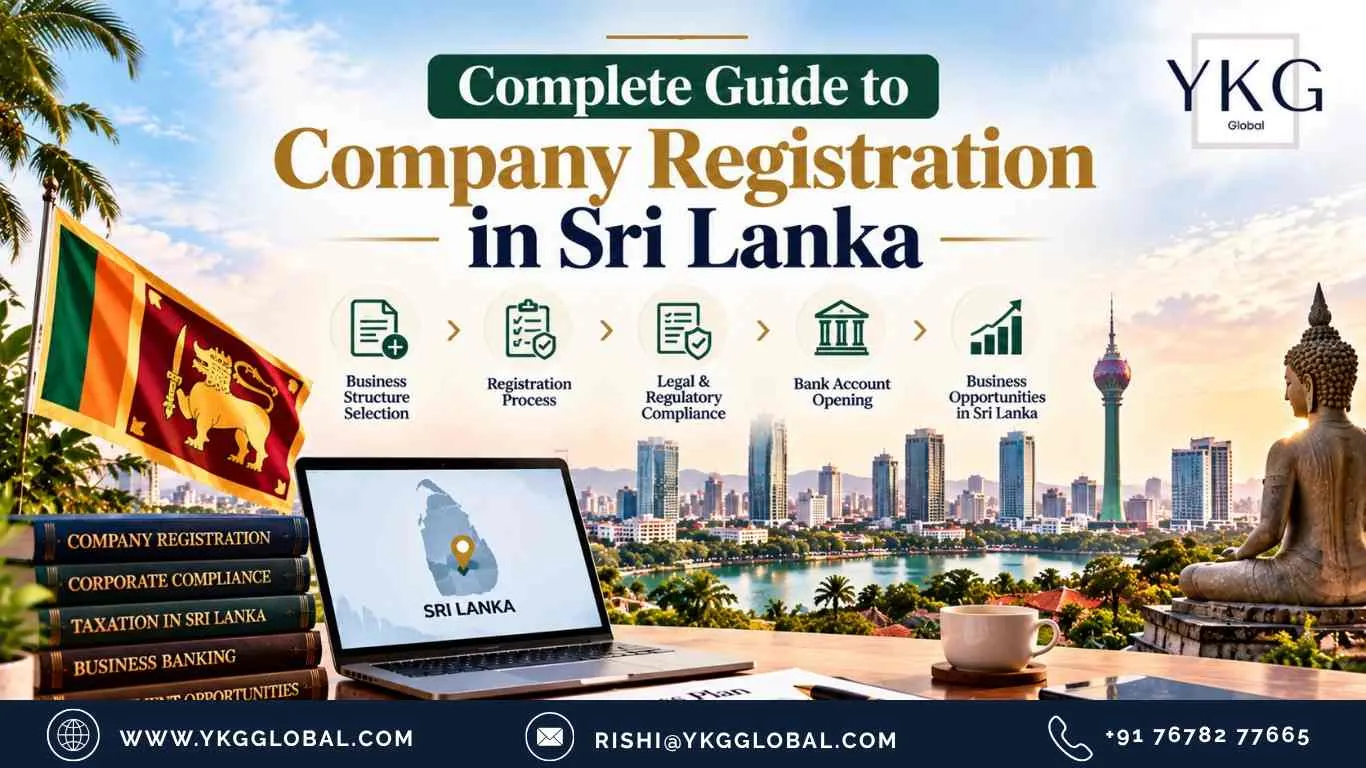
Complete Guide to Company Registration in Sri Lanka
Sri Lanka offers opportunities for businesses in technology, manufacturing, trading, tourism and professional services. For foreign investors and local entrepreneurs, establishing a business requires more than selecting a name: the legal structure, ownership arrangements and regulatory obligations must also be considered.
Business registration in sri lanka follows different procedures depending on whether the entrepreneur intends to operate individually, form a partnership or incorporate a company. A private limited company is often considered by businesses seeking a separate legal entity for their commercial activities.
This guide explains the key incorporation decisions, documents, registration steps and compliance requirements that entrepreneurs should understand before entering the Sri Lankan market.
1. Decide Which Business Structure Fits Your Plans
Before starting company registration in srilanka, assess how the business will be owned, managed and operated.
1.1 Private limited company: Suitable for many commercial businesses that want a separate legal entity, subject to applicable requirements.
1.2 Individual business: May suit a person operating independently under the relevant local registration rules.
1.3 Partnership: May be appropriate where two or more people intend to operate a business together.
1.4 Foreign company registration: An overseas business should assess whether registering its existing entity or incorporating a Sri Lankan subsidiary better fits its activities.
The choice affects governance, liability, documentation and ongoing compliance. Foreign investors should also check whether restrictions or approvals apply to their intended business sector.
2. Choose and Check the Company Name
Business name registration in sri lanka begins with checking that the proposed name meets the Registrar of Companies’ requirements.
Before submitting an application:
1. Search for existing company names that may conflict with the proposed name.
2. Prepare alternative names in case the preferred option is unavailable.
3. Ensure the name does not contain prohibited or restricted expressions.
4. Confirm that the name is consistent across the application and incorporation documents.
Name approval does not itself create a company. The remaining incorporation requirements must also be completed.
3. Prepare the Incorporation Documents
For a typical private company, the application requires prescribed company information and supporting documents. These generally include:
1. The incorporation application and company particulars.
2. Articles of Association.
3. Details of initial shareholders and directors.
4. Director consent documents.
5. Company secretary details and consent.
6. The proposed registered office address.
7. Additional identification or corporate documents where applicable.
Sri Lanka’s Registrar of Companies provides incorporation guidance and model Articles of Association. Applicants should check the current requirements before preparing their documents.
The Articles should reflect the company’s proposed governance and activities. Where foreign shareholding is involved, the business objectives and ownership structure should be reviewed carefully.
4. Submit the Application Through eROC
The Department of the Registrar of Companies operates the eROC electronic registration system. It supports online business registration in sri lanka for applicable company registration procedures.
The general process is:
1. Complete the company name approval process.
2. Enter the required company and ownership details.
3. Prepare the Articles of Association and prescribed forms.
4. Obtain the required consents from directors and the company secretary.
5. Submit the application through the applicable system.
6. Complete the relevant filing requirements and respond to any queries.
Once the application satisfies the applicable requirements, the Registrar processes the incorporation and issues the relevant documentation.
Processing times can vary. Incomplete information, inconsistencies or requests for clarification may delay the application, so documents should be checked before submission.
5. Address the New Beneficial Ownership Requirements
An important development for company founders is Sri Lanka’s beneficial ownership reporting framework.
Under the requirements introduced in 2026, new incorporations must complete the applicable beneficial ownership and authorised-person submissions through the designated system. The Registrar’s guidance identifies Form BO1 for beneficial ownership details and Form BO5 for the authorised person.
Founders should identify the individuals who ultimately own or control the company and prepare the information required by the official process. The authorised person should understand their responsibilities for submitting and maintaining accurate information.
Beneficial ownership details may also need to be updated following relevant changes, such as share issues or transfers. Companies should check the current Registrar guidance for the applicable filing event and deadline.
6. Understand the Requirements for a Private Limited Company
Private limited company registration in sri lanka requires suitable arrangements for ownership, management and administration.
Before incorporation, confirm:
1. Who will hold the shares.
2. Who will serve as the directors.
3. Who will act as company secretary.
4. Which address will serve as the registered office.
5. How statutory records and future filings will be maintained.
A private company must comply with the requirements applicable to its structure, including restrictions concerning offers of shares to the public. The company’s Articles of Association should be prepared accordingly.
Entrepreneurs considering pvt ltd company registration sri lanka should also assess whether the proposed ownership structure and activities are permitted under the applicable investment rules.
7. Complete Tax and Operational Registrations
Incorporation is not the final step. After registration, the company should assess its tax obligations and any additional registrations required for its operations.
1. Tax registration: Determine the process for obtaining a Taxpayer Identification Number and meeting the relevant Inland Revenue Department requirements.
2. Corporate tax and VAT: Assess the company’s tax registration, accounting and filing responsibilities based on its activities and the applicable rules.
3. Business licences: Certain industries may require additional permits or approvals before operations begin.
4. Banking: Banks conduct their own due diligence and onboarding. A Certificate of Incorporation does not guarantee approval for a business bank account.
5. Ongoing filings: Maintain company records, monitor annual return requirements and notify the Registrar of relevant changes when required.
8. What Foreign Investors Should Check Before Incorporation
Foreign entrepreneurs planning to register a business in sri lanka should assess the proposed structure before committing to the application.
Key considerations include:
1. Whether foreign ownership is permitted in the intended sector.
2. Whether specific approvals or restrictions apply.
3. Whether a subsidiary or registration of an overseas company is more appropriate.
4. What documents are required from foreign shareholders or corporate owners.
5. How cross-border investments and transactions will be documented.
These requirements vary according to the proposed activity and ownership arrangements. Investors should obtain appropriate local advice where necessary rather than assume that the same rules apply to every sector.
How YKG Global Helps You
YKG Global supports businesses exploring international expansion, overseas entity establishment and cross-border compliance. For companies considering Sri Lanka, support can focus on understanding the proposed business model, identifying incorporation requirements and coordinating the preparation of relevant documentation.
Assistance may include:
1. Reviewing the proposed structure and ownership arrangements.
2. Coordinating company particulars and supporting documents.
3. Identifying foreign investment and regulatory questions that need local review.
4. Planning for tax registration and ongoing compliance.
5. Coordinating the Sri Lankan establishment process with the company’s wider international operations.
The appropriate scope depends on the business and its requirements. Sri Lankan legal, regulatory and filing work should be handled with appropriately qualified local professionals where necessary.