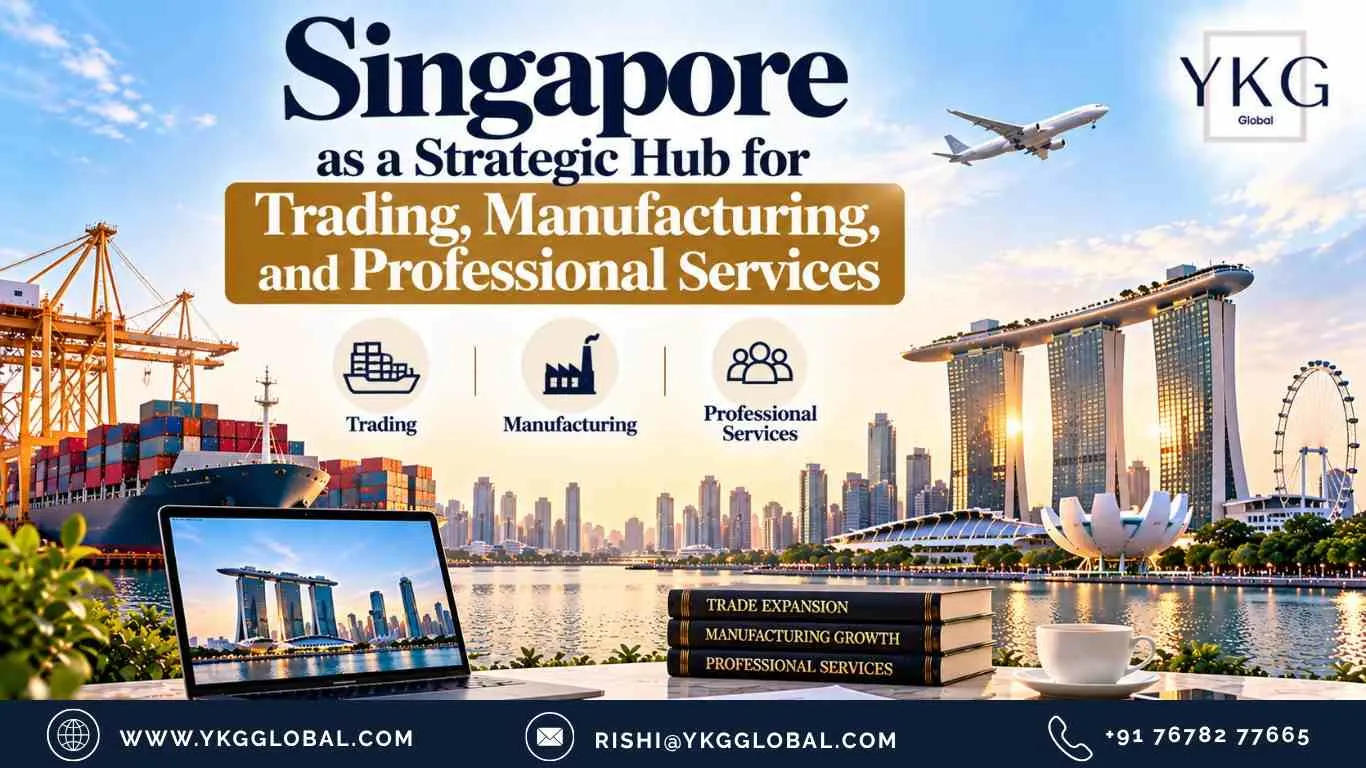
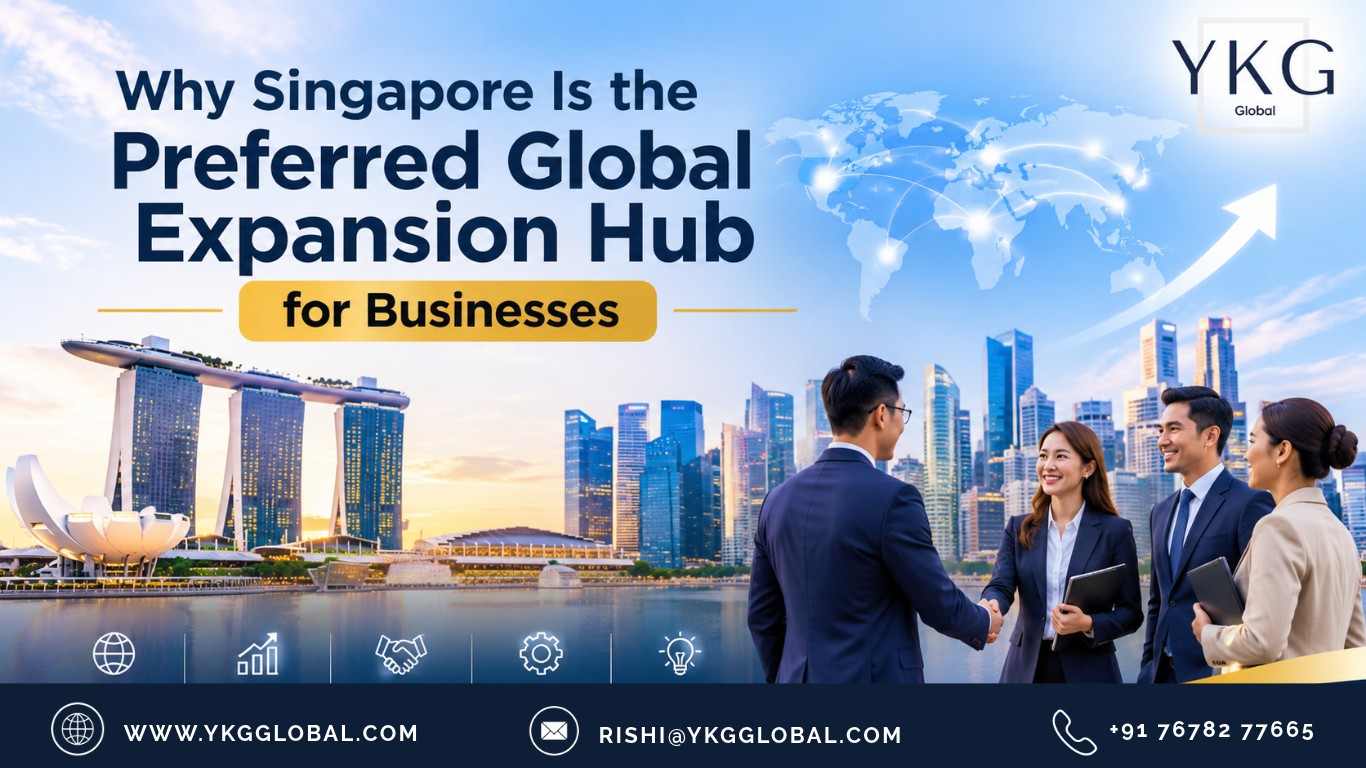
Singapore as a Strategic Hub for Trading, Manufacturing, and Professional Services
Singapore has established itself as an important international business centre by combining global connectivity, developed infrastructure, a skilled workforce and access to Asian markets. Its economy supports international trading, advanced manufacturing, regional headquarters, technology, consulting, engineering and other professional services.
For companies expanding internationally, Singapore can serve as a base for coordinating suppliers, managing regional operations, distributing products and delivering specialised services across borders. Its value lies not simply in its location, but in the wider ecosystem of logistics providers, financial institutions, technology firms and professional advisers.
According to Singapore's Economic Development Board, the professional services sector contributed 5.6% of the country's GDP in 2025. Singapore also attracted significant investment commitments in advanced manufacturing, headquarters operations, professional services and research and development during 2025.
However, choosing Singapore requires a clear commercial strategy. Companies must assess customer demand, operating costs, supply chains, regulatory requirements and their intended role in the region before committing to a local presence.
Why is Singapore strategically important for international companies?
Singapore connects businesses with regional and global markets through established shipping, aviation, digital and financial infrastructure. It is particularly relevant to companies that need to coordinate international transactions, manage suppliers in different countries or serve clients across Southeast Asia.
Its main strategic advantages include:
1. Trade connectivity: Established port and air-cargo infrastructure supports importers, exporters and regional distributors.
2. Business services: Companies can access banking, accounting, legal, consulting and technology expertise.
3. Regional coordination: International groups can manage selected commercial, financial and operational functions from Singapore.
4. Skilled talent: The market supports specialist roles in engineering, finance, technology, consulting and advanced production.
5. Innovation and investment: Research institutions, multinational companies and technology providers create opportunities for collaboration.
6. Established business framework: A developed corporate environment supports contracts, governance and international commercial activity.
These factors can make Singapore an effective regional base, but they do not guarantee profitability. Companies still need a competitive offer, suitable customers and a practical operating model.
Singapore as a hub for international trading
Singapore supports trading businesses involved in sourcing, importing, exporting, distribution and supply-chain coordination. Companies can use the market to manage supplier relationships, organise shipments, oversee regional sales and coordinate transactions between international customers and producers.
Trading opportunities may involve electronics, industrial components, chemicals, energy-related products, consumer goods, food products and specialised equipment, depending on the business model and applicable regulations.
What should trading companies evaluate?
Before entering the market, businesses should consider:
1. The countries where products will be sourced and sold.
2. Supplier reliability, shipping schedules and inventory requirements.
3. Customs declarations, import permits and export controls.
4. Product-specific standards and restrictions.
5. Payment terms, trade finance and foreign-exchange exposure.
6. Warehousing, freight forwarding and third-party logistics requirements.
Singapore's trade agreements may provide access advantages for eligible products and transactions. However, preferential treatment depends on the relevant agreement, product classification, rules of origin and other conditions.
A company planning to register a business in singapore for trading purposes should therefore assess its intended transactions and products before selecting its operating structure. Registration is only one part of establishing a viable trading operation.
Singapore as a centre for advanced manufacturing
Singapore's manufacturing ecosystem focuses on high-value activities that depend on technology, specialised talent, research and advanced production capabilities.
Important areas include semiconductors, electronics, aerospace, biomedical sciences, precision engineering and manufacturing technology. International companies may establish production facilities, research operations, testing functions or regional manufacturing coordination activities, depending on their requirements.
1. Opportunities for manufacturers
Businesses can explore opportunities in:
A. Semiconductor and electronics production.
B. Precision engineering and industrial components.
C. Aerospace maintenance, repair and overhaul.
D. Pharmaceutical and biomedical manufacturing.
E. Product development and technical testing.
F. Automation and digital manufacturing systems.
Singapore's industrial infrastructure and connections to international suppliers can support companies that require specialised production capabilities. Its research ecosystem can also help businesses collaborate on product development and process innovation.
Nevertheless, companies should evaluate facility availability, utilities, labour requirements, production costs, environmental obligations and access to customers. Singapore may be suitable for high-value or specialised activities without necessarily being the lowest-cost location for every type of manufacturing.
2. Manufacturing compliance considerations
Manufacturers should determine which approvals apply to their premises, production processes and products. Depending on the activity, requirements may involve workplace safety, environmental controls, hazardous materials, product standards or sector-specific licences.
A company should confirm that its proposed activities are permitted at the intended premises before committing to a facility. Incorporation does not automatically authorise regulated manufacturing operations.
3. Singapore as a hub for professional services
Professional services form another important part of Singapore's international business ecosystem. The country supports accounting, legal services, management consulting, engineering, technology, marketing, risk management and other specialised activities.
Its regional role can help professional services firms serve multinational clients, support market-entry projects and coordinate assignments across several Asian markets.
4. Opportunities for service providers
Companies may explore services such as:
A. Management and strategy consulting.
B. Accounting and financial advisory.
C. Engineering and technical services.
D. Digital transformation and technology consulting.
E. Cybersecurity and risk management.
F. Marketing, advertising and design.
G. Sustainability and operational advisory.
Demand for specialised capabilities, including cybersecurity, artificial intelligence, data governance and sustainability, creates opportunities for firms with relevant expertise.
For companies planning business incorporation singapore, the key consideration is how the Singapore presence will generate value. The entity may serve regional clients, employ specialist teams, manage projects or coordinate relationships with local partners. Its purpose should be clearly defined before registration.
Professional services that are regulated may require specific licences, professional qualifications or approvals. Businesses should verify these requirements before offering services to clients.
Which company structure should international businesses consider?
The appropriate entry model depends on whether the organisation is establishing a new Singapore entity or extending an existing foreign company.
A private company limited by shares is a common choice for businesses seeking a separate legal entity. A foreign company may instead consider registering a branch, while an eligible company assessing the market before launching commercial operations may consider a representative office.
These structures have different legal and operational implications.
1. Private limited company: A separate legal entity that can suit trading, manufacturing and professional services operations.
2. Foreign company branch: An extension of the overseas company, subject to applicable registration, representation and reporting requirements.
3. Representative office: A limited-purpose presence generally used for market research and evaluation rather than ordinary revenue-generating commercial activities.
Companies should compare ownership arrangements, liability, governance, tax implications, permitted activities and reporting requirements before choosing.
How does company incorporation in Singapore work?
A planned company incorporation singapore process involves more than submitting an application. Businesses should prepare their ownership details, identify the intended activities and understand the obligations that begin after registration.
The general process includes:
1. Choose the structure: Determine whether a local company, branch or another permitted arrangement matches the business model.
2. Select the company name: Apply through the Accounting and Corporate Regulatory Authority (ACRA) and address any required referrals.
3. Prepare incorporation details: Gather shareholder, director, registered office, share capital and company constitution information.
4. Submit the application: Complete the relevant filing through ACRA's Bizfile system, engaging a registered corporate service provider where required.
5. Organise post-registration arrangements: Maintain statutory records, appoint the required officers, assess tax registrations and prepare for banking and operational needs.
Businesses planning to setup company in singapore should also consider whether they will need employees, physical premises, banking services, industry licences or additional registrations in other jurisdictions.
What should foreign founders know?
For setting up company in singapore by foreigner, the applicable local-residency and filing requirements must be addressed. A Singapore-incorporated company generally needs at least one director who meets the local-residency requirements. Foreign founders must also engage a registered corporate service provider to register a business in Singapore.
Company ownership does not automatically grant permission to live or work in Singapore. Immigration and work-pass requirements are separate and depend on the individual's circumstances.
Businesses already established overseas should also distinguish a new Singapore company from offshore company registration in singapore. In practice, this search may refer to different arrangements, including establishing a Singapore entity for international operations. Singapore's legal, tax and reporting requirements still apply, and the appropriate structure depends on the actual activities and ownership.
Tax and corporate compliance requirements
After sg business registration, companies must assess their ongoing legal, financial and tax responsibilities.
Key considerations include:
1. Corporate records: Maintain required company particulars, statutory registers and records of relevant decisions.
2. Company secretary: Appoint a qualified company secretary within the statutory timeframe, generally six months after incorporation.
3. Annual returns: Submit required annual filings to ACRA and keep company information current.
4. Corporate income tax: Singapore's headline corporate income tax rate is 17% of chargeable income, subject to applicable exemptions and incentives.
5. GST: Determine whether registration is required based on taxable turnover and the relevant rules.
6. Accounting records: Keep proper books and supporting documents for income, expenses and financial transactions.
7. Sector-specific approvals: Obtain relevant licences or permits before conducting regulated activities.
Companies should maintain a compliance calendar covering corporate filings, tax deadlines, licences and reporting requirements. Businesses operating across several countries should also assess cross-border tax, customs and regulatory implications.
How YKG Global can support Singapore market entry
Selecting Singapore as a regional hub requires coordination between commercial planning, incorporation, banking preparation and ongoing compliance.
YKG Global supports entrepreneurs and international companies with:
1. Singapore company registration assistance.
2. Business structure and incorporation guidance.
3. Corporate banking assistance.
4. Tax and accounting support.
5. Corporate compliance coordination.
6. International business expansion consulting.
For companies evaluating a setup company in singapore strategy, professional guidance can help clarify the intended structure, prepare documentation and identify the obligations that follow registration.
The objective is to help companies approach international expansion with a practical plan aligned with their activities, ownership and long-term business goals.