Why Indian Entrepreneurs Choose Hong Kong for Global Business Expansion
Expanding internationally is a major step for Indian entrepreneurs looking to reach overseas customers, build global partnerships and diversify their business operations. Choosing the right jurisdiction can influence how efficiently a company manages cross-border transactions, banking, taxation and regulatory compliance.
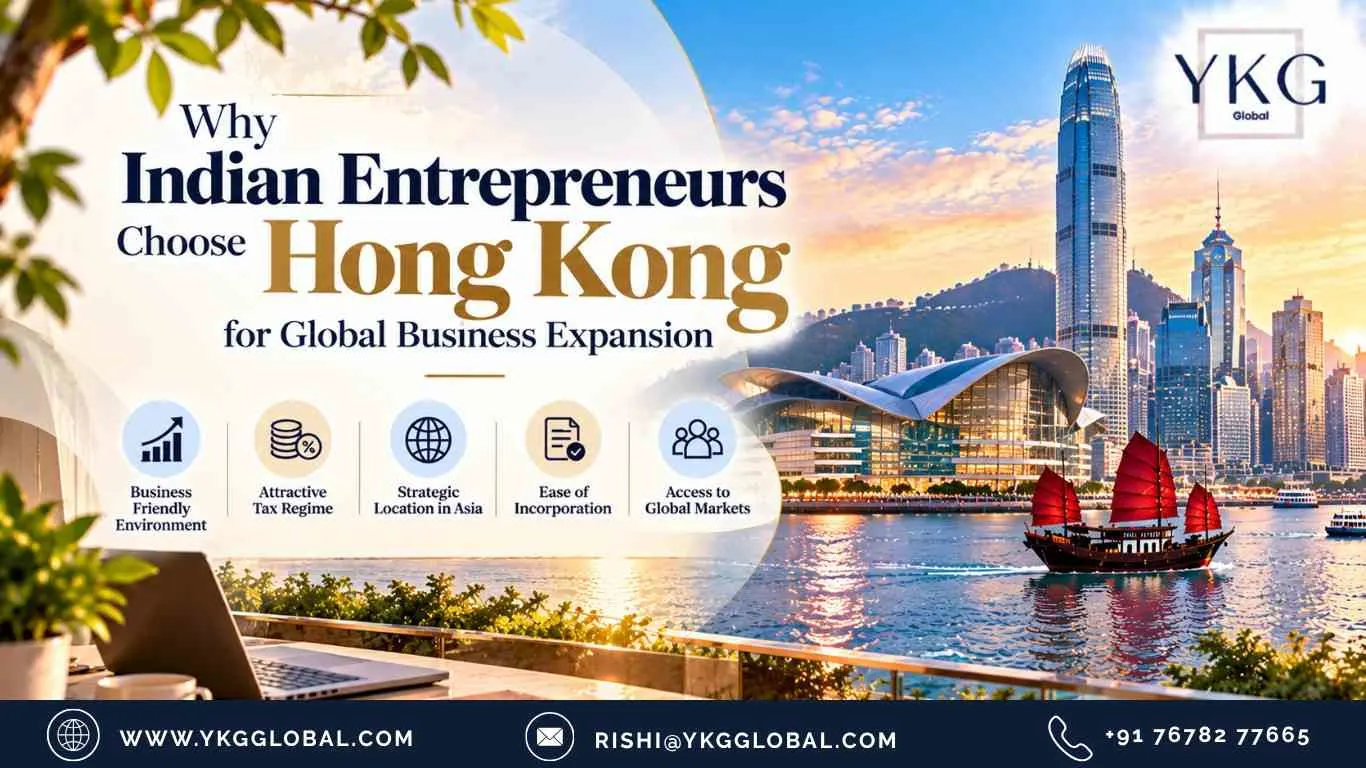
Hong Kong is one destination Indian businesses may consider for international expansion. Its established financial sector, international trading environment and corporate framework make it relevant for businesses involved in sourcing, consulting, technology, distribution and cross-border trade.
However, incorporating overseas should serve a genuine commercial purpose. Entrepreneurs must assess their business model, target markets, tax position and ongoing compliance responsibilities before selecting a jurisdiction.
This guide explores why Indian entrepreneurs consider Hong Kong for global business expansion and what they should know before establishing a company there.
1. Access to International Markets
Hong Kong has an established role in international commerce, making it a potential base for businesses seeking to develop overseas customer and supplier relationships.
For Indian entrepreneurs, this can be relevant when domestic operations begin serving international markets or when the business needs a separate entity for overseas commercial activities.
Businesses that may consider Hong Kong include:
A. Import-export and wholesale trading companies.
B. Electronics and industrial component suppliers.
C. Technology and software service providers.
D. International sourcing and procurement businesses.
E. Consulting and professional service firms.
F. Companies managing regional distribution networks.
For example, an Indian business sourcing components from Asian suppliers and selling them to customers in multiple countries may evaluate whether a Hong Kong entity would support its contracting and trading arrangements.
The right structure depends on the actual flow of goods, contracts, payments and business activities.
2. A Separate Structure for Global Operations
An Indian company may initially conduct international business directly. As overseas transactions grow, entrepreneurs may consider establishing a separate foreign entity to manage specific commercial activities.
A Hong Kong entity may be used, where commercially appropriate, to:
A. Enter into contracts with international customers.
B. Manage relationships with overseas suppliers.
C. Support cross-border trading operations.
D. Develop regional distribution arrangements.
E. Build a separate platform for international growth.
A carefully planned hong kong company setup can help define the responsibilities of the overseas entity and its relationship with the Indian business.
However, separate incorporation does not automatically make related companies independent for tax purposes. Transactions between associated entities may need to comply with transfer-pricing requirements and other applicable regulations.
The structure should reflect genuine business operations rather than being created solely to obtain a perceived tax advantage.
3. A Competitive and Structured Tax Framework
Tax treatment is an important consideration when comparing international business locations.
Hong Kong follows a territorial-source profits tax system. Generally, profits arising in or derived from Hong Kong from a trade, profession or business may be taxable there.
For corporations, the standard profits tax rate is 16.5%. Under the two-tiered profits tax regime, eligible corporations generally pay 8.25% on the first HK$2 million of assessable profits and 16.5% on the remaining assessable profits. Conditions and restrictions apply, including rules for connected entities.
This framework can help businesses assess potential tax liabilities when preparing international expansion plans.
Does Hong Kong automatically exempt overseas income?
No. The source of profits depends on the facts and circumstances of the business. Having foreign customers, overseas suppliers or a bank account outside Hong Kong does not, by itself, establish that profits are non-Hong Kong-sourced.
Indian entrepreneurs must also consider Indian tax law, overseas investment rules, transfer pricing and other applicable anti-avoidance provisions.
Before establishing a company, businesses should obtain advice based on their actual transactions, ownership structure and operating arrangements.
4. Limited Liability and Corporate Structure
A private company limited by shares is a commonly used structure for businesses operating in Hong Kong. It has a legal identity separate from its shareholders, and shareholder liability is generally limited to the unpaid amount on their shares.
A hong kong limited company may be suitable for entrepreneurs seeking a separate entity for international contracts, commercial partnerships and overseas operations.
The structure can also help define ownership, governance and the allocation of responsibilities within the business.
Limited liability does not eliminate every risk. Directors may have statutory duties, and personal guarantees or certain legal breaches can create personal exposure.
Entrepreneurs should therefore assess the ownership arrangement, director responsibilities and relationship between the Hong Kong company and any existing Indian entity before proceeding.
5. Foreign Entrepreneurs Can Establish a Hong Kong Company
Hong Kong permits non-residents, including Indian entrepreneurs, to incorporate local limited companies. A founder does not generally need to be a Hong Kong resident simply to become a shareholder or director.
This can make Hong Kong accessible to Indian business owners who want to retain their domestic operations while developing overseas activities.
A local private company must satisfy applicable requirements, including:
A. A registered office in Hong Kong.
B. A company secretary meeting Hong Kong's statutory requirements.
C. At least one natural-person director.
D. Appropriate incorporation documents and company records.
E. Ongoing statutory filings and tax compliance.
Before deciding to incorporate in hong kong, entrepreneurs should define the business purpose, ownership structure, anticipated transactions, banking requirements and responsibilities for ongoing compliance.
Planning these elements early can help prevent avoidable administrative complications.
6. An Established Financial and Banking Environment
Banking is a practical consideration for businesses that receive international payments, pay overseas suppliers or transact in multiple currencies.
Hong Kong has an established financial services sector and banking institutions serving corporate customers. Depending on the company's activities and eligibility, this environment may support its international payment and treasury requirements.
However, company registration does not guarantee bank account approval.
Banks conduct their own due diligence and may request:
A. Details of shareholders and directors.
B. Information about the company's business model.
C. Expected transaction volumes and countries involved.
D. Customer and supplier contracts.
E. Evidence of the source of funds.
F. Supporting invoices and business records.
Indian entrepreneurs should assess banking feasibility before incorporation, particularly if the proposed company will have limited operating history or complex cross-border transactions.
7. Opportunities in Asian Supply Chains
Hong Kong may be relevant for Indian businesses working with manufacturers, suppliers and distributors across Asia.
For example, an Indian company importing industrial components may need to coordinate suppliers, negotiate commercial terms and manage customer contracts across multiple jurisdictions. Depending on the operating model, a Hong Kong entity could form part of that arrangement.
Potentially relevant sectors include electronics, industrial machinery, consumer products, wholesale trading and international procurement.
Nevertheless, entrepreneurs should examine the actual movement of goods, transfer of ownership, invoicing, customs duties and indirect tax implications.
Using a Hong Kong company does not automatically eliminate Indian customs duties or other obligations applicable to imports into India.
8. A Flexible Approach to Business Expansion
International expansion does not always require establishing a large overseas office at the outset.
Some entrepreneurs prefer to begin with a defined commercial objective and expand as customer demand develops. A Hong Kong entity may be considered as part of this approach where it supports genuine business activities.
A staged strategy could involve:
A. Defining the company's international business purpose.
B. Establishing relationships with overseas customers and suppliers.
C. Evaluating demand in selected markets.
D. Developing distribution or service arrangements.
E. Expanding operations as the business grows.
F. Even a company with limited initial activity must meet its applicable legal and filing obligations.
In some cases, direct contracting through the Indian company or choosing another jurisdiction may be more practical. The decision should reflect commercial needs rather than a general assumption that overseas incorporation is always beneficial.
9. What Indian Entrepreneurs Should Know About Registration
The hong kong business registration process involves more than submitting an incorporation application. Entrepreneurs should understand the initial requirements as well as their ongoing responsibilities.
A typical process includes:
Step 1: Define the business model. Identify the company's activities, target markets, expected transaction flows and commercial purpose.
Step 2: Select the company structure. Determine the ownership, shareholding and governance arrangements appropriate for the proposed operations.
Step 3: Prepare the incorporation details. Select a suitable name and prepare the required information about directors, shareholders, the registered office and company secretary.
Step 4: Submit the application. Complete the relevant incorporation and business registration procedures through the applicable Hong Kong process.
Step 5: Prepare for operations. Organise contracts, financial records and supporting documents needed for banking and commercial activities.
Step 6: Establish a compliance calendar. Track annual returns, accounting, audit requirements where applicable, tax filings and business registration obligations.
Proper planning can help entrepreneurs understand their responsibilities before the company begins trading.
10. Ongoing Compliance After Incorporation
Incorporation is the beginning of the company's legal and administrative responsibilities, not the end of the process.
Depending on the company's circumstances, ongoing requirements may include:
1. Maintaining proper accounting records.
2. Preparing financial statements and arranging audits where required.
3. Filing annual returns with the Companies Registry.
4. Maintaining statutory registers and company records.
5. Filing profits tax returns and responding to tax authority enquiries.
6. Maintaining required beneficial ownership information.
7. Reviewing related-party transactions and transfer-pricing obligations.
8. Updating company particulars when required.
Indian entrepreneurs must also assess applicable Indian tax and foreign exchange requirements relating to overseas investment, funding, remittances and transactions with related entities.
The precise obligations depend on the structure and activities of the business. A compliance plan should therefore be prepared before operations begin.
11. Is Hong Kong the Right Choice for Your Business?
Hong Kong may be worth considering if an Indian business has a clear international expansion plan.
It may be relevant for entrepreneurs who:
1. Conduct or plan to conduct cross-border trade.
2. Serve customers across multiple international markets.
3. Work with Asian suppliers and distributors.
4. Need a separate entity for genuine overseas operations.
5. Have assessed banking and compliance requirements.
6. Can demonstrate a clear commercial rationale for the structure.
It may be less suitable for a founder who has no identifiable overseas business activity and is considering incorporation solely because of perceived tax benefits.
The decision should be based on expected business activity, administration, tax implications, banking feasibility and long-term commercial objectives.
How YKG Global Helps You
YKG Global supports businesses evaluating hong kong company formation, cross-border advisory and corporate compliance requirements.
For Indian entrepreneurs considering Hong Kong, assistance may include:
1. Assessing the proposed international business structure.
2. Coordinating incorporation documentation and registration requirements.
3. Explaining registered office and company secretary requirements.
4. Helping businesses understand ongoing corporate compliance.
5. Reviewing cross-border tax and related-party considerations.
Assessing India-side considerations relating to overseas investment and applicable foreign exchange regulations.
The appropriate scope of assistance depends on the business model, ownership structure and jurisdictions involved. Banking, tax and regulatory outcomes remain subject to the relevant authorities and institutions.