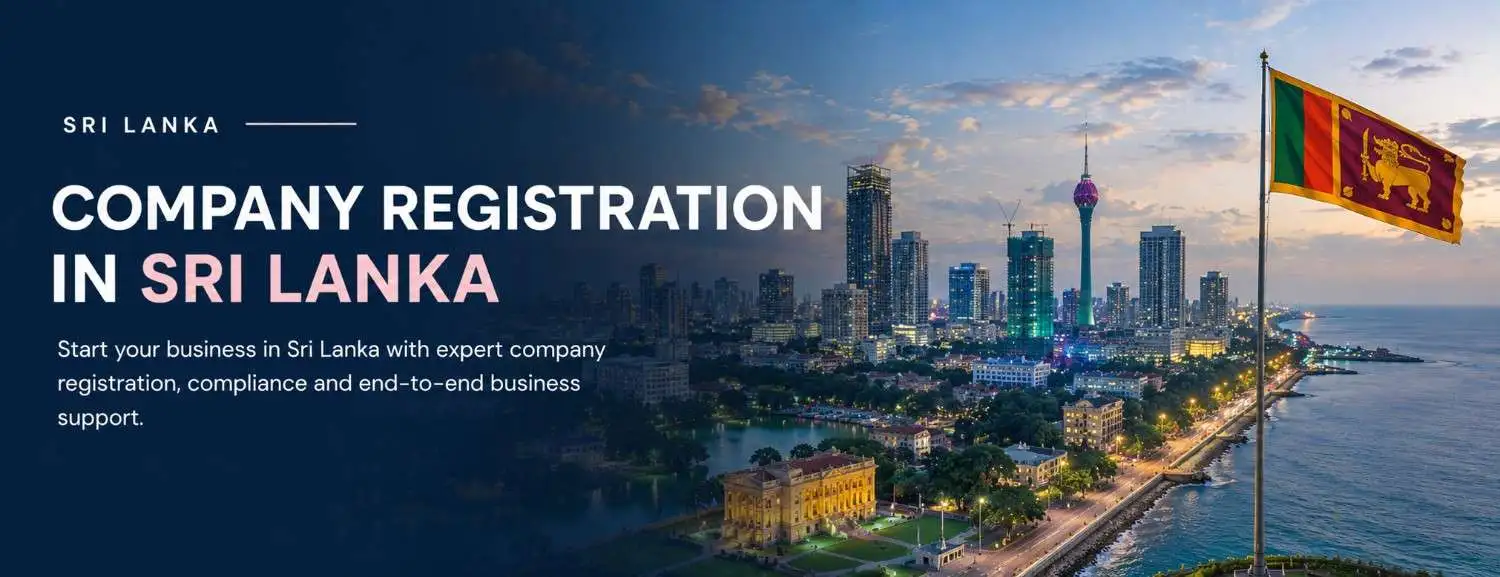
Business Registration Sri Lanka
Sri Lanka offers opportunities for entrepreneurs and international investors looking to establish a presence in South Asia. Its strategic position along major Indian Ocean shipping routes, established manufacturing industries and developing services sector make it relevant for businesses involved in international trade, logistics, tourism and professional services.
For investors considering business registration in sri lanka, understanding the country's incorporation procedures, ownership regulations and statutory obligations is essential.
Business registration requirements vary depending on whether an entrepreneur intends to establish a private limited company, sole proprietorship, partnership or registered overseas company.
This guide explains the available business structures, registration process, documentation, foreign investment rules, taxation and compliance requirements.
1. Why Establish a Business in Sri Lanka?
Sri Lanka offers a combination of international connectivity, established commercial infrastructure and investment opportunities.
1.1 Strategic Geographic Location
Sri Lanka is positioned along important maritime routes connecting Asia, the Middle East and Europe. This supports international trading, freight forwarding and logistics businesses.
1.2 Major Business Industries
The country's commercial environment supports activities such as:
• Import and export trading.
• Tourism and hospitality.
• Information technology and outsourcing.
• Apparel and textile manufacturing.
• Logistics and distribution.
• Professional and consulting services.
• Renewable energy and infrastructure.
1.3 Important Commercial Locations
- Colombo: The principal commercial centre, supporting banking, international trade and professional services.
- Gampaha: An important location for manufacturing, industrial facilities and logistics.
- Kandy: Offers opportunities in tourism, education and regional commercial services.
- Hambantota: Relevant for port-related activities, logistics and industrial development.
2. Types of Business Structures in Sri Lanka
Entrepreneurs planning to register a business in sri lanka should select a legal structure based on ownership, liability and operational requirements.
2.1 Private Limited Company
A private limited company is commonly used by local entrepreneurs and eligible foreign investors.
Its principal characteristics include:
• Separate legal personality.
• Limited shareholder liability, subject to statutory exceptions.
• One or more shareholders.
• At least one director.
• Appointment of a company secretary.
• A registered office in Sri Lanka.
• Generally no prescribed minimum stated capital for an ordinary private company.
2.2 Sole Proprietorship
A sole proprietorship is operated by an individual who is personally responsible for the business's liabilities.
It does not create a separate legal entity.
2.3 Partnership
A partnership allows two or more persons to conduct business jointly, subject to applicable partnership laws and registration requirements.
2.4 Public Limited Company
A public limited company may suit larger businesses seeking more extensive capital arrangements.
2.5 Registered Overseas Company
An overseas company establishing a qualifying place of business in Sri Lanka may need to register under the Companies Act.
3. Sri Lanka Registrar of Companies and eROC
The Department of the Registrar of Companies administers company incorporation under the Companies Act No. 7 of 2007.
3.1 Role of the Registrar of Companies
The Registrar maintains official corporate records and administers statutory filings.
The sri lanka business registry framework includes company records maintained by the ROC and separate arrangements for certain unincorporated businesses.
3.2 eROC Online Registration
Sri Lanka's eROC platform facilitates electronic company registration and prescribed filings.
Entrepreneurs exploring online business registration in sri lanka can use the applicable electronic procedures for company name approval, incorporation and corporate administration.
3.3 Company Registration Number
Following incorporation, a company receives a registration number and Certificate of Incorporation.
These details identify the registered legal entity.
4. Step-by-Step Company Registration Process
The process of private limited company registration in sri lanka generally involves the following stages.
4.1 Company Name Approval
Select a proposed company name and submit it through the applicable ROC name approval procedure.
The name must satisfy statutory requirements and should be distinguishable from existing registered names.
4.2 Appointment of Shareholders and Directors
Determine the ownership structure, share allocation and management arrangements.
4.3 Appointment of Company Secretary
Arrange an eligible company secretary to support incorporation and statutory administration.
4.4 Registered Office Address
Provide a valid registered office address in Sri Lanka.
4.5 Preparation of Incorporation Documents
Typical documentation includes:
• Approved company name.
• Articles of Association.
• Form 1 — Application for Incorporation.
• Form 18 — Consent and Certificate of Director.
• Form 19 — Consent and Certificate of Secretary.
• Shareholder and director particulars.
4.6 Submission of Incorporation Application
Submit the prescribed documents through the applicable ROC registration system and pay the relevant government fees.
4.7 Certificate of Incorporation
Once approved, the Registrar issues the Certificate of Incorporation confirming the company's legal establishment.
4.8 Post-Incorporation Registrations
Complete applicable tax, banking, employment and business licensing requirements.
5. Foreign Ownership and Investment Requirements
Sri Lanka permits foreign investment in many commercial sectors, subject to applicable restrictions and approvals.
5.1 Foreign Shareholding
Foreign individuals and overseas corporations may hold substantial or full ownership in eligible companies.
Certain activities are restricted, reserved or subject to foreign ownership limits.
5.2 Investment Restrictions
Foreign investment in certain sectors, including specified retail trading activities, may be subject to minimum investment requirements or other restrictions.
The proposed business activity should be reviewed before finalising the ownership structure.
5.3 Board of Investment Approval
Certain investment projects may qualify for facilitation or incentives through the Board of Investment of Sri Lanka.
Eligibility depends on the investment's nature, size and applicable regulations.
5.4 Immigration Requirements
Owning a Sri Lankan company does not automatically provide permission to reside or work in the country.
Foreign investors intending to manage operations locally should assess applicable visa requirements.
6. Business Name Registration vs Company Incorporation
Business-name registration and company incorporation are separate legal procedures.
6.1 Business Name Registration
business name registration in sri lanka generally applies to relevant sole proprietorships and partnerships under applicable provincial arrangements.
Requirements can vary depending on the business location and structure.
6.2 Private Limited Company Incorporation
A private limited company is incorporated through the Registrar of Companies under the Companies Act.
It receives a separate legal identity and is subject to corporate governance requirements.
6.3 Choosing the Appropriate Registration
Entrepreneurs should consider liability protection, ownership, taxation and future expansion before selecting a structure.
7. Company Registration Costs and Timelines
The cost of pvt ltd company registration sri lanka depends on the incorporation method, documentation and professional assistance required.
7.1 Government Registration Charges
Applicable ROC charges may include:
• Company name approval fees.
• Incorporation application fees.
• Prescribed statutory form charges.
• Additional filing fees, where applicable.
The latest official fee schedule should be checked before submission.
7.2 Professional and Administrative Expenses
Additional expenses may include:
• Company secretary services.
• Registered office arrangements.
• Document preparation.
• Incorporation assistance.
• Tax registration support.
• Corporate banking coordination.
7.3 Processing Timeline
Electronic incorporation may be completed within several working days where documents are complete and approved.
Foreign shareholder documentation or regulatory approvals may increase the processing time.
8. Tax Registration and Corporate Taxation
Companies operating in Sri Lanka must comply with applicable tax legislation.
8.1 Taxpayer Identification Number
Businesses generally require a Taxpayer Identification Number (TIN) for relevant tax administration.
8.2 Corporate Income Tax
Sri Lanka's standard corporate income tax rate is generally 30%.
Different rates or exemptions may apply to specified activities and taxpayers.
8.3 Value Added Tax
The standard VAT rate is 18%.
VAT registration depends on applicable turnover thresholds and statutory requirements.
8.4 Employment-Related Obligations
Employers may need to comply with Employees' Provident Fund (EPF), Employees' Trust Fund (ETF) and payroll-related requirements.
9. Corporate Banking and Post-Incorporation Compliance
After incorporation, companies should establish appropriate banking and statutory compliance arrangements.
9.1 Corporate Bank Account
Banks may request:
• Certificate of Incorporation.
• Articles of Association.
• Company registration details.
• Director and shareholder identification.
• Beneficial ownership information.
• Board resolutions.
• Business activity and source-of-funds documentation.
Foreign-owned companies may also need to consider applicable foreign exchange and investment account requirements.
9.2 Annual Corporate Filings
Companies must complete applicable annual returns and other statutory filings with the Registrar of Companies.
9.3 Accounting and Financial Reporting
Companies must maintain appropriate accounting records and prepare financial statements in accordance with applicable requirements.
9.4 Statutory Records
Companies should maintain accurate shareholder, director and other prescribed corporate records.
9.5 Business Licences
Additional licences or approvals may be required depending on the company's activities and location.
Call us or fill out our contact form to schedule a consultation today.
📧 Email: Rishi@ykgglobal.com
🌐 Website: www.ykgglobal.com
📱 Call/WhatsApp: +91 76782 77665
📍 Offices: Delhi | Mumbai | Dubai | Singapore