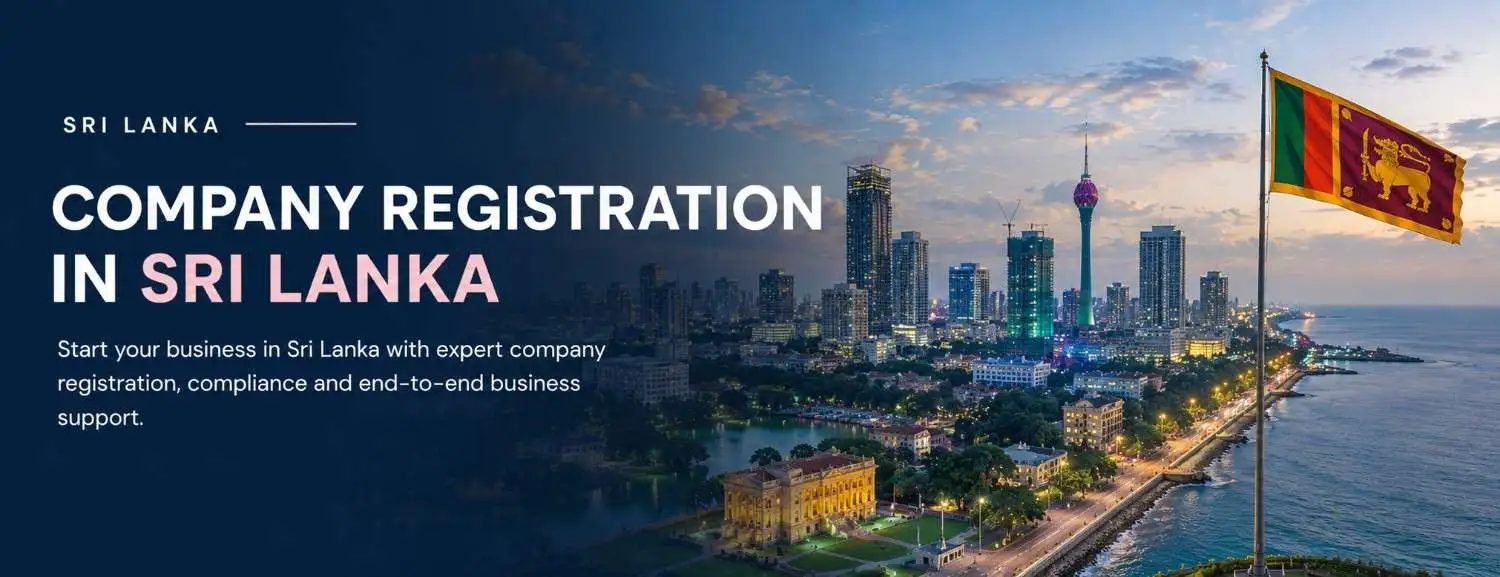
Sri Lanka Business Registry
Sri Lanka's business registration system serves different purposes depending on whether an entrepreneur establishes a limited company, sole proprietorship or partnership. Although these businesses may operate in the same market, they are not necessarily registered with the same government authority.
The sri lanka business registry framework includes the national Department of the Registrar of Companies and provincial authorities responsible for registering certain unincorporated businesses.
Understanding this distinction is important for entrepreneurs, overseas investors and businesses conducting due diligence on Sri Lankan suppliers or commercial partners.
1. Sri Lanka Does Not Have One Registry for Every Business
1.1 National Company Registration
The Department of the Registrar of Companies administers incorporation under the Companies Act No. 7 of 2007.
It maintains records of companies incorporated or registered under applicable company legislation.
1.2 Provincial Business Name Registration
Sole proprietorships and partnerships generally follow the relevant provincial business name registration framework.
1.3 Why the Difference Matters
A company incorporated nationally has separate legal personality. Registering a sole proprietorship's business name does not create a separate legal entity.
Consequently, business registration in sri lanka must begin by identifying the appropriate legal structure and registration authority.
2. Understanding the Department of the Registrar of Companies
The Department of the Registrar of Companies, commonly called the ROC, is the principal authority for company incorporation.
2.1 Company Incorporation
The department processes applications for private limited companies and other recognised corporate structures.
2.2 Corporate Records
It maintains prescribed information concerning registered companies, directors and company secretaries.
2.3 Statutory Changes
Companies submit applicable notifications when corporate particulars change.
2.4 Public Searches
The department provides electronic services for company name searches and access to relevant registry information.
The register of company sri lanka system is therefore particularly relevant when verifying a limited company's legal existence and corporate particulars.
3. How the eROC System Works
Sri Lanka's eROC platform supports electronic company registration and related services.
3.1 Company Name Search
Applicants can search proposed names to identify existing or potentially conflicting registrations.
3.2 Name Reservation
An available name may be submitted for approval before incorporation.
3.3 Electronic Incorporation
Applicants provide prescribed company details and supporting documents through the system.
3.4 Company Changes
The portal supports relevant post-incorporation filings and administrative procedures.
3.5 Registry Verification
Users can search for companies using available name or registration information.
Although online business registration in sri lanka is available for companies through eROC, provincial sole proprietorship procedures may follow different administrative arrangements.
4. Registering a Private Limited Company
A private limited company is commonly selected for businesses seeking a separate legal identity.
4.1 Select a Company Name
The proposed name must satisfy the Registrar's naming requirements.
4.2 Identify Shareholders
Prepare shareholder information and determine the company's ownership structure.
4.3 Appoint Directors
The company must satisfy applicable director appointment requirements.
4.4 Appoint a Company Secretary
A company secretary meeting statutory requirements must be appointed.
4.5 Prepare Articles of Association
The articles establish the company's governance and internal operating rules.
4.6 Submit Incorporation Documents
The eROC process generally involves system-generated Form 1, Form 18 and Form 19, together with the relevant articles.
4.7 Receive Incorporation Confirmation
Following approval, the Registrar issues the Certificate of Incorporation.
Private limited company registration in sri lanka provides a corporate structure distinct from the shareholders, subject to the Companies Act and other applicable laws.
5. Provincial Registration for Individual Businesses
Not every entrepreneur needs to incorporate a limited company.
5.1 Sole Proprietorship
A sole proprietorship is operated by an individual who remains personally responsible for business obligations.
5.2 Provincial Authority
The appropriate registration authority depends on the province where the business operates.
5.3 Western Province Example
The Western Province maintains a dedicated Business Names Registration Department.
Its requirements generally include the prescribed application, owner identification and evidence concerning the business premises.
5.4 Supporting Documents
Depending on the province and activity, applicants may need a Grama Niladhari report, premises documentation and relevant local authority records.
5.5 Registration Deadlines
Business name registration deadlines and procedures are determined by the applicable provincial rules.
For example, Western Province guidance generally requires registration within one month of commencing business.
Individual business registration sri lanka should therefore be assessed according to the business location rather than assuming one national procedure applies everywhere.
6. How Business Name Registration Differs From Incorporation
6.1 Legal Identity
A registered business name identifies the business but does not necessarily establish a separate legal person.
6.2 Liability
A sole proprietor generally remains personally liable for business debts.
6.3 Ownership
A private company can have shareholders, while a sole proprietorship belongs to its individual owner.
6.4 Registration Certificate
Provincial authorities issue business name registration certificates under their respective frameworks.
6.5 Commercial Verification
Banks and customers may request registration certificates, identification documents and business address evidence.
The requirements for business name registration in sri lanka should not be confused with the documentation required to incorporate a limited company.
7. Verifying a Sri Lankan Business Before a Transaction
7.1 Identify the Legal Structure
Determine whether the supplier is a company, partnership or individual business.
7.2 Search the Appropriate Registry
For incorporated companies, use the Registrar of Companies' electronic services.
For provincial businesses, identify the relevant provincial or divisional authority.
7.3 Review Registration Documents
Request the incorporation certificate or business name registration certificate, as appropriate.
7.4 Confirm Authorised Representatives
Check whether the person signing contracts has authority to represent the business.
7.5 Examine Additional Licences
A valid registration certificate does not automatically establish permission to conduct regulated activities.
7.6 Verify Current Operations
Registration records should be supplemented by commercial and financial due diligence where necessary.
8. Considerations for Foreign Investors
8.1 Foreign Shareholding
Foreign investment in Sri Lankan companies is permitted in many sectors, subject to applicable restrictions and approval requirements.
8.2 Sector Assessment
Activities involving regulated industries may require additional permissions or investment analysis.
8.3 Overseas Corporate Shareholders
Foreign corporate investors may need incorporation extracts, ownership records and authorised resolutions.
8.4 Banking Arrangements
Banks conduct separate due diligence concerning shareholders, beneficial owners and proposed transactions.
8.5 Tax Registration
Companies must assess applicable income tax, VAT and other registration obligations.
8.6 Immigration
Ownership of a Sri Lankan company does not automatically grant permission to reside or work in the country.
Foreign investors should assess these requirements before submitting incorporation documents.
9. Maintaining Accurate Registry Information
Registration creates continuing administrative responsibilities.
9.1 Annual Returns
Companies must submit prescribed annual returns within the applicable statutory periods.
9.2 Corporate Changes
Relevant changes involving directors, secretaries, addresses and share capital require appropriate documentation.
9.3 Beneficial Ownership
Companies must assess applicable beneficial ownership disclosure and reporting requirements.
9.4 Accounting Records
Financial statements and accounting records must be maintained according to applicable law.
9.5 Tax Compliance
Tax returns, payments and supporting documentation remain separate from corporate registry filings.
Keeping registry information current supports banking, investment transactions and commercial credibility.
10. How YKG Global Helps You
YKG Global assists entrepreneurs and international investors with Sri Lankan business registration planning and regulatory coordination.
10.1 Structure Assessment
Helping determine whether a private limited company, branch or other structure suits the proposed activities.
10.2 Registry Procedures
Coordinating company name searches, incorporation documentation and relevant electronic filings.
10.3 Foreign Shareholder Documentation
Supporting preparation of overseas corporate records, ownership details and authorisations.
10.4 Local Professional Coordination
Working with appropriately qualified Sri Lankan professionals for incorporation and statutory requirements.
10.5 Banking and Tax Preparation
Helping organise documents required for banking reviews and applicable tax registrations.
10.6 Continuing Compliance
Coordinating corporate changes, annual filings and related administrative responsibilities.
YKG Global helps businesses approach Sri Lankan registration with an understanding of the relevant authority, legal structure and post-registration obligations.
Call us or fill out our contact form to schedule a consultation today.
📧 Email: Rishi@ykgglobal.com
🌐 Website: www.ykgglobal.com
📱 Call/WhatsApp: +91 76782 77665
📍 Offices: Delhi | Mumbai | Dubai | Singapore