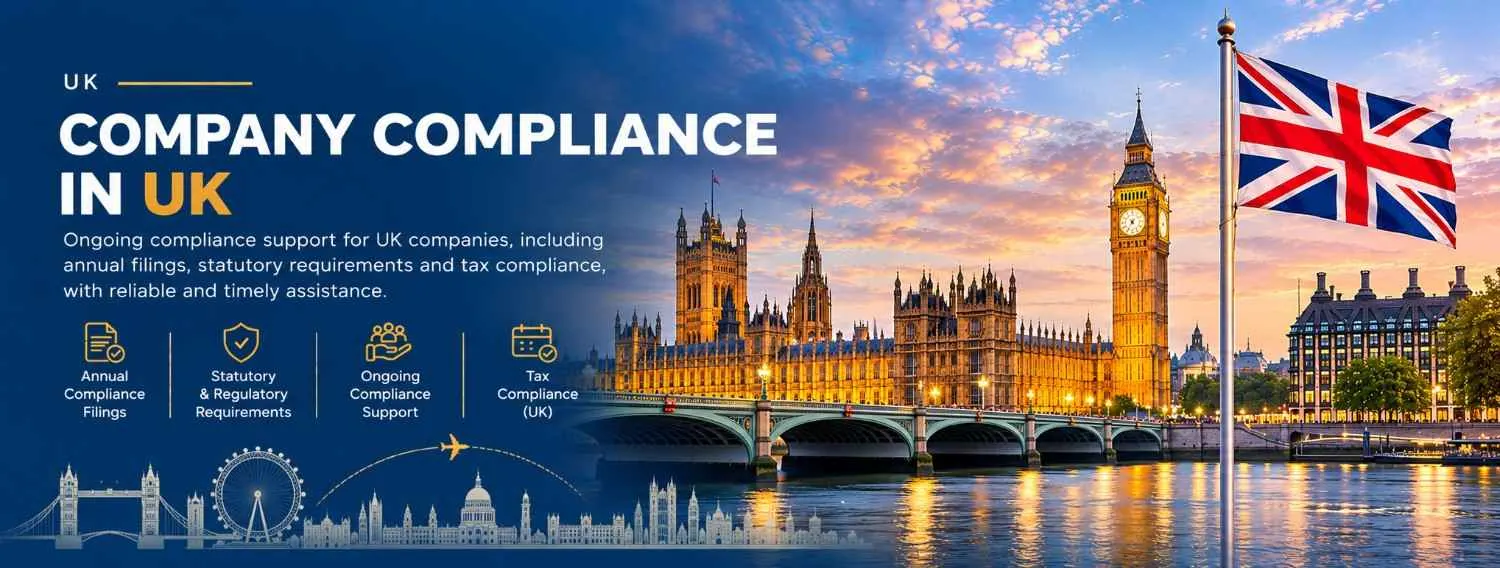
Company Compliance Services in West Midlands, UK
The West Midlands is an important UK business region, supporting companies across manufacturing, automotive engineering, technology, logistics and professional services. Birmingham, Coventry, Wolverhampton and Solihull are major commercial centres attracting domestic and international businesses.
However, maintaining a company involves ongoing legal, financial and regulatory responsibilities.
Businesses seeking company compliance services in West Midlands must meet requirements administered by Companies House, HM Revenue & Customs (HMRC) and relevant local authorities.
This guide explains annual filings, tax obligations, corporate governance and essential compliance requirements for companies operating in the West Midlands.
1. Understanding Company Compliance in West Midlands
1.1 Companies House Requirements
Companies registered in England and Wales must maintain accurate corporate information and submit prescribed statutory filings.
1.2 HMRC Requirements
HMRC administers Corporation Tax, VAT, PAYE and other applicable tax obligations.
1.3 Local Business Regulations
Businesses operating in Birmingham, Coventry or other West Midlands locations may require additional licences, planning permissions or industry-specific approvals.
Effective company compliance in UK involves coordinating these responsibilities throughout the financial year.
2. Companies House Annual Filings
2.1 Confirmation Statement
Every registered company must generally file a confirmation statement at least once every 12 months.
It confirms prescribed information, including:
• Registered office details.
• Directors and company officers.
• Shareholder information.
• People with significant control (PSCs).
• Business activity classification.
2.2 Filing Deadline
Companies generally have 14 days after the end of their confirmation statement review period to submit the filing.
2.3 Government Fees
As of November 2026, the confirmation statement costs £50 online or £110 by post.
2.4 Corporate Information Updates
Changes involving directors, registered offices and other prescribed details must be reported within applicable deadlines.
Timely Companies House annual filing helps businesses avoid penalties and maintain accurate public records.
3. Annual Accounts and Financial Reporting
3.1 Statutory Accounts
UK limited companies generally must prepare annual accounts reflecting their financial position and performance.
3.2 Filing Deadlines
For most private limited companies:
• First accounts: Generally due 21 months after incorporation.
• Subsequent annual accounts: Generally due nine months after the financial year-end.
Different deadlines may apply in particular circumstances.
3.3 Small Company Reporting
Eligible small companies and micro-entities may qualify for simplified reporting arrangements.
3.4 Audit Requirements
Audit obligations depend on company size, classification and applicable exemptions.
These requirements form an essential part of UK company annual compliance.
4. Corporation Tax Compliance
4.1 Corporation Tax Rates
For the 2026 financial year, the principal rates are:
• 19% small profits rate for qualifying profits up to £50,000.
• 25% main rate for profits above £250,000.
• Marginal Relief may apply between these thresholds.
Threshold adjustments and special rules may apply.
4.2 Company Tax Return
Companies generally must submit their Corporation Tax return within 12 months after the relevant accounting period ends.
4.3 Tax Payment Deadline
Corporation Tax is generally payable nine months and one day after the accounting period ends for companies outside the instalment payment rules.
4.4 Recordkeeping
Businesses must maintain adequate financial records supporting income, expenses and tax calculations.
Professional corporation tax filing UK assistance helps companies manage statutory deadlines and reporting requirements.
5. VAT and Payroll Compliance
5.1 VAT Registration
Businesses generally must register for VAT when taxable turnover exceeds £90,000 under the applicable registration tests.
5.2 VAT Returns
VAT-registered companies must submit applicable returns and maintain records under Making Tax Digital requirements.
5.3 PAYE Registration
Employers generally must operate PAYE to report employee payments and applicable tax deductions.
5.4 National Insurance
Businesses employing staff must calculate and pay applicable employer National Insurance contributions.
5.5 Workplace Pensions
Eligible employers must comply with workplace pension automatic enrolment requirements.
6. Corporate Governance and Statutory Records
6.1 Director Responsibilities
Directors must comply with duties under the Companies Act 2006, including maintaining appropriate records and meeting filing obligations.
6.2 Identity Verification
Companies House identity verification requirements apply to directors and people with significant control.
Applicable personal codes and verification details must be provided within prescribed deadlines.
6.3 Statutory Information
Companies must maintain required information concerning ownership, directors and corporate administration.
6.4 Registered Office
A company must maintain an appropriate registered office address in its jurisdiction of incorporation.
6.5 Foreign-Owned Companies
UK subsidiaries of overseas businesses may face additional accounting, related-party transaction and international tax considerations.
These responsibilities make statutory compliance in UK particularly important for multinational groups.
7. West Midlands Business Regulations
7.1 Local Licensing
Certain businesses require licences from their relevant local authority.
Examples include hospitality, food services and regulated commercial activities.
7.2 Workplace Regulations
Employers must comply with applicable employment and workplace health and safety legislation.
7.3 Commercial Premises
Planning permission, business rates and premises-related approvals may apply depending on the location and activity.
7.4 Sector-Specific Requirements
Automotive, manufacturing, financial and healthcare businesses may face additional regulatory obligations.
8. Common Compliance Challenges
8.1 Missed Deadlines
Late annual accounts, confirmation statements and tax returns can result in penalties.
8.2 Incorrect Company Records
Outdated ownership or director information can create regulatory and administrative difficulties.
8.3 Incomplete Tax Reporting
Incorrect VAT or Corporation Tax filings may lead to interest and penalties.
8.4 Poor Financial Records
Inadequate documentation can complicate financial reporting and tax calculations.
Maintaining a compliance calendar helps businesses monitor obligations and reduce filing risks.
9. How YKG Global Helps You
YKG Global provides cross-border advisory and compliance coordination for businesses operating in the United Kingdom.
Our corporate compliance services UK support domestic and foreign-owned companies in managing their statutory responsibilities.
9.1 Companies House Compliance
Assistance with confirmation statements, company information updates and prescribed filings.
9.2 Annual Accounts Coordination
Supporting financial statement preparation and applicable filing requirements.
9.3 Corporation Tax Support
Coordinating tax return preparation and statutory reporting with qualified professionals.
9.4 VAT and Payroll Guidance
Supporting applicable VAT, PAYE and employer compliance requirements.
9.5 Corporate Governance Assistance
Helping companies organise statutory records and ownership documentation.
9.6 Foreign-Owned Company Support
Assisting international groups with UK corporate administration and reporting coordination.
YKG Global helps businesses maintain organised compliance processes through professional guidance and structured documentation.
Call us or fill out our contact form to schedule a consultation today.
📧 Email: Rishi@ykgglobal.com
🌐 Website: www.ykgglobal.com
📱 Call/WhatsApp: +91 76782 77665
📍 Offices: Delhi | Mumbai | Dubai | Singapore