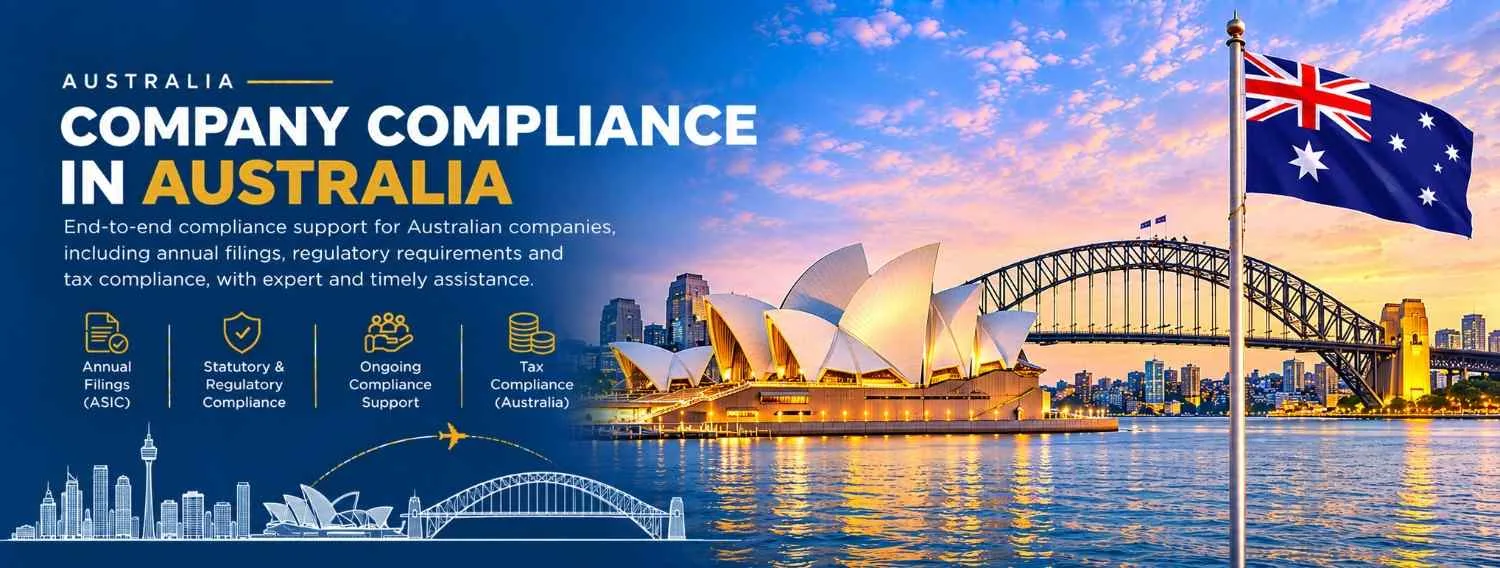
Company Compliance Services in Brisbane, Australia
Brisbane is a major business centre in Queensland, supporting construction, technology, logistics, professional services, tourism and international trade. Companies operating here must comply with Australia's national corporate laws while also meeting Queensland-specific tax, employment and licensing requirements.
For a Brisbane-based company, maintaining compliance involves more than paying an annual ASIC fee. Directors must monitor corporate records, financial reporting obligations, taxation, employee entitlements and approvals relating to their business premises.
Effective Brisbane company compliance requires understanding which obligations apply to the company and which arise from its activities.
1. Understanding Brisbane's Regulatory Framework
1.1 Three Levels of Regulation
Businesses in Brisbane commonly interact with three levels of government:
• Federal authorities for company regulation and income taxation.
• Queensland authorities for payroll tax, workplace insurance and industry regulation.
• Brisbane City Council for relevant planning approvals and local business licences.
1.2 Principal Authorities
The Australian Securities and Investments Commission (ASIC) administers corporate registration, while the Australian Taxation Office (ATO) manages federal taxation.
The Queensland Revenue Office administers state taxes.
1.3 Why Location Matters
A company incorporated in Australia can operate in Brisbane without separate Queensland incorporation. However, operating premises, employing staff or conducting regulated activities may create additional obligations.
2. ASIC Annual Review and Director Responsibilities
2.1 Annual Review Date
Australian companies generally complete their annual review around the anniversary of incorporation.
ASIC issues an annual statement identifying registered company information.
2.2 Annual Review Requirements
The ASIC annual review involves three principal responsibilities:
• Paying the prescribed annual review fee.
• Confirming company information is accurate.
• Passing and recording the required solvency resolution, unless an applicable exception applies.
2.3 Government Fee
From 1 July 2026, the standard annual review fee for an ordinary proprietary company is AUD 342.
Late payment may attract additional charges.
2.4 Updating Company Information
Changes involving directors, addresses or share structures generally must be notified to ASIC within 28 days.
Companies should not wait until their next annual review to report changes.
3. Financial Statements and Corporate Recordkeeping
3.1 Financial Reporting Obligations
Not every Australian proprietary company must lodge annual financial statements with ASIC.
Requirements depend on factors such as company size, ownership and applicable statutory exemptions.
3.2 Foreign-Controlled Companies
Certain foreign-controlled proprietary companies may face additional financial reporting obligations.
Relief may be available where statutory conditions are satisfied.
3.3 Corporate Records
Companies should maintain:
• Share registers and ownership records.
• Director resolutions.
• Financial records.
• Company constitution.
• Relevant contracts and supporting documents.
3.4 Director Accountability
Directors must comply with duties under the Corporations Act 2001, including obligations relating to care, diligence and insolvent trading.
4. Queensland Payroll Tax and Grouping Rules
4.1 Payroll Tax Threshold
Queensland's annual payroll tax threshold is AUD 1.3 million in Australian taxable wages, subject to applicable calculations.
4.2 Payroll Tax Rates
The general rates are:
• 4.75% for employers or groups with Australian taxable wages of AUD 6.5 million or less.
• 4.95% where Australian taxable wages exceed AUD 6.5 million.
4.3 Grouping Provisions
Related businesses may be grouped for payroll tax purposes.
This means separate companies cannot automatically claim separate thresholds.
4.4 Mental Health Levy
Larger employers may also become subject to Queensland's mental health levy.
Accurate Queensland payroll tax calculations require reviewing total wages, group relationships and available exemptions.
5. Brisbane City Council: Local Business Approvals
5.1 Business Premises
Brisbane's City Plan regulates land use and development.
Changing a property's use may require development approval even when the company is already registered with ASIC.
5.2 Food Businesses
Certain restaurants, cafes, catering businesses and food manufacturers require licences under the Food Act 2006.
5.3 Home-Based Operations
Home-based businesses must assess relevant planning rules. Some activities may require council approval.
5.4 Signage and Outdoor Trading
Advertising signs, outdoor dining and commercial activities on council-controlled land may require separate permissions.
The applicable Brisbane business licences depend on the actual activity, premises and operating arrangements.
6. WorkCover and Employee Protection
6.1 Workers' Compensation Insurance
Queensland employers generally must maintain appropriate workers' compensation insurance for eligible workers.
6.2 WorkCover Registration
Employers should assess their obligations with WorkCover Queensland when hiring staff.
6.3 Workplace Health and Safety
Businesses must comply with applicable Queensland workplace health and safety legislation.
6.4 Employment Entitlements
Companies must also consider:
• National Employment Standards.
• Applicable modern awards.
• Superannuation contributions.
• PAYG withholding.
• Employee recordkeeping.
Employment compliance becomes particularly important for construction, hospitality and labour-intensive businesses.
7. Corporate Income Tax, GST and BAS
7.1 Corporate Tax Rates
The standard Australian company tax rate is 30%.
Qualifying base rate entities may be eligible for the reduced 25% rate.
7.2 GST Registration
Businesses generally must register for GST when their GST turnover reaches AUD 75,000.
The standard GST rate is 10%.
7.3 Business Activity Statements
GST-registered businesses generally lodge Business Activity Statements according to their assigned reporting cycle.
7.4 Annual Tax Returns
Companies must lodge corporate income tax returns within the deadlines applicable to their circumstances.
7.5 International Transactions
Foreign-owned businesses should assess transfer pricing, withholding tax and related-party documentation obligations where relevant.
8. Brisbane Industry Compliance Considerations
8.1 Construction and Property
Construction businesses may require Queensland Building and Construction Commission licensing and relevant building approvals.
8.2 Transport and Logistics
Commercial transport operations may involve heavy vehicle, safety and transport regulatory requirements.
8.3 Hospitality and Tourism
Businesses must assess food safety, liquor licensing and relevant operational approvals.
8.4 Technology and Professional Services
Companies handling personal information or delivering regulated professional services may have additional privacy or licensing obligations.
These sector-specific responsibilities make corporate compliance Brisbane more complex than maintaining company registration alone.
9. How YKG Global Helps You
YKG Global supports Australian and foreign-owned businesses with corporate compliance coordination in Brisbane.
9.1 ASIC Compliance Support
Assistance with annual reviews, statutory information updates and corporate documentation.
9.2 Accounting and Tax Coordination
Supporting company tax returns, GST reporting and relevant financial statement requirements.
9.3 Queensland Regulatory Guidance
Helping businesses identify payroll tax, workers' compensation and state-specific obligations.
9.4 Local Licensing Assistance
Coordinating relevant Brisbane City Council permits and industry approvals with appropriate professionals.
9.5 Foreign-Owned Company Support
Assisting international groups with reporting obligations, ownership documentation and cross-border compliance considerations.
YKG Global helps companies establish organised compliance processes aligned with their operations and regulatory responsibilities.
Call us or fill out our contact form to schedule a consultation today.
📧 Email: Rishi@ykgglobal.com
🌐 Website: www.ykgglobal.com
📱 Call/WhatsApp: +91 76782 77665
📍 Offices: Delhi | Mumbai | Dubai | Singapore