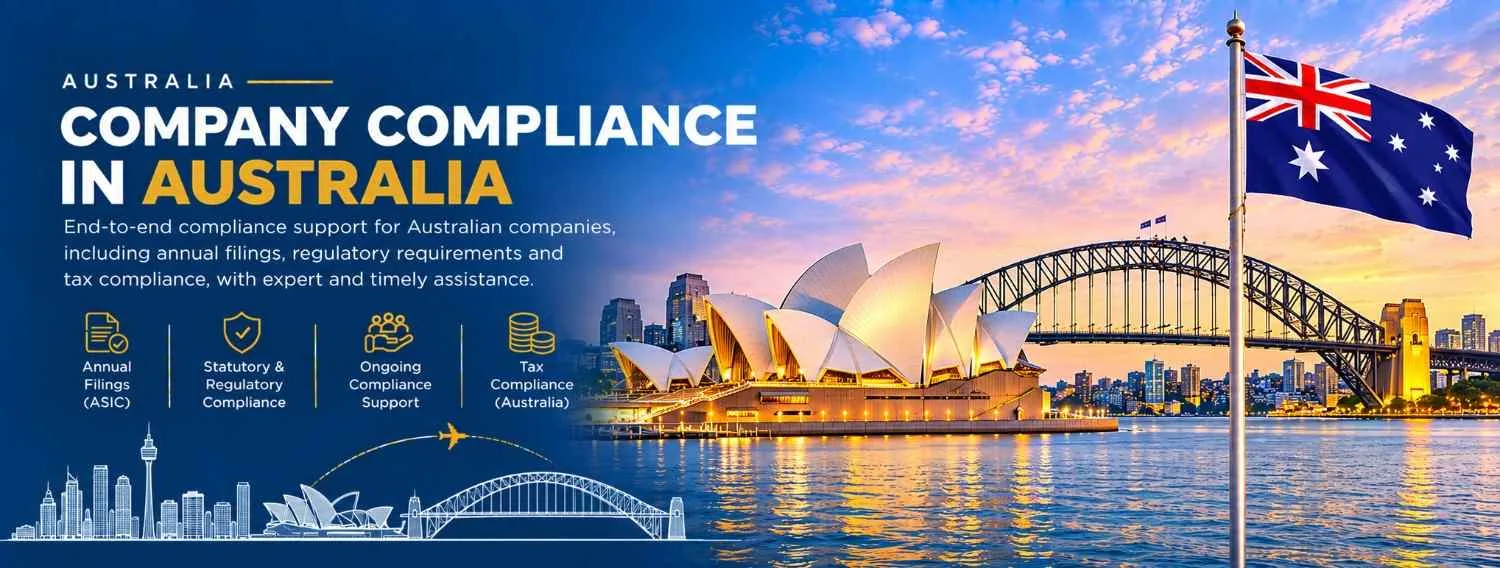
Company Compliance Services in Melbourne, Australia
Melbourne is a major Australian business centre, supporting companies across technology, manufacturing, financial services, healthcare and international trade. Operating a business in Victoria requires more than incorporation. Companies must maintain statutory records, meet tax obligations and comply with relevant corporate regulations.
Businesses seeking company compliance services in Melbourne must understand requirements administered by the Australian Securities and Investments Commission (ASIC), Australian Taxation Office (ATO) and Victorian authorities.
This guide explains the principal annual filings, taxation, accounting and governance obligations for Melbourne-based companies.
1. Understanding Corporate Compliance in Melbourne
1.1 ASIC Requirements
ASIC regulates Australian companies under the Corporations Act 2001. Companies must maintain accurate registration details, complete annual reviews and notify ASIC of prescribed changes.
1.2 ATO Requirements
The ATO administers company income tax, Goods and Services Tax (GST), Business Activity Statements (BAS) and employer tax obligations.
1.3 Victorian Requirements
Businesses may also need to comply with Victorian payroll tax, workers' compensation, workplace safety and industry-specific licensing requirements.
Effective company compliance in Australia involves coordinating these national and state obligations.
2. ASIC Annual Review Requirements
2.1 Annual Review Statement
ASIC generally issues an annual review statement around a company's registration anniversary.
Companies should verify:
• Registered office address.
• Principal business address.
• Director and secretary details.
• Share structure and shareholder information.
2.2 Annual Review Fee
Most proprietary companies must pay the applicable ASIC annual review fee within two months of their annual review date.
2.3 Solvency Resolution
Directors generally must pass a solvency resolution within two months after the annual review date, subject to applicable exceptions.
2.4 Reporting Company Changes
Certain changes, including director appointments and registered office updates, generally must be reported to ASIC within 28 days.
Proper ASIC annual review Australia management helps prevent late fees and inaccurate corporate records.
3. Corporate Tax and ATO Compliance
3.1 Company Income Tax
Australia's standard corporate income tax rate is 30%.
Qualifying base rate entities may benefit from a reduced rate of 25%, subject to applicable eligibility conditions.
3.2 Annual Income Tax Return
Companies generally must lodge annual income tax returns with the ATO.
Filing deadlines depend on the company's circumstances and tax agent arrangements.
3.3 GST Registration
Australia's standard GST rate is 10%.
Businesses generally must register for GST when their GST turnover reaches the applicable AUD 75,000 threshold.
3.4 Business Activity Statements
Registered businesses may need to lodge BAS covering GST, PAYG withholding and other relevant tax obligations.
Professional support for corporate tax filing in Australia helps businesses manage reporting requirements accurately.
4. Accounting and Financial Reporting
4.1 Financial Records
Australian companies must maintain records that accurately explain their financial transactions and position.
Financial records generally must be retained for at least seven years under the Corporations Act.
4.2 Annual Financial Statements
Financial reporting requirements depend on company classification.
Small proprietary companies are not automatically required to lodge annual financial reports with ASIC, although exceptions apply.
4.3 Audit Requirements
Large proprietary companies and certain other entities may be required to prepare audited financial statements.
4.4 Reporting Deadlines
Applicable reporting deadlines depend on the company's financial year-end and statutory classification.
These requirements form an important part of Australian company annual compliance.
5. Employment and Payroll Compliance
5.1 PAYG Withholding
Employers generally must register for PAYG withholding and remit applicable amounts deducted from employee payments.
5.2 Superannuation
Employers must make compulsory superannuation contributions for eligible employees.
The superannuation guarantee rate is 12% for the 2026–27 financial year.
5.3 Single Touch Payroll
Most employers must report payroll information through the ATO's Single Touch Payroll system.
5.4 Victorian Payroll Tax
Businesses exceeding applicable Victorian payroll tax thresholds may need to register and pay payroll tax.
5.5 Workers' Compensation
Employers may require WorkCover insurance under Victoria's workers' compensation framework.
6. Corporate Governance and Statutory Records
6.1 Director Responsibilities
Directors must comply with statutory duties involving care, diligence, good faith and proper corporate management.
6.2 Director Identification Number
Eligible directors must obtain a director identification number under Australian requirements.
6.3 Company Registers
Companies should maintain prescribed records, including:
• Shareholder information.
• Director and secretary details.
• Share issue and transfer records.
• Relevant corporate resolutions.
6.4 Registered Office
Companies must maintain an Australian registered office and notify ASIC of prescribed changes.
6.5 Foreign-Owned Companies
Foreign-owned Australian entities may face additional financial reporting, tax and related-party transaction obligations.
Maintaining statutory compliance in Australia is particularly important for international corporate groups.
7. Victorian Business Licences and Local Compliance
7.1 Business Licences
Certain industries require additional licences, including food services, construction, transport and regulated professional activities.
7.2 Local Council Permissions
Businesses may require planning, signage, premises or trading permits from relevant local councils.
7.3 Workplace Safety
Employers and other duty holders must comply with applicable Victorian occupational health and safety legislation.
7.4 Industry Regulations
Businesses operating in regulated sectors may face additional reporting and operational requirements.
8. Common Corporate Compliance Risks
8.1 Missed Filing Deadlines
Delayed ASIC filings, tax returns or BAS submissions can result in penalties and interest.
8.2 Incorrect Company Information
Outdated director, shareholder or address information may create regulatory difficulties.
8.3 Incomplete Financial Records
Poor recordkeeping can complicate tax reporting, financial statements and audits.
8.4 Payroll Non-Compliance
Incorrect superannuation, PAYG or payroll tax administration can create additional liabilities.
Businesses should maintain a compliance calendar and assign responsibility for each statutory obligation.
9. How YKG Global Helps You
YKG Global provides cross-border corporate advisory and compliance coordination for Australian businesses.
Our business compliance services Melbourne support companies in managing ongoing regulatory responsibilities.
9.1 ASIC Compliance Support
Assistance with annual reviews, company updates and prescribed ASIC filings.
9.2 Tax Compliance Coordination
Support for applicable corporate income tax, GST and BAS requirements.
9.3 Accounting and Financial Reporting
Assistance with financial record organisation and reporting coordination.
9.4 Corporate Governance
Support for statutory registers, corporate documentation and director-related requirements.
9.5 Employment Compliance
Guidance on PAYG, superannuation and Victorian payroll obligations.
9.6 Foreign-Owned Company Support
Assistance with corporate administration and reporting coordination for international businesses.
YKG Global helps Melbourne companies maintain organised compliance processes through professional coordination and structured documentation.
Call us or fill out our contact form to schedule a consultation today.
📧 Email: Rishi@ykgglobal.com
🌐 Website: www.ykgglobal.com
📱 Call/WhatsApp: +91 76782 77665
📍 Offices: Delhi | Mumbai | Dubai | Singapore