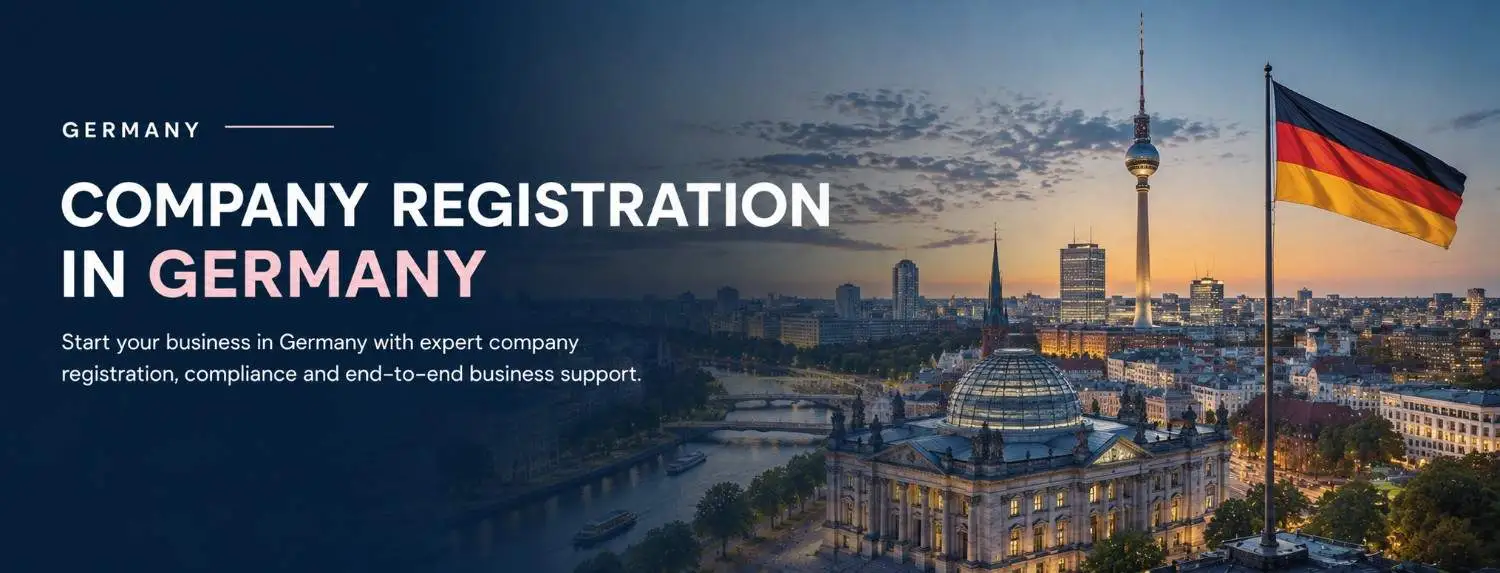
Company Formation in Hesse (Frankfurt), Germany
Hesse is one of Germany’s major economic regions, with Frankfurt am Main serving as an important location for financial services, trade, logistics, technology and international companies. For entrepreneurs planning company formation in Germany, Frankfurt can provide access to a strong commercial environment and a highly international business market.
Company formation in Hesse follows German federal company law, while certain registrations and local procedures are handled by authorities in the municipality where the company operates. Frankfurt therefore has specific local requirements for trade registration and administrative procedures in addition to the national incorporation process.
Why Choose Frankfurt, Hesse for Company Formation?
Frankfurt is not simply a major German city; it is a significant international business centre. Its location and infrastructure can be relevant for companies involved in financial services, professional services, technology, logistics, trading, consulting and international commerce.
Hesse can also be suitable for foreign-owned companies that want a German operating base. However, choosing Frankfurt does not create a separate corporate law system. The company's legal form, incorporation documents, commercial registration and statutory obligations are governed primarily by German law.
Which Company Structure Can Be Established in Frankfurt?
The appropriate structure depends on ownership, liability, management and the intended activities.
• GmbH: The Gesellschaft mit beschränkter Haftung is one of the principal limited-liability company forms in Germany. It can be established by one or more shareholders. The statutory minimum share capital is €25,000, with at least €12,500 generally required to be contributed before registration for a cash formation.
• UG (haftungsbeschränkt): A UG is a limited-liability form that can be established with share capital below the GmbH minimum. The entire subscribed capital must be paid in at formation, and statutory reserves are required until the capital reaches the GmbH level.
• AG: An Aktiengesellschaft is a stock corporation generally used for larger corporate structures and has substantially more complex governance requirements.
• Partnership structures: Depending on the activity and ownership arrangement, structures such as OHG, KG or GmbH & Co. KG may also be relevant.
For many international founders, the GmbH or UG is considered after assessing liability, ownership, funding and long-term business plans.
What Is the Role of the German Business Register and Commercial Register?
The German business register and the Commercial Register should not be treated as the same system.
The Handelsregister, or Germany commercial register, records companies and other entities that are legally required to be registered. GmbHs and UGs must be entered in the Commercial Register, and the company obtains its legal existence as a GmbH upon registration.
The local Gewerberegister is different. In Frankfurt, commercial activities requiring a trade registration are handled through the city's Gewerberegister. This local registration records the trade activity and should not be confused with the publicly authoritative Commercial Register.
Understanding this distinction is particularly important for foreign founders because incorporation and trade registration are separate stages.
How Does Company Formation in Frankfurt Work?
A typical Germany company formation process for a GmbH or UG involves several connected stages:
1. Select the legal structure
Determine whether a GmbH, UG or another legal form fits the proposed activity, ownership model and liability requirements.
2. Choose the company name and business purpose
The proposed company name and object of the enterprise need to be structured in accordance with German legal requirements. For registered companies, the name must also be suitable for registration.
3. Prepare the formation documents
For a GmbH, the articles of association, shareholder information, managing-director details and other required declarations are prepared for the notarial process.
4. Complete the notarial formation
The formation documents are notarised. German law also permits certain GmbH and UG formations and related registrations to be completed through the statutory online notarial procedure where the applicable conditions are met.
5. Open the corporate bank account and provide the required capital
Where applicable, the agreed share capital is contributed according to the formation structure. The documentation required by the bank can vary depending on the company and its shareholders.
6. Register with the Commercial Register
The notary submits the required registration electronically to the competent register court. The GmbH or UG becomes a legal entity upon the relevant Commercial Register entry.
7. Complete local trade registration
Where the activity constitutes a trade, the company must complete the appropriate Gewerbeanmeldung with the responsible local authority. For a company operating in Frankfurt, this is handled through the Frankfurt Gewerberegister.
8. Complete tax and activity-specific registrations
After incorporation, the company must complete the applicable tax registration and assess whether additional permits, professional authorisations or sector-specific registrations are required.
What Documents Are Needed?
The exact documentation depends on the legal structure and ownership.
Common incorporation information may include:
• Proposed company name and business activity
• Registered office details in Germany
• Articles of association or applicable formation agreement
• Shareholder details and ownership structure
• Managing director information
• Identification documents for shareholders and directors
• Declaration concerning the management and representation of the company
• Evidence relating to share-capital contributions where required
• Documents required for Commercial Register registration
Foreign shareholders may need additional corporate documents, certifications, translations or evidence concerning the legal existence and authority of an overseas parent company.
Can Foreign Entrepreneurs Set Up a Company in Frankfurt?
Yes. Germany does not generally require German shareholders simply because a company is being established by foreign investors. Foreign individuals and overseas companies can participate in German company structures, subject to applicable legal and regulatory requirements.
For someone starting a company in Germany as a foreigner, two different issues should be considered separately:
• Company formation: whether the proposed German company can legally be established and registered.
• Immigration and residence: whether the foreign founder personally requires a German residence permit to live in Germany and carry out self-employed activity.
Company incorporation by itself does not automatically grant a right to reside in Germany. Non-EU/EEA founders who intend to personally conduct self-employed activities in Germany may need an appropriate residence status.
What Should Foreign Founders Consider Before Setting Up a Company?
Foreign entrepreneurs should plan the German structure before beginning the incorporation process. Important considerations include:
• Whether the company will be a subsidiary, standalone German company or another structure
• The intended business activity and whether it requires a special permit
• The German registered office
• Shareholder and managing-director arrangements
• Availability of required corporate documents
• Notarial and Commercial Register requirements
• Tax registration and accounting obligations
• Residence and work-right considerations for founders who will relocate
• Banking and source-of-funds documentation
• Ongoing annual accounting and statutory filing obligations
This preparation can make setting up a company in Germany more organised and reduce avoidable delays caused by incomplete documentation.
What Happens After Registration?
Once the company has been incorporated and the relevant local registrations completed, its obligations continue.
Depending on the structure and activity, the company may need to maintain accounting records, prepare annual financial statements, meet tax filing requirements, maintain accurate shareholder and management information, and comply with applicable commercial regulations.
A GmbH or UG must also maintain its registered corporate information and report relevant changes through the appropriate statutory channels.
Why Choose YKG Global for Company Formation in Hesse?
YKG Global supports international entrepreneurs and companies planning to open a company in Germany, including founders considering Frankfurt and the wider Hesse region.
Our assistance can be structured around:
• Selecting a suitable German company structure
• Understanding the Frankfurt-specific registration process
• Preparing incorporation and corporate documentation
• Coordinating the notarial and Commercial Register stages
• Supporting local trade-registration requirements
• Assisting foreign shareholders with documentation requirements
• Coordinating business compliance requirements after incorporation
For international founders, the objective is not simply to register a company but to establish the structure correctly from the beginning and understand the obligations that follow registration.
Call us or fill out our contact form to schedule a consultation today.
📧 Email: Rishi@ykgglobal.com
🌐 Website: www.ykgglobal.com
📱 Call/WhatsApp: +91 76782 77665
📍 Offices: Delhi | Mumbai | Dubai | Singapore