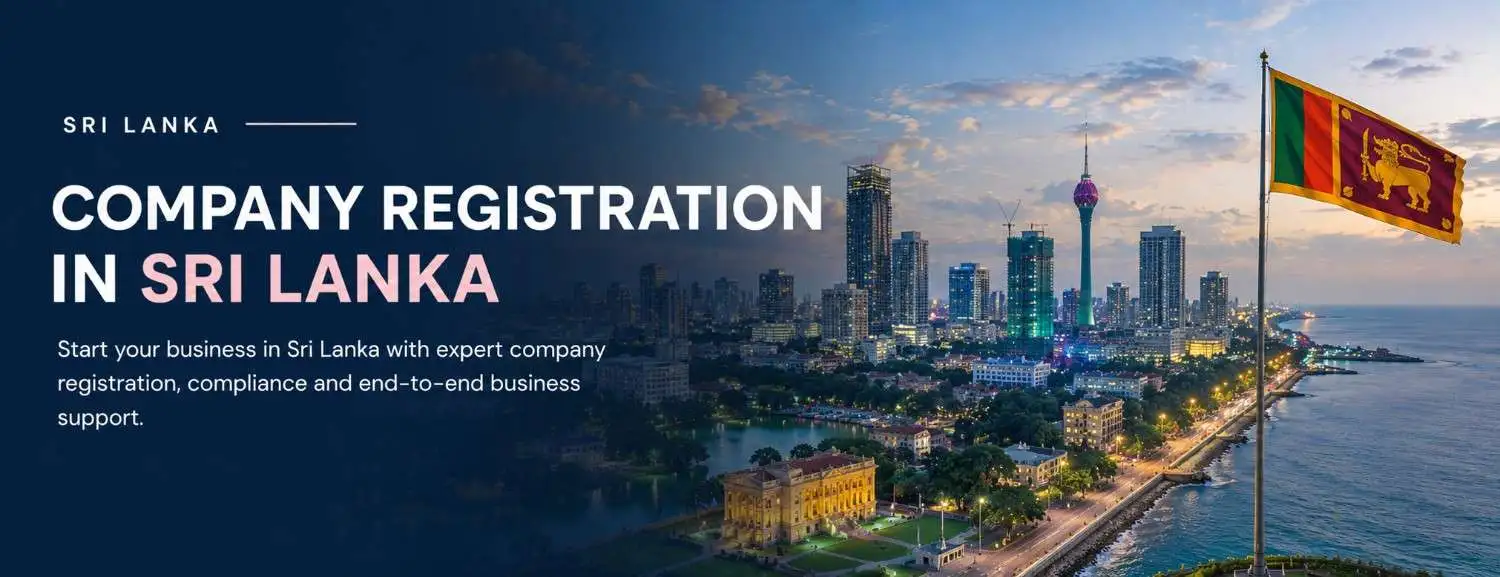
Company Formation in Sri Lanka
Sri Lanka can be a market to consider for businesses exploring South Asia, regional trade, manufacturing, tourism, professional services and international business opportunities. Establishing a local company can provide a formal structure for conducting eligible activities and building commercial relationships.
However, incorporation requires more than submitting an application. Founders need to select an appropriate company structure, prepare accurate documentation, identify ownership and management details, and plan for tax and statutory responsibilities.
YKG Global supports businesses planning business registration in sri lanka, with a focus on company formation, registration coordination and post-incorporation compliance planning.
Why Consider Establishing a Company in Sri Lanka?
The right business structure depends on the market, activities and long-term objectives. Businesses may consider Sri Lanka when planning to:
• Establish a local presence for eligible commercial activities.
• Develop relationships with local suppliers, distributors and customers.
• Explore manufacturing, trading, technology or professional service opportunities.
• Coordinate regional operations and cross-border commercial relationships.
• Build a formal structure for employing staff or entering business contracts.
The suitability of Sri Lanka depends on the sector, ownership structure, regulatory requirements and commercial plan. Incorporation does not automatically provide sector-specific approvals, tax concessions or permission to conduct every type of activity.
Choosing the Right Business Structure
Before proceeding with company registration in srilanka, assess how the business will operate and who will own and manage it.
Private limited company
A private company limited by shares is a common structure for commercial businesses. It has a separate legal identity, and shareholder liability is generally limited under the applicable law, subject to relevant exceptions and other obligations.
A private company may suit trading businesses, service providers, subsidiaries and entrepreneurs planning to develop a local operation.
Public company
A public company may be considered where the proposed ownership, fundraising or business plans require a public-company structure. It involves additional legal and governance considerations and is not necessary for every new business.
Registration of an existing overseas company
An overseas business planning to operate in Sri Lanka should assess whether a local subsidiary or registration as an overseas company is appropriate. The choice depends on the intended activities, local presence and applicable legal requirements.
Foreign investors should also review sector-specific ownership restrictions, licensing rules and investment requirements before committing to a structure.
How to Register a Private Limited Company in Sri Lanka
The process for pvt ltd company registration sri lanka generally involves the following steps.
1. Define the business activity
Identify the proposed products or services, target customers, ownership arrangements and operating model. This helps determine whether additional approvals may be required.
2. Choose and check the company name
Check the proposed name through the Department of the Registrar of Companies. Names must comply with the applicable rules and cannot be identical to an existing registered company name. Restricted or misleading names may be rejected.
3. Identify directors and shareholders
Determine who will own the company, their shareholdings and who will serve as directors. Prepare the necessary identity and contact information for the incorporation process.
4. Appoint a company secretary
A company secretary is part of the incorporation requirements. Confirm that the proposed appointment meets the applicable eligibility requirements and that the secretary can support the company's statutory filings.
5. Prepare the incorporation documents
The process generally involves the Articles of Association, Form 01 for incorporation, Form 18 for director consent and Form 19 for secretary consent. Use the current forms generated or required by the official registration system.
6. Submit the application through eROC
The Registrar's eROC platform supports online company registration. Submit the required information, documents and fees through the applicable workflow. Applications may be delayed or rejected if documents are incomplete or fail to meet the requirements.
7. Complete beneficial ownership reporting
After incorporation and payment of fees, new companies must follow the Registrar's beneficial ownership submission process. The official notice effective 30 March 2026 requires the relevant beneficial ownership and authorised-person details through the designated portal, including Forms BO1 and BO5.
8. Obtain and retain registration records
Once approved, retain the certificate of incorporation and other company records. Confirm the company's registration status and any further requirements before commencing regulated activities.
The precise process depends on the entity type and the company's circumstances. Businesses pursuing online business registration in sri lanka should follow the latest eROC instructions rather than rely on outdated form lists or third-party checklists.
Documents and Information to Prepare
The documents required depend on the company structure and the details of its founders. Common preparation items include:
• Proposed company name and business objectives.
• Details of shareholders and their ownership percentages.
• Identity and contact information for directors.
• Company secretary details and consent.
• Articles of Association and incorporation forms.
• Registered office details and other information requested through eROC.
• Beneficial ownership and authorised-person information required under the current process.
Foreign founders should confirm any additional document authentication, identification or sector-specific requirements before filing.
Tax Registration and Ongoing Compliance
Incorporation is the start of the company's statutory responsibilities, not the end. Businesses should plan for tax registration, accounting and recurring filings from the outset.
Important considerations include:
• Taxpayer Identification Number: Sri Lanka's Inland Revenue Department states that companies incorporated or registered in Sri Lanka must register with the Commissioner-General within 30 days of incorporation or registration.
• Corporate income tax: Review the applicable tax treatment based on the company's income, activities and circumstances.
• VAT: Assess whether registration is required based on taxable supplies and the applicable rules. Commercial importers and exporters may have specific registration obligations.
• Accounting records: Maintain accurate records of transactions, invoices, expenses and supporting documents.
• Annual returns: Monitor filing obligations with the Registrar of Companies and keep company information up to date.
• Beneficial ownership records: Complete required submissions and maintain accurate ownership and control information.
The requirements under private limited company registration in sri lanka should therefore be considered alongside the tax and compliance framework. Registration thresholds and filing rules should be checked against current official guidance.
How YKG Global Helps You
YKG Global supports businesses evaluating international company formation and cross-border expansion. Our approach focuses on understanding the business objective and identifying the steps that need attention before and after incorporation.
Support can include:
• Formation planning: Reviewing the proposed business model, ownership structure and intended activities.
• Documentation coordination: Helping organise the information required for the registration process.
• Registration support: Helping businesses understand the relevant incorporation steps and official filing workflow.
• Compliance planning: Identifying tax registration, accounting and statutory filing responsibilities.
• Cross-border considerations: Highlighting matters that may need additional review where owners, investors or operations are based in different countries.
The exact scope of assistance should be confirmed according to the company's needs and the services agreed.
If you are planning to establish a Sri Lankan entity, begin by clarifying the ownership structure, business activities and expected operating model. These decisions help establish a practical foundation for registration and future compliance.
Call us or fill out our contact form to schedule a consultation today.
📧 Email: Rishi@ykgglobal.com
🌐 Website: www.ykgglobal.com
📱 Call/WhatsApp: +91 76782 77665
📍 Offices: Delhi | Mumbai | Dubai | Singapore