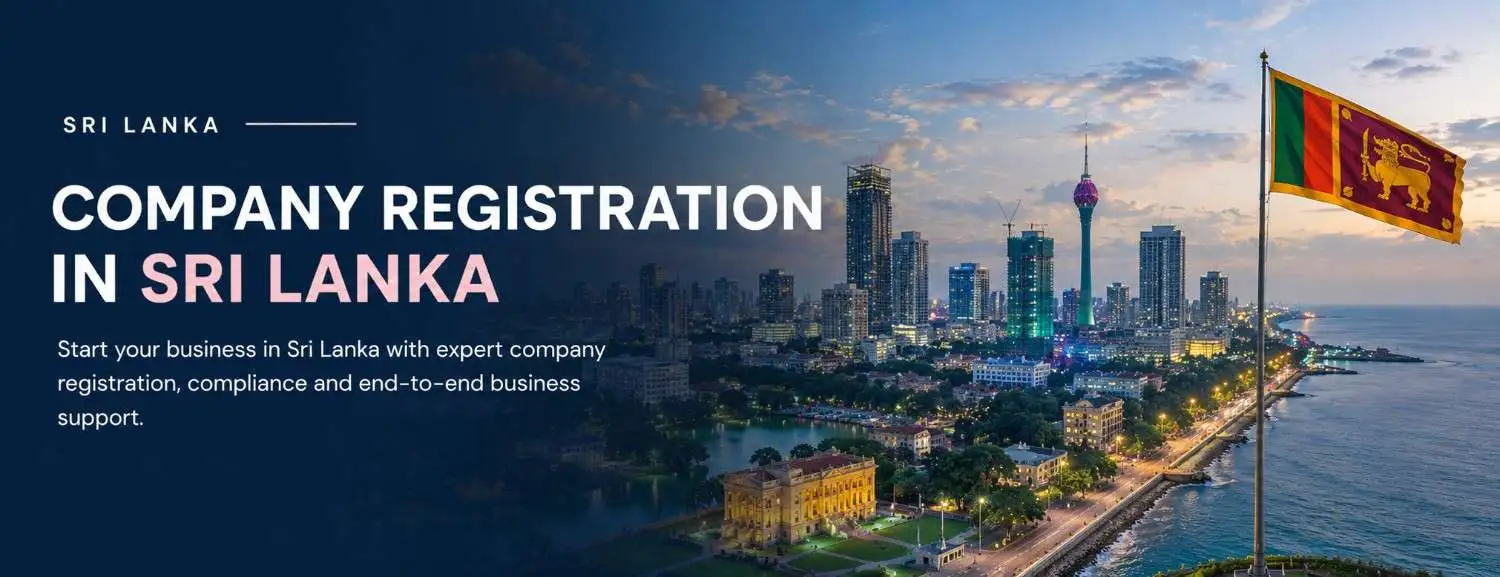
Company Registration in Colombo Sri Lanka
Colombo is Sri Lanka’s principal commercial centre, hosting businesses across international trade, financial services, logistics, technology, manufacturing and professional consulting. Its established business ecosystem makes it an important location for entrepreneurs and international investors planning to enter the Sri Lankan market.
For businesses exploring company registration in sri lanka, it is important to understand that incorporation is governed by national law rather than a separate Colombo registration system. The Department of the Registrar of Companies (DRC) manages company incorporation through its electronic registration platform, eROC.
Whether you are establishing a new private limited company, creating a subsidiary for an overseas group or planning a local business operation, the process involves selecting the appropriate structure, preparing incorporation documents and completing tax and regulatory formalities.
Why Establish a Business in Colombo?
Colombo can offer several advantages for businesses establishing operations in Sri Lanka.
• Commercial connectivity: Businesses can access local customers, suppliers, professional advisers and financial services.
• International trade: The city’s commercial ecosystem supports import-export businesses, distributors and companies involved in regional trade.
• Professional services: Accounting, legal, consulting and technology service providers support businesses at different stages of development.
• Regional expansion: A Sri Lankan company can provide a local base for eligible business activities, subject to applicable licensing and regulatory requirements.
• Access to talent: Companies can recruit professionals and employees according to their operational needs and applicable employment rules.
The best business location depends on the company’s activities, customers, staffing requirements and premises. Businesses operating outside Colombo may follow the same national incorporation framework while complying with the local requirements applicable to their operations.
Choose the Right Business Structure
Before beginning business registration in sri lanka, assess which legal structure fits your ownership and commercial objectives.
1. Private Limited Company
A private limited company is a common choice for commercial businesses seeking a separate legal entity. It may suit consulting firms, technology companies, trading businesses and subsidiaries of overseas groups.
The company operates under its registered name and must comply with the Companies Act, applicable filing requirements and its constitutional documents.
2. Public Company
A public company may be appropriate for businesses with broader capital-raising or ownership objectives. Its governance, disclosure and compliance requirements differ from those of a private company.
3. Branch of a Foreign Company
An overseas company may consider registering a branch in Sri Lanka where the intended activities and applicable rules permit it. A branch differs from a locally incorporated subsidiary because the overseas company remains the underlying legal entity.
Foreign investors should compare these options before choosing a structure.
How to Register a Company in Colombo
The process for company registration in srilanka is managed through the DRC and its eROC platform for eligible company registrations.
Step 1: Check the Company Name
Search the existing company records and submit a name reservation application through eROC. The proposed name must satisfy the applicable requirements and receive approval from the Registrar or authorised officer.
Name approval is not automatic. Applicants may be asked to provide additional information or choose another name.
Step 2: Prepare Incorporation Documents
Prepare the company’s Articles of Association and the information required for incorporation. Depending on the structure, this may include details of directors, shareholders, the registered office and the proposed business activities.
Foreign corporate shareholders may need additional supporting documents, while overseas documents may require authentication or other formalities.
Step 3: Appoint the Required Company Officers
Identify the company’s directors and company secretary in accordance with Sri Lankan law. Confirm that the proposed appointments satisfy the applicable eligibility requirements and that the required consents and particulars are available.
Step 4: Submit the Application Through eROC
Create an account on the official eROC platform, complete the applicable incorporation forms, upload the documents and pay the prescribed fees.
The Registrar reviews the application and may request corrections or further information. Once approved, the company receives its incorporation documentation.
Step 5: Submit Beneficial Ownership Information
An important compliance requirement took effect on 30 March 2026: the DRC announced mandatory beneficial ownership submissions for new company incorporations after incorporation fees are paid. Applicants must use the official beneficial ownership portal and follow the current submission instructions.
Companies should identify the individuals who ultimately own or control the entity and prepare the required information as part of their incorporation workflow.
Step 6: Complete Tax Registration
After incorporation, register with the Inland Revenue Department (IRD) as required and obtain the company’s Taxpayer Identification Number (TIN). Additional tax-type registrations depend on the business’s activities and obligations.
Business Registration and Compliance Requirements
Business registration srilanka involves more than receiving an incorporation certificate. Companies must complete the relevant post-registration formalities before commencing activities that require additional approvals.
Key considerations include:
• Tax registration: Obtain the required TIN and assess corporate income tax, VAT and other applicable obligations.
• Accounting records: Maintain accurate records of income, expenses, assets and liabilities.
• Banking: Prepare incorporation documents, ownership details and identification records for bank due diligence.
• Licences: Check whether the company’s activities require sector-specific approvals or operating licences.
• Annual filings: Maintain company information and submit applicable annual returns and other statutory filings.
• Employment obligations: Companies hiring staff should assess applicable payroll and employment-related registrations.
The requirements depend on the company’s legal structure, activities and ownership.
Company Registration for Foreign Investors
Foreign investors considering srilanka company registration should assess the proposed business activity and applicable investment rules before incorporating.
A locally incorporated company may be suitable for establishing a separate Sri Lankan entity, while a registered branch may suit certain overseas businesses. Foreign ownership and capital requirements can vary by industry, and some activities are subject to restrictions or additional approvals.
Foreign founders should consider:
• Identity and ownership documentation for all relevant parties.
• The appropriate structure for the proposed operation.
• Any sector-specific foreign investment restrictions.
• Banking documentation and source-of-funds verification.
• Tax obligations in Sri Lanka and the investor’s home jurisdiction.
• Immigration and work authorisation for foreign personnel where applicable.
Company incorporation does not automatically grant a visa or permission to work in Sri Lanka. Immigration and investment approval requirements should be reviewed separately.
How YKG Global Helps You
YKG Global supports entrepreneurs and international businesses planning to establish operations in Colombo and elsewhere in Sri Lanka.
Our assistance can include:
• Guidance on selecting a suitable company structure.
• Support with incorporation documentation and eROC registration planning.
• Guidance on beneficial ownership submission requirements.
• Assistance identifying tax registration and accounting obligations.
• Support with foreign ownership and cross-border compliance considerations.
• Ongoing corporate compliance planning.
The appropriate support depends on the company’s ownership, business activity and intended operating model. Registrations and approvals remain subject to the relevant Sri Lankan authorities.
Call us or fill out our contact form to schedule a consultation today.
📧 Email: Rishi@ykgglobal.com
🌐 Website: www.ykgglobal.com
📱 Call/WhatsApp: +91 76782 77665
📍 Offices: Delhi | Mumbai | Dubai | Singapore