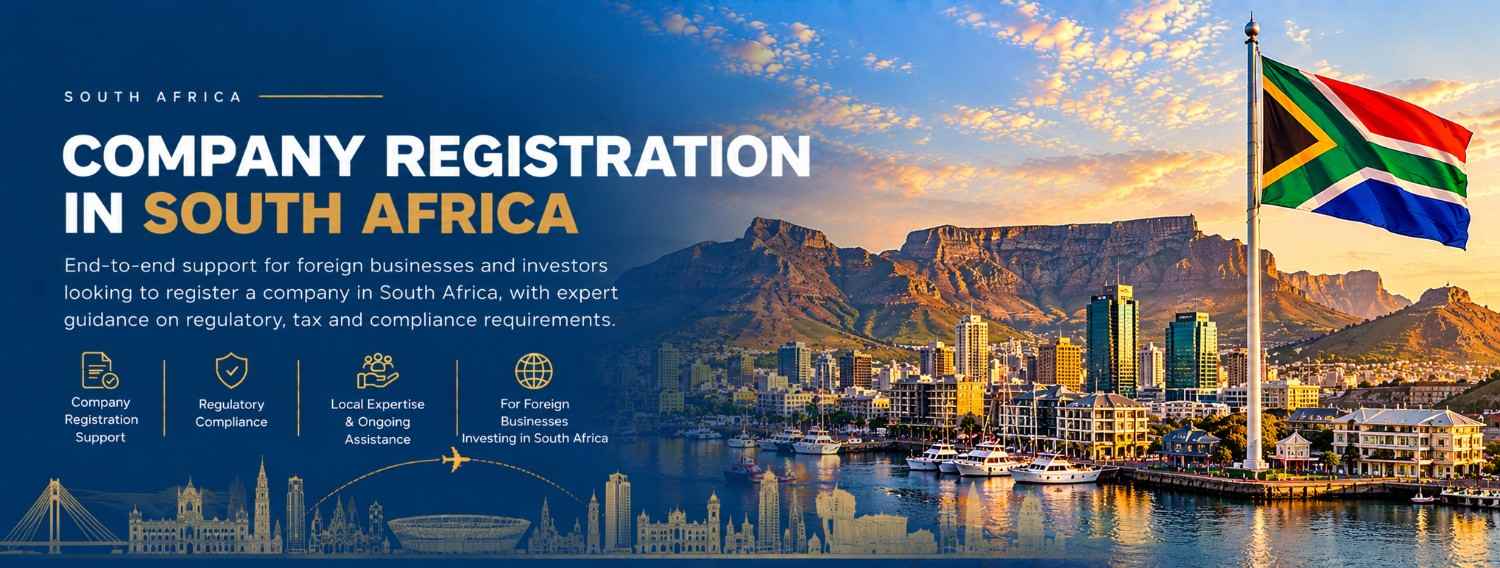
Company Registration in Eastern Cape, South Africa
The Eastern Cape is an important province for businesses exploring manufacturing, automotive supply chains, agriculture, logistics, tourism and regional services in South Africa. Cities such as Gqeberha, East London and Mthatha serve different commercial markets, creating opportunities for entrepreneurs, established companies and international investors.
For businesses planning company registration in Eastern Cape, it is important to understand that company incorporation is handled nationally through the Companies and Intellectual Property Commission (CIPC). The province does not have a separate company incorporation system. However, the municipality where a business operates may impose additional requirements relating to premises, zoning, trading licences and specific activities.
YKG Global helps entrepreneurs and international businesses understand the incorporation process, documentation, tax registrations and compliance considerations involved in establishing a South African business.
Why Consider the Eastern Cape for Business?
The province offers opportunities across several sectors, depending on the location and commercial strategy.
• Automotive and manufacturing: The Gqeberha and East London areas are associated with automotive manufacturing and related supplier networks. Businesses may explore opportunities in components, engineering, industrial services and logistics.
• Agriculture and agro-processing: Agricultural activity creates potential demand for food processing, packaging, distribution and supporting services.
• Ports and logistics: Businesses involved in shipping, warehousing, distribution and trade may evaluate the province's port-linked commercial infrastructure.
• Tourism and hospitality: Coastal destinations, natural attractions and cultural tourism support opportunities in accommodation, restaurants, leisure and travel services.
• Local business services: Consulting, technology, retail and professional services businesses can serve customers across the province and wider South African market.
Choosing a location requires an assessment of customer access, infrastructure, workforce, premises and applicable local regulations rather than incorporation alone.
Step 1: Choose the Right Business Structure
Before starting business registration in Eastern Cape, decide which legal structure best suits your business activities and plans.
Private Company (Pty) Ltd
A private company is a separate legal entity from its shareholders. It can own assets, enter into contracts and conduct business in its own name. Shareholder liability is generally limited, subject to applicable legal exceptions.
This structure may suit consulting firms, trading businesses, manufacturers, technology companies and subsidiaries of international businesses.
Non-Profit Company (NPC)
An NPC may be appropriate for qualifying organisations established for non-profit purposes. It has different governance and operating requirements from a commercial company.
Sole Proprietorship or Partnership
An individual may operate as a sole proprietor, while a partnership involves two or more parties carrying on a business together. These structures differ from an incorporated company in legal identity, liability and tax treatment.
For businesses seeking a separate legal entity, a Pty Ltd company is often worth considering.
Step 2: Choose a Company Name
The next step in company formation in South Africa is deciding whether to incorporate with a reserved name or use the company's registration number as its registered name initially.
CIPC permits qualifying profit companies to be incorporated with or without a reserved name. If a company is incorporated without a reserved name, its registration number becomes its registered name with the prescribed “(South Africa)” suffix. A suitable trading name may be used subject to applicable requirements.
Before applying, consider the following:
• Check the proposed name against the existing company register.
• Ensure that the name complies with the applicable legal requirements.
• Consider whether it could conflict with existing business names or protected brands.
• Confirm whether a separate trademark search is needed.
A company name registration and a trademark are not the same thing. If brand protection is important, review the relevant intellectual property requirements separately.
Step 3: Prepare the Company Information
Before submitting a CIPC application, prepare the company's ownership and registration details.
Common information includes:
• Proposed company name, if applicable.
• Details of the incorporator and directors.
• Identification information and supporting documents.
• Registered and business address details.
• Shareholders and proposed shareholding percentages.
• Memorandum of Incorporation (MOI).
• Contact details and other required declarations.
A private company generally requires at least one director and one incorporator. The director and incorporator may be the same person. The MOI sets out the company's governance rules and may use the standard format or an appropriately prepared customised version.
Foreign founders should confirm the relevant identity verification and passport documentation requirements before submitting their applications.
Step 4: Register the Company with CIPC
To register a company in South Africa, apply through CIPC's available electronic services or BizPortal, depending on the company type and filing route.
The process generally involves:
- Registering as a CIPC customer.
- Choosing the company type.
- Reserving a name, if required.
- Providing director, incorporator and company details.
- Submitting the required MOI and declarations.
- Paying the applicable registration fees.
- Retaining the registration confirmation and incorporation records.
CIPC provides registration options for private companies and other company types, with the filing process varying according to the structure and MOI selected.
Once incorporated, keep the registration certificate and company records securely. The company may need these documents for banking, contracts, tax administration and other registrations.
Step 5: Complete Tax and Business Registrations
After incorporation, determine the tax registrations required for the company's activities.
South African companies registered through CIPC are generally registered with the South African Revenue Service (SARS) for corporate income tax. The company should confirm its tax reference details and establish the necessary arrangements to transact electronically with SARS.
Depending on the business, additional registrations may include:
• VAT: Registration depends on the applicable taxable turnover rules and other statutory conditions.
• PAYE: Relevant where the company has employee withholding obligations.
• Unemployment Insurance Fund (UIF): Applicable where the business meets the relevant employer requirements.
• Compensation Fund: Employers may need to register and meet workplace injury reporting and assessment obligations.
• Customs and excise: Relevant to businesses involved in importing, exporting or regulated goods.
The company should assess its actual activities and obligations rather than assume every registration applies to every business.
Step 6: Check Eastern Cape Municipal Requirements
National incorporation does not automatically authorise a business to operate from any premises or conduct every activity.
Depending on the location, businesses should check with the relevant municipality, which may include Nelson Mandela Bay, Buffalo City, or another local authority in the Eastern Cape.
Requirements can vary according to the business activity, premises and local by-laws. They may include:
• Zoning or land-use permission.
• Building and fire safety compliance.
• Trading or business licences for specified activities.
• Food premises and health-related approvals.
• Environmental or sector-specific authorisations.
• Signage, outdoor trading or other local permissions.
For example, a food outlet, accommodation establishment, industrial facility and general consulting office may face very different local requirements. Confirm the rules before leasing premises, fitting out a facility or beginning regulated operations.
Step 7: Open a Business Bank Account
A dedicated business account helps separate company transactions from personal finances and supports customer payments, supplier expenses and payroll.
Banks typically undertake their own due diligence and may request:
• CIPC incorporation documents.
• Director and shareholder identification.
• Company address and contact details.
• Tax registration information.
• Ownership and beneficial ownership details.
• Information about the business model and expected transactions.
Foreign-owned businesses may face additional verification requirements. Bank account approval is not guaranteed by company incorporation, so check the selected bank's documentation and onboarding process in advance.
Step 8: Maintain Ongoing Compliance
After incorporation, a company must meet its continuing statutory, tax and operational responsibilities.
These may include:
• Filing annual returns with CIPC and paying the applicable fees.
• Keeping director, registered address and company information current.
• Maintaining accounting records and supporting documentation.
• Filing tax returns and paying applicable taxes on time.
• Meeting beneficial ownership reporting and recordkeeping requirements.
• Complying with payroll and employment requirements where applicable.
• Renewing licences and maintaining any required permits.
• Preparing financial statements and arranging an audit where required.
A compliance calendar can help the company track deadlines and maintain records as it grows. Directors should understand that incorporation does not remove their responsibilities under South African law.
Common Mistakes to Avoid
Businesses planning Eastern Cape business setup should avoid:
• Assuming the province has a separate company incorporation process.
• Providing incomplete or inconsistent director and shareholder information.
• Choosing a company structure without considering liability and governance.
• Assuming CIPC registration replaces municipal licences.
• Overlooking SARS registrations and filing deadlines.
• Failing to check zoning and premises requirements before committing to a location.
• Neglecting annual returns and company recordkeeping.
A well-planned registration process helps align the company's legal structure, tax arrangements and local operating requirements from the beginning.
How YKG Global Helps You
YKG Global supports entrepreneurs and international businesses planning to establish a South African company with operations in the Eastern Cape.
Our assistance can include:
• Guidance on selecting an appropriate company structure.
• Support with CIPC incorporation documentation and registration requirements.
• Guidance on tax registration and ongoing statutory responsibilities.
• Help identifying relevant municipal licences and operating requirements.
• Assistance with accounting, reporting and compliance planning.
• Support in identifying cross-border tax and regulatory matters that may require specialist advice.
The exact scope depends on the company's ownership, business activity and intended location. Government registrations, banking decisions and local permits remain subject to the relevant authorities and service providers.
Call us or fill out our contact form to schedule a consultation today.
📧 Email: Rishi@ykgglobal.com
🌐 Website: www.ykgglobal.com
📱 Call/WhatsApp: +91 76782 77665
📍 Offices: Delhi | Mumbai | Dubai | Singapore