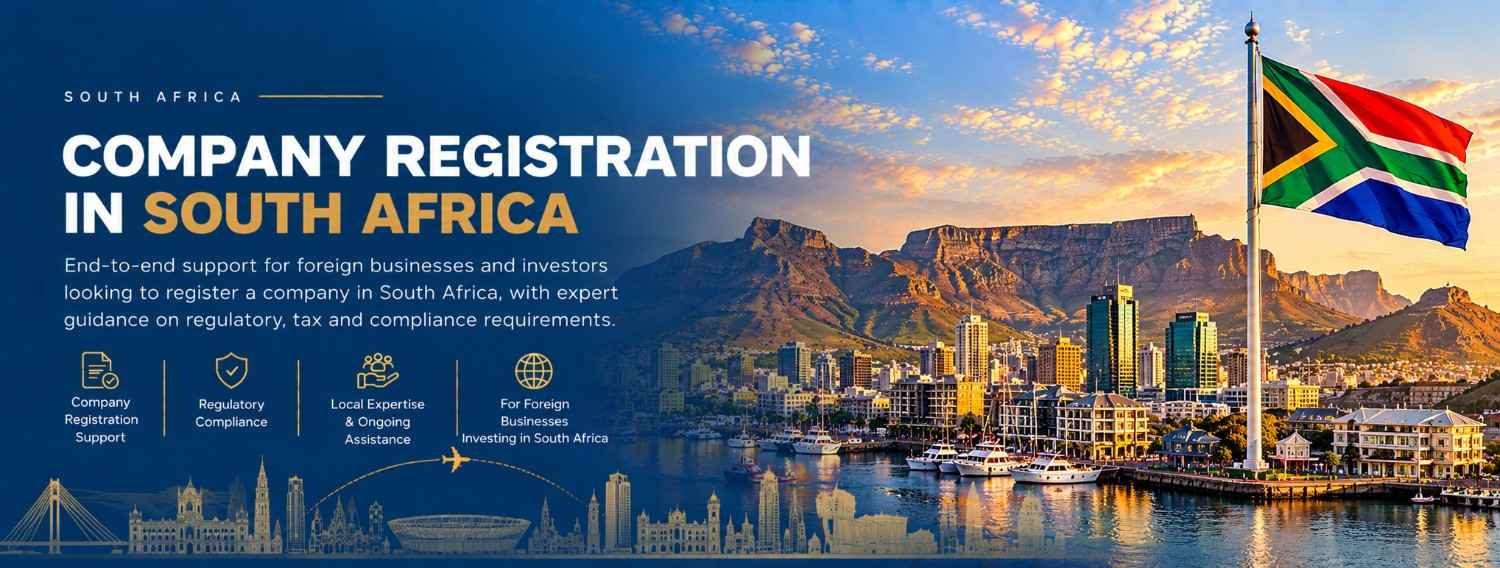
Company Registration in Gauteng, South Africa
Gauteng is South Africa's smallest province by land area but a major centre of economic activity. With Johannesburg serving as a prominent financial and commercial hub and Pretoria housing important government institutions, the province attracts businesses across professional services, technology, logistics, manufacturing, wholesale trade and other industries.
For entrepreneurs entering the South African market, choosing Gauteng can be a commercial decision based on customers, suppliers, talent and access to business networks. But establishing a company also requires decisions about legal structure, ownership, registration, tax and ongoing administration.
YKG Global helps international entrepreneurs and businesses understand the requirements for company registration in Gauteng and plan their South African market entry.
Which Part of Gauteng Fits Your Business?
Your location should support your actual operations, not simply provide a registered address.
• Johannesburg: Worth considering for businesses seeking access to corporate clients, financial services, professional networks and commercial activity.
• Pretoria: May suit businesses working with government-related organisations, research institutions, professional services and the broader Tshwane business community.
• Midrand: Can be considered by companies looking for access between Johannesburg and Pretoria, including service providers and businesses with regional offices.
• Ekurhuleni: Relevant to businesses evaluating logistics, industrial activity, manufacturing and supply-chain operations.
These are commercial considerations rather than separate registration jurisdictions. The same national company-registration framework applies across Gauteng. Businesses should select premises based on operational needs, lease terms, licensing and customer access.
Choose the Legal Structure Before You Register
The right structure determines how the business is owned, how its liabilities are treated and which registration and reporting obligations apply.
Private Company (Pty) Ltd
A private company is a common structure for businesses that want a separate legal entity. It can be suitable for consulting, trading, technology, manufacturing and service operations.
The company must have a Memorandum of Incorporation (MOI), which sets out its governance rules. A private company must have at least one director and one incorporator; the same person may fulfil both roles.
Sole Proprietorship
A sole proprietorship is operated by an individual rather than a separate incorporated company. Business profits are generally taxed in the owner's individual capacity, and the owner remains personally responsible for business obligations.
This may suit certain small operations, but it offers a different liability and tax profile from an incorporated company.
Non-Profit Company
A non-profit company may be appropriate for qualifying organisations established for public-benefit or other non-profit purposes. Its governance and use of funds must align with its legal objectives.
Foreign investors should also assess whether sector-specific rules, ownership restrictions or additional approvals apply to their proposed activities.
How to Register a Company in Gauteng
The process to register a company in Gauteng follows South Africa's national framework through the Companies and Intellectual Property Commission (CIPC). The main stages are:
1. Confirm the company details. Decide on the name, business activity, directors, ownership and registered office. Check whether the business needs a standard or customised MOI.
2. Prepare the registration information. Gather the required identification and contact details for directors and incorporators, together with the company's proposed details. Foreign applicants should confirm the applicable identity verification and document requirements.
3. Submit the CIPC application. Applications can be made through CIPC's electronic services and other official channels. Name reservation and incorporation procedures depend on the application route.
4. Receive the registration documents. Once the application is accepted, retain the company's registration details and MOI and check that the recorded information is accurate.
5. Complete post-registration requirements. Review tax administration, beneficial ownership filings, accounting arrangements and any permits required before commencing regulated activities.
A successful application establishes the company but does not automatically satisfy every tax, licensing, employment or industry-specific obligation.
Understanding CIPC and South African Tax Registration
Businesses sometimes use the phrase business registration Gauteng as if a separate provincial company register exists. In practice, company incorporation is administered nationally by CIPC. Its systems provide services for company registration, name reservations, company information and annual returns.
Tax administration is handled separately by the South African Revenue Service (SARS). For companies registered with CIPC, a company income tax reference number is generally generated through the CIPC–SARS interface. The company representative must still manage the relevant SARS profile and ongoing tax responsibilities.
Depending on the business, additional obligations may include:
• VAT registration where the applicable rules require it.
• PAYE and other employment-related registrations if the company employs staff and the requirements apply.
• Accounting records and tax returns.
• Industry licences, permits or regulatory approvals.
• Annual returns and updates to CIPC company details.
Compliance After Incorporation
Company registration South Africa is the beginning of a continuing legal and administrative relationship, not a one-time formality.
CIPC requires companies to file annual returns. Beneficial ownership information and the applicable securities or beneficial-interest registers must also be maintained and filed as required. CIPC states that newly incorporated entities must submit beneficial ownership information within 10 business days of incorporation, with updates required when relevant information changes. Annual-return filing also depends on the applicable beneficial ownership requirements.
Businesses should establish a compliance calendar covering statutory filings, tax deadlines, accounting records, director changes and any applicable licence renewals. Foreign-owned companies should additionally review cross-border payments, related-party transactions and the tax obligations of their wider group.
How YKG Global Helps You
YKG Global supports international businesses planning South Africa company setup, from evaluating the proposed structure to coordinating registration and identifying post-incorporation requirements.
Our support can include:
• Reviewing the appropriate legal structure for the intended business activity.
• Coordinating CIPC registration documentation and related formalities.
• Helping identify tax registrations, accounting requirements and recurring filing responsibilities.
• Supporting cross-border structuring and coordination with an overseas parent company.
• Identifying beneficial ownership and ongoing corporate compliance requirements.
• Helping businesses plan their South African establishment alongside their wider international expansion.
If you are starting a business in Gauteng, our team can help you understand the registration pathway and the responsibilities that follow incorporation.
Call us or fill out our contact form to schedule a consultation today.
📧 Email: Rishi@ykgglobal.com
🌐 Website: www.ykgglobal.com
📱 Call/WhatsApp: +91 76782 77665
📍 Offices: Delhi | Mumbai | Dubai | Singapore