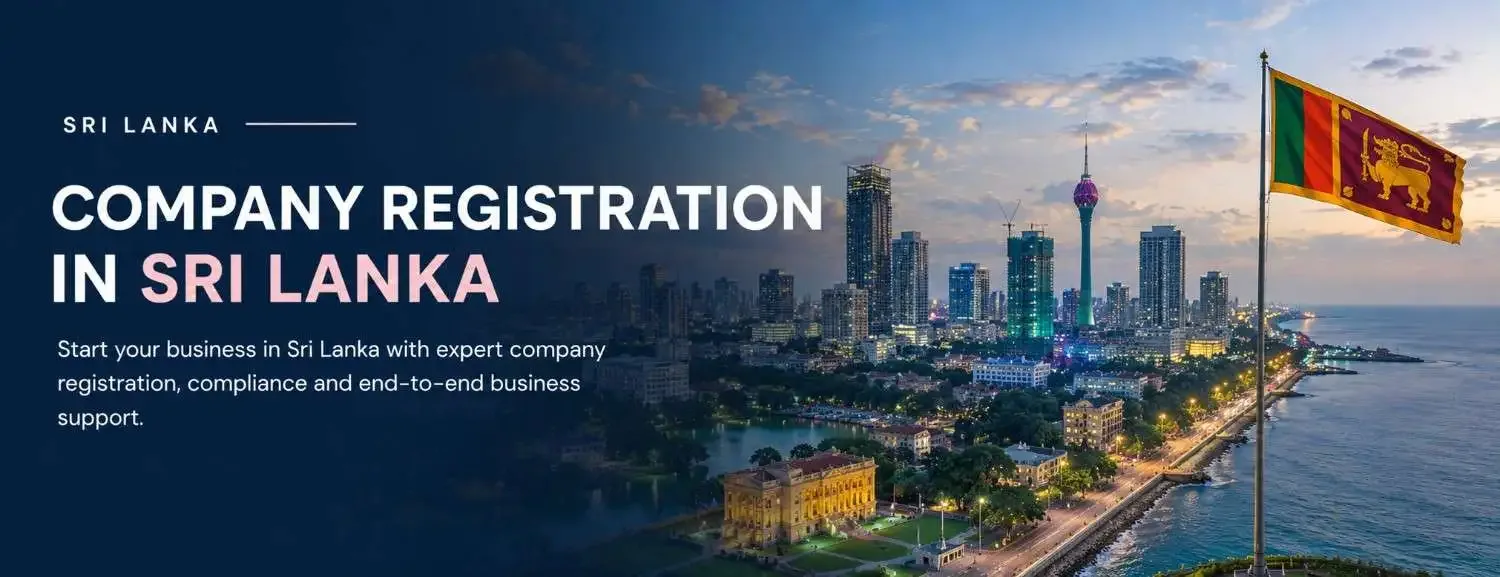
Company Registration in North Western Province (Kurunegala), Sri Lanka
If you are planning Company Registration in North Western Province, Kurunegala is an important commercial location to consider. However, the company itself is not incorporated through a separate provincial company registry. Incorporation is handled under Sri Lanka's national company-registration framework through the Department of the Registrar of Companies (DRC) and its eROC system.
For entrepreneurs, this means Company Registration in Sri Lanka and local business approvals are two connected but separate matters.
A company operating in Kurunegala may need national corporate registration as well as local-authority, environmental or sector-specific approvals depending on what it does and where its premises are located.
1. Kurunegala Company Registration: National vs Local Requirements
The legal incorporation of a company is handled nationally by the Registrar of Companies.
The local side becomes important after deciding where and how the business will operate.
A Kurunegala business may therefore have requirements relating to:
• Company incorporation through eROC.
• Registered office information.
• Tax registration.
• Local trade licences.
• Building or premises approvals.
• Environmental approvals.
• Industry-specific permits.
This distinction is important for anyone searching for business registration in Sri Lanka because registering the company does not automatically authorise every activity at its operating premises.
2. Which Business Structure Should You Choose?
Before Sri Lanka company registration, decide whether you need a company or an individual business structure.
Common options include:
• Private company limited by shares.
• Public company.
• Company limited by guarantee.
• Overseas company.
• Individual business activity, where appropriate.
A private limited company registration in Sri Lanka can be suitable for entrepreneurs who want a separate legal entity and limited liability.
An individual entrepreneur may instead consider individual business registration Sri Lanka, depending on the nature and scale of the activity.
The structure should be selected based on ownership, liability, investment plans and the business model.
3. Private Limited Company Registration in Sri Lanka
A private limited company is a common structure for commercial businesses.
The DRC currently lists the main incorporation requirements for private companies as including:
• Articles of Association / Company Profile.
• Form 01 – Application of Incorporation.
• Form 18 – Consent of Directors.
• Form 19 – Consent of Secretary.
The DRC also specifies that Form 01 and relevant incorporation forms should be generated through eROC.
For entrepreneurs specifically searching for Pvt Ltd company registration in Sri Lanka, this is the corporate route that should be evaluated first when limited liability and a separate company identity are required.
4. Online Business Registration in Sri Lanka
Sri Lanka's DRC provides eROC, its web-based single-window platform for business-registration facilities.
For eligible company incorporations, the process can be managed electronically by:
- Creating an eROC account.
- Checking the proposed name.
- Preparing incorporation information.
- Entering director and shareholder details.
- Generating the required forms.
- Submitting the application.
- Completing the applicable payment process.
- Completing additional compliance requirements after incorporation.
This makes online business registration in Sri Lanka particularly relevant for founders who want to coordinate incorporation electronically.
5. Register a Business in Sri Lanka: Company vs Individual
The phrase register a business in Sri Lanka can refer to different legal processes.
If the entrepreneur operates personally, the relevant registration may be an individual or local business registration.
If the entrepreneur wants a separate corporate entity, company incorporation through the DRC is the appropriate route.
This distinction prevents a common mistake: assuming that every business must first be incorporated as a private limited company.
The correct route depends on the business activity, ownership, liability requirements and intended scale.
6. Business Name Registration in Sri Lanka
A business name should be considered separately from the legal identity of a company.
If an entrepreneur operates under a business name rather than simply using their personal legal name, the applicable business name registration in Sri Lanka requirements should be checked with the relevant authority.
For a company, the corporate name is dealt with as part of the company-incorporation process.
Before finalising branding, founders should also check name availability and consider whether separate intellectual-property protection is appropriate.
7. Sri Lanka Business Registry and Corporate Information
The Sri Lanka Business Registry is primarily accessed through the Registrar of Companies' systems.
eROC and the DRC's corporate services provide mechanisms for company registration, company information and corporate filings.
Registered-company information can be relevant when:
• Checking an existing company.
• Verifying corporate details.
• Reviewing directors.
• Checking registration status.
• Conducting preliminary business due diligence.
This makes the registry useful not only when incorporating but also when evaluating potential suppliers, customers, investors or business partners.
8. Registered Office in Kurunegala
A company must maintain an appropriate registered office in Sri Lanka.
For a business based in Kurunegala, the registered-office arrangements should be established before incorporation.
The registered office should not be confused with every location from which the business operates.
Depending on the company, there may be separate:
• Registered office.
• Principal place of business.
• Factory or warehouse.
• Retail premises.
• Branch locations.
Accurate address information is important because corporate notices and official communications may be connected to the registered office.
9. Beneficial Ownership: Important 2026 Change
A significant recent development for Sri Lanka Company Registration is the mandatory beneficial-ownership process introduced in 2026.
The DRC states that, effective 30 March 2026, newly incorporated companies must submit beneficial-ownership information and authorised-person information after incorporation fees are paid.
The required submissions include BO1 and BO5. Failure to complete the requirement can result in the incorporation being resubmitted.
The DRC's BO system provides a separate workflow for incorporation-stage beneficial-ownership submissions.
This should now be treated as part of the practical incorporation process rather than an optional later step.
10. Kurunegala Local and Environmental Approvals
Company incorporation does not automatically authorise a business to operate from any premises.
For industrial projects in North Western Province, the Provincial Environmental Authority states that an Environmental Site Clearance Certificate should be obtained before establishing an industry or project where its requirements apply. It also states that construction should not begin before the required site clearance.
Applications can involve documents such as:
• Land ownership or lease evidence.
• Survey plan.
• Building plans.
• Project proposal.
• Business registration evidence.
• Local-authority approval where required.
• GPS coordinates.
• Sector-specific approvals.
The Province also administers Environmental Protection Licence requirements for applicable operating industries.
This is particularly relevant to manufacturing and industrial Kurunegala business registration projects.
11. Company Compliance After Registration
Once incorporated, the company must maintain its corporate and regulatory responsibilities.
These can include:
• Annual returns.
• Accounting records.
• Tax filings.
• Director and secretary updates.
• Registered-office updates.
• Beneficial-ownership submissions.
• Business licences.
• Environmental approvals where applicable.
The DRC currently lists Form 15 as the annual return for companies other than companies limited by guarantee and Form 20 for changes to directors or secretaries.
The beneficial-ownership system also provides a specific annual-return workflow for existing companies.
12. For Foreign Entrepreneurs in Kurunegala
Foreign entrepreneurs can explore establishing businesses in Sri Lanka, but the appropriate ownership and investment structure should be assessed before registration.
Foreign founders may need:
• Passport and identification documents.
• Corporate documents where a foreign company is involved.
• Shareholding information.
• Director information.
• Investment-related approvals where applicable.
• Banking and source-of-funds documentation.
The DRC's incorporation guidance specifically requires relevant company information and supporting documentation where foreign shareholding is involved.
13. Why Choose YKG Global?
YKG Global assists entrepreneurs and international investors with:
• Business Registration in Sri Lanka
• Company Registration in North Western Province.
• Kurunegala company formation.
• Private limited company incorporation.
• eROC registration coordination.
• Beneficial-ownership filing.
• Registered-office guidance.
• Tax-registration coordination.
• Local business licence support.
• Environmental-approval coordination where applicable.
• Ongoing corporate compliance.
Our approach connects the national incorporation process with the practical requirements of operating a business in Kurunegala.
Company Registration in North Western Province (Kurunegala), Sri Lanka is completed through Sri Lanka's national Registrar of Companies system rather than a separate provincial company registry.
For entrepreneurs searching for company registration in Sri Lanka, register business in Sri Lanka, or business registration Sri Lanka, the correct process depends first on whether the activity will be conducted personally or through a separate company.
For a corporate structure, private limited company registration in Sri Lanka can provide a formal legal entity, while local Kurunegala requirements may add trade, environmental or premises-related approvals.
The 2026 beneficial-ownership requirement is also an important part of the current incorporation workflow and should be completed alongside the company's registration process.
Call us or fill out our contact form to schedule a consultation today.
📧 Email: Rishi@ykgglobal.com
🌐 Website: www.ykgglobal.com
📱 Call/WhatsApp: +91 76782 77665
📍 Offices: Delhi | Mumbai | Dubai | Singapore