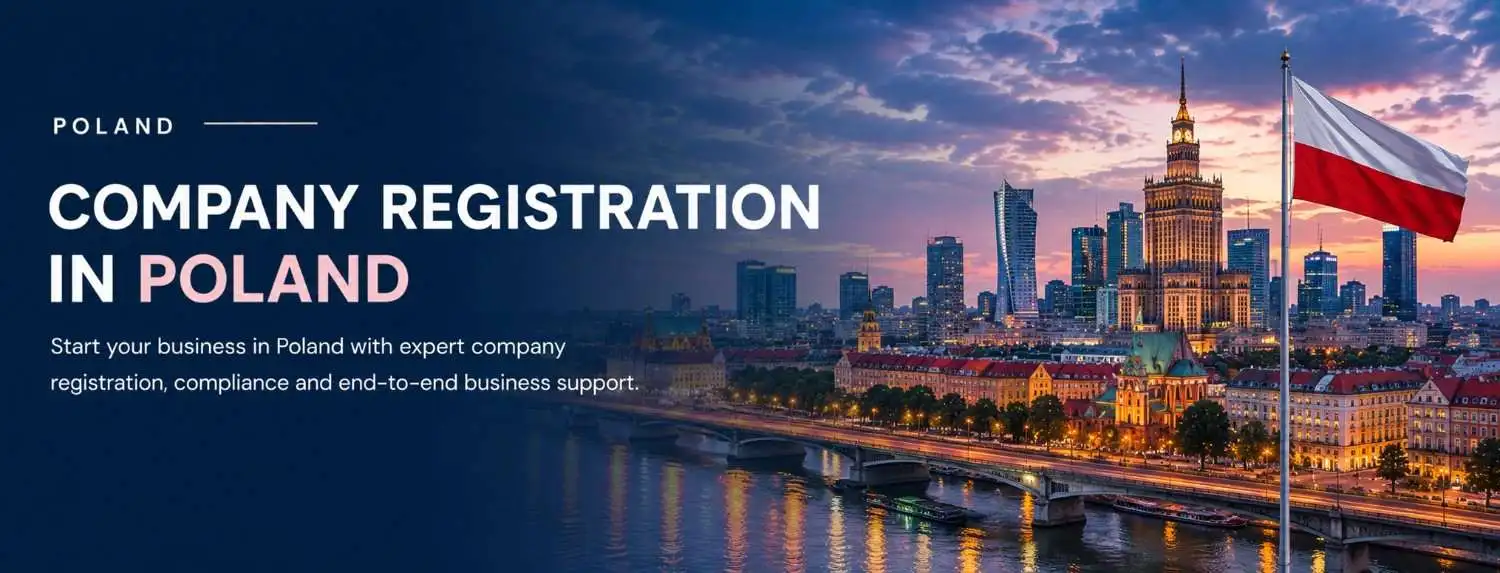
Company Registration in Pomeranian, Poland
Pomeranian Voivodeship, located along Poland's Baltic coast, is an attractive destination for entrepreneurs interested in European trade, manufacturing, maritime services and technology. Its major commercial centres, including Gdańsk, Gdynia and Słupsk, offer access to transport infrastructure, industrial networks and regional business opportunities.
For international entrepreneurs, company registration in poland provides an opportunity to establish a legal business presence within the European Union. However, incorporating in Pomeranian requires an understanding of Polish commercial law, company structures, registration procedures and post-incorporation responsibilities.
1. Pomeranian as a Business Destination
Unlike landlocked regions, Pomeranian has a strong connection with maritime trade and international logistics.
1.1 Regional commercial advantages
The region supports several important industries:
• Maritime logistics and port-related services.
• Shipbuilding and marine engineering.
• Manufacturing and industrial supply chains.
• Information technology and business services.
• Tourism and hospitality operations.
1.2 Business locations within Pomeranian
Gdańsk serves as a major administrative and commercial centre, while Gdynia is particularly relevant to maritime and logistics businesses. Słupsk and other regional locations may appeal to manufacturing and service businesses.
The appropriate registered office depends on the company's operational requirements, workforce and intended customers.
2. Legal Structures Available to Entrepreneurs
Before starting a business in poland as a foreigner, investors should evaluate which legal structure best supports their ownership, liability and management requirements.
2.1 Limited liability company (Sp. z o.o.)
The spółka z ograniczoną odpowiedzialnością is commonly selected for foreign-owned businesses.
Its principal characteristics include:
• Minimum share capital of PLN 5,000.
• Separate legal personality.
• Shareholder liability generally limited to unpaid share contributions.
• Management through an appointed management board.
• One or more shareholders, subject to statutory restrictions.
This structure can accommodate trading, consulting, manufacturing and other commercial activities.
2.2 Other business structures
Poland also recognises:
• Simple joint-stock companies (PSA), which may suit certain investment-oriented ventures.
• Joint-stock companies (S.A.) for businesses requiring a different capital and governance framework.
• General and limited partnerships, subject to applicable eligibility rules.
• Sole proprietorships for individuals legally entitled to conduct business in this form.
Foreign founders should assess eligibility before selecting a structure.
3. Registration Authorities and Legal Requirements
Entrepreneurs planning to register a company in poland must understand the country's registration system.
3.1 National Court Register (KRS)
The Krajowy Rejestr Sądowy is Poland's National Court Register. The poland company register records information about companies and other entities subject to registration.
Its records generally include:
• Registered company name and legal form.
• Registered office and address.
• Management board and representation details.
• KRS identification number.
• Relevant company particulars and statutory filings.
3.2 KRS, NIP and REGON
Three important identifiers are associated with Polish companies:
• KRS: Company registration number.
• NIP: Tax identification number.
• REGON: Statistical identification number.
Each serves a different administrative purpose.
3.3 Business activity classification
Companies must identify their intended activities using the applicable Polish Classification of Activities (PKD). The selected codes should accurately describe the proposed operations and reflect the classification rules in force.
4. Documents Required for Incorporation
The documentation depends on the company's structure, shareholders and chosen registration method.
4.1 Shareholder and director information
Typical requirements include:
• Identification details of shareholders and management board members.
• Shareholding structure and capital contributions.
• Addresses and relevant declarations.
• Details of authorised representatives.
• Corporate documents for foreign entity shareholders.
4.2 Company incorporation documents
A Polish limited liability company generally requires:
• Proposed company name.
• Registered office in Poland.
• Company agreement or articles.
• Description of business activities.
• Share capital and ownership details.
• Required management board declarations.
4.3 Foreign document formalities
Foreign corporate documents may require certified translations and, where applicable, apostille or legalisation.
The exact requirements depend on the issuing country, document type and registration procedure.
5. Incorporation Routes in Pomeranian
Entrepreneurs considering setting up a company in poland can use different incorporation procedures depending on their proposed company agreement.
5.1 S24 electronic incorporation
S24 allows eligible companies to register using standardised electronic agreement templates.
This route may suit founders who do not require extensive customised provisions.
5.2 Notarial incorporation and PRS
Where customised provisions are required, founders may execute the company agreement before a notary and submit the registration application electronically through the Court Registers Portal (PRS).
5.3 Step-by-step registration process
- Select the legal structure and proposed business activities.
- Choose a company name and arrange the registered office.
- Determine the shareholders, capital and management board.
- Prepare the company agreement and supporting documents.
- Select the appropriate incorporation route.
- Submit the KRS application and applicable fees.
- Obtain registration confirmation and verify the company's particulars.
- Complete relevant tax, banking and administrative formalities.
The registration timeline depends on the procedure, completeness of documents and processing by the relevant authorities.
6. Post-Incorporation Responsibilities
Completing company formation in poland creates continuing legal and administrative responsibilities.
6.1 Corporate taxation and VAT
Polish companies generally need to assess their corporate income tax obligations and determine whether VAT registration is required.
Applicable requirements depend on business activities, transaction types and statutory thresholds.
6.2 Accounting and financial reporting
A Polish limited liability company must maintain accounting records and prepare financial statements under the applicable accounting legislation.
Responsibilities may include:
• Maintaining transaction records and supporting documentation.
• Preparing annual financial statements.
• Filing financial statements electronically.
• Arranging statutory audits where required.
6.3 Beneficial ownership reporting
Entities covered by the relevant rules must report beneficial ownership information to the Central Register of Beneficial Owners (CRBR).
The information should be updated following reportable ownership or control changes.
6.4 Employment and operational compliance
Businesses employing staff may need to register with the Social Insurance Institution (ZUS) and comply with payroll, employment and social security requirements.
Certain activities may also require permits, licences or sector-specific approvals.
7. Practical Considerations for Foreign-Owned Businesses
Foreign investors should assess the company's operational requirements alongside its incorporation arrangements.
7.1 Banking and capital contributions
Corporate bank account opening may involve verification of shareholders, beneficial owners, management representatives and business activities.
Banks independently determine their documentation and due diligence requirements.
7.2 Cross-border business operations
Companies trading internationally should assess VAT, customs, transfer pricing and other relevant cross-border requirements.
The poland business registry entry confirms registered company information but does not replace any industry-specific licences or tax registrations required for actual operations.
8. How YKG Global Helps You
YKG Global supports entrepreneurs and international businesses planning company establishment and expansion into Poland.
Our assistance may include:
• Reviewing the proposed ownership and legal structure.
• Coordinating incorporation documentation.
• Assisting with company registration requirements.
• Supporting tax and statutory compliance coordination.
• Explaining post-incorporation responsibilities.
• Coordinating with relevant Polish professionals for local procedures.
Our objective is to help businesses establish a compliant corporate structure and prepare for continuing operations in Pomeranian.
Call us or fill out our contact form to schedule a consultation today.
📧 Email: Rishi@ykgglobal.com
🌐 Website: www.ykgglobal.com
📱 Call/WhatsApp: +91 76782 77665
📍 Offices: Delhi | Mumbai | Dubai | Singapore