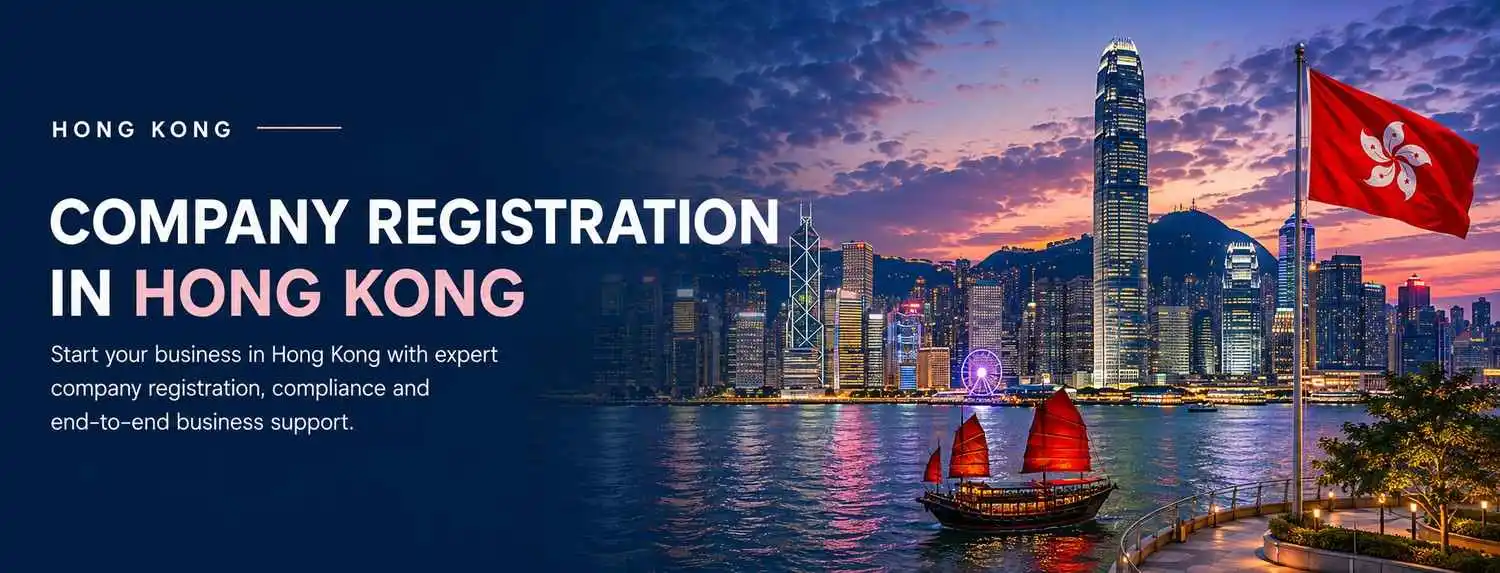
Hong Kong Business Registration
Hong Kong is an established international business centre for entrepreneurs, trading companies, consultants, technology businesses and multinational groups. Its commercial infrastructure and international connections make it a potential base for businesses serving customers across Asia and other global markets.
However, Hong Kong business registration involves more than obtaining a certificate. Businesses must identify the appropriate legal structure, complete the relevant registration process and understand their tax, accounting and licensing responsibilities.
The registration route depends on whether you intend to operate as a sole proprietor, partnership, local limited company or overseas company with a place of business in Hong Kong. The Inland Revenue Department (IRD) administers business registration, while the Companies Registry handles the incorporation of local companies and registration of non-Hong Kong companies.
1. What Is Business Registration in Hong Kong?
Business registration in Hong Kong is the process of registering a business with the IRD under the Business Registration Ordinance. The resulting Business Registration Certificate records key details about the business and its registration.
Company incorporation is a separate legal process. It establishes a company as a legal entity under the Companies Ordinance.
For eligible local companies, Hong Kong operates a one-stop service that combines the incorporation application with the business registration application. Once approved, the Companies Registry generally issues the Certificate of Incorporation and Business Registration Certificate together.
Sole proprietorships, partnerships and certain other businesses that are not incorporated as local companies generally apply for business registration directly through the IRD.
Importantly, a Business Registration Certificate is not itself a licence to conduct every type of business. Additional permissions may be required for regulated activities.
2. Choose the Right Business Structure
Before you register a business in Hong Kong, select a structure that reflects your ownership, liability and commercial objectives.
1. Sole Proprietorship
A sole proprietorship is owned and operated by one individual. It may suit a small business or independent professional, but the owner is generally personally responsible for the business's liabilities.
The business is not a separate legal entity from its proprietor.
2. Partnership
A partnership involves two or more partners carrying on a business together. The rights, responsibilities and liability of the partners depend on the partnership structure and applicable law.
A written partnership agreement can help clarify contributions, profit sharing, decision-making and exit arrangements.
3. Private Company Limited by Shares
A private limited company is a separate legal entity and a common structure for commercial businesses. Shareholders generally have limited liability, subject to applicable legal exceptions.
It may suit trading companies, consulting firms, technology businesses, startups and overseas groups establishing a Hong Kong subsidiary.
4. Registered Non-Hong Kong Company
An overseas company that establishes a place of business in Hong Kong may need to register as a non-Hong Kong company. This is different from incorporating a new Hong Kong subsidiary because the overseas company remains the legal entity.
The appropriate route depends on the intended business activities, ownership arrangements and risk allocation.
3. How to Complete Hong Kong Business Registration
The process depends on the selected structure.
Step 1: Define Your Business Activities
Identify what the business will do, where it will operate and whether it requires a specific licence. The activity may affect the documents required and the registrations that must be completed.
If the business will trade internationally, consider its customers, suppliers, payment flows and contractual arrangements when selecting the structure.
Step 2: Choose the Business Name
Select a name that complies with the relevant naming requirements. For a company, the Companies Registry assesses whether the proposed name can be registered.
For an unincorporated business, check the applicable business registration requirements. A business name does not automatically provide trademark protection, so consider a separate trademark review where appropriate.
Step 3: Prepare the Registration Documents
For a local company limited by shares, the usual incorporation documents include:
• Form NNC1, the incorporation form for a company limited by shares.
• A copy of the Articles of Association.
• Form IRBR1, the notice to the Business Registration Office.
Additional information may be required depending on the entity type and circumstances.
For a sole proprietorship or partnership, the relevant IRD business registration application and identity documentation must be prepared. Applicants should use the current forms and instructions applicable to their structure.
Step 4: Submit the Application
Local company incorporation and business registration applications are generally submitted together through the Companies Registry's electronic services or by the permitted paper filing route.
For a sole proprietorship, partnership or certain other unincorporated business, apply through the IRD's business registration process.
Applications are subject to document checks, applicable fees and any additional requirements. Straightforward electronic applications for a private company limited by shares can normally be processed within approximately one hour, provided the proposed name and submitted information meet the system's requirements.
Step 5: Receive and Retain the Certificate
Once approved, retain the Business Registration Certificate and any relevant incorporation documents. Businesses must also comply with the applicable requirements for displaying or producing the certificate.
Keep the certificate's expiry and renewal information under review, and update the IRD when relevant business particulars change.
4. Hong Kong Business Registration for Foreigners
Hong Kong business registration for foreigners is available to eligible overseas entrepreneurs and businesses, subject to the applicable requirements.
Foreign founders may consider incorporating a local company or registering an existing overseas company if it establishes a place of business in Hong Kong. The choice depends on the intended operations and whether a separate local legal entity is required.
Foreign applicants should prepare for:
• Identity and address verification.
• Details of the business owners and authorised representatives.
• Corporate documents if an overseas company is involved.
• A suitable Hong Kong registered office for a local company.
• Company secretary arrangements where a local company is incorporated.
• Banking due diligence and source-of-funds checks.
• Any activity-specific licences or regulatory approvals.
A foreign shareholder does not generally need to be a Hong Kong resident merely to own shares in a local company. However, local company secretary and registered office requirements must be met.
Business registration does not automatically provide immigration status or permission to work in Hong Kong. Founders intending to relocate should assess the relevant immigration requirements separately.
5. Tax Obligations After Registration
After completing Hong Kong company registration or registering an unincorporated business, establish the appropriate accounting and tax procedures.
1. Profits Tax
Businesses must assess whether profits are chargeable to Hong Kong profits tax under the applicable rules. Hong Kong generally follows a territorial basis of taxation, but the treatment of particular profits depends on the facts and relevant law.
2. Accounting Records
Maintain records of income, expenses, assets, liabilities and supporting transactions. The records should be sufficient to explain the business's financial position and support its tax reporting.
3. Annual Filings and Renewals
Companies must meet their applicable Companies Registry filing requirements, while businesses must keep their business registration details current and renew certificates as required.
4. Employer Obligations
Businesses employing staff should assess salaries tax reporting, employer returns and other applicable employment requirements.
Businesses engaged in international trade should also review cross-border tax exposure, related-party transactions and reporting responsibilities in the jurisdictions where they operate.
6. Licences and Ongoing Compliance
A Business Registration Certificate does not automatically authorise every commercial activity. Depending on the business, additional licences or approvals may be required.
Before commencing operations, check whether the business needs:
• Sector-specific licences or regulatory approval.
• Import or export registrations for relevant goods or activities.
• Food, health or premises-related approvals.
• Employment-related registrations.
• Other permits required by the relevant government department.
For a local limited company, ongoing responsibilities may include maintaining statutory records, filing annual returns, keeping company particulars updated and maintaining the required registers. Companies generally also need to prepare financial statements and arrange audits unless an applicable exemption applies.
Common Mistakes to Avoid
Businesses planning Hong Kong business setup should avoid:
• Confusing business registration with company incorporation.
• Choosing a structure without considering liability and ownership.
• Submitting incomplete or inconsistent registration information.
• Assuming a Business Registration Certificate replaces industry licences.
• Overlooking renewal dates and changes that must be reported.
• Failing to establish accounting records and tax procedures.
Addressing these issues early helps businesses establish a more reliable compliance process.
How YKG Global Helps You
YKG Global supports entrepreneurs and international businesses planning to establish or expand their presence in Hong Kong.
Our assistance can include:
• Guidance on selecting a suitable business structure.
• Support with incorporation and business registration documentation.
• Guidance on company secretary and registered office requirements.
• Assistance identifying tax, accounting and filing obligations.
• Support with foreign ownership and cross-border compliance considerations.
• Ongoing corporate compliance planning.
The appropriate scope depends on the business structure, ownership and intended activities. Registration, banking and licensing remain subject to the relevant authorities and service providers.
Call us or fill out our contact form to schedule a consultation today.
📧 Email: Rishi@ykgglobal.com
🌐 Website: www.ykgglobal.com
📱 Call/WhatsApp: +91 76782 77665
📍 Offices: Delhi | Mumbai | Dubai | Singapore