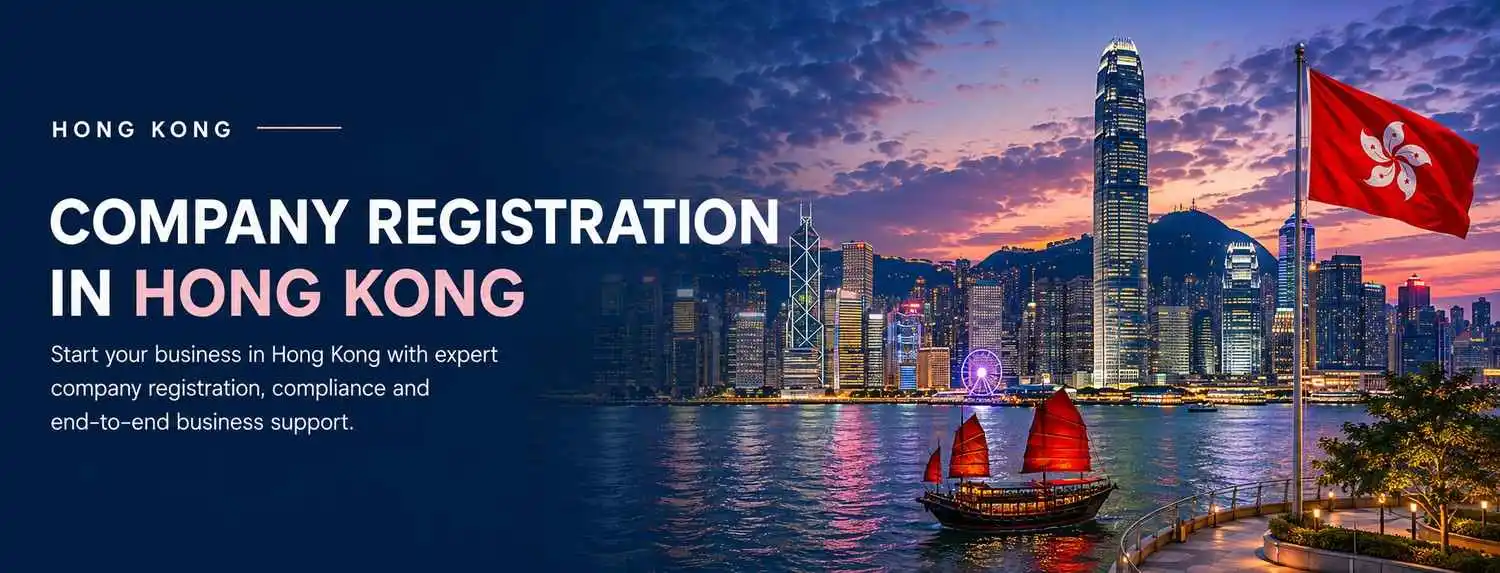
Hong Kong Company Formation
Hong Kong is an established international business centre connecting mainland China, Asia-Pacific markets and global trading networks. Its commercial infrastructure, international banking environment and common-law business framework make it an option for entrepreneurs, trading businesses, consultants and international groups planning cross-border operations.
Hong Kong company formation involves choosing an appropriate legal structure, preparing incorporation documents and registering with the Companies Registry. For most commercial ventures, a private company limited by shares is a practical starting point because it is a separate legal entity and generally limits shareholders’ liability to the unpaid amount on their shares.
However, incorporation is only the beginning. Founders must also arrange a registered office, appoint a company secretary, complete business registration and establish appropriate accounting and tax procedures. The right structure depends on the intended activities, ownership, customers and long-term expansion plans.
Why Consider Hong Kong for Your Business?
Hong Kong may suit companies that need an international base for trade, professional services, sourcing or regional business development.
• International trading opportunities: Its commercial ecosystem supports businesses involved in sourcing, distribution, import and export.
• Regional connectivity: Businesses can develop relationships across Asia while serving customers in other international markets.
• Established professional services: Legal, accounting, corporate secretarial and banking services are available to support business operations.
• Foreign ownership flexibility: Non-Hong Kong residents may incorporate local companies, subject to applicable requirements and restrictions.
• Separate legal identity: A limited company can enter contracts, own assets and conduct business in its own name.
Hong Kong is not automatically the right location for every business. Founders should assess where their customers, employees, management and actual commercial activities will be based before selecting the jurisdiction.
Choose the Right Company Structure
Before starting company registration in Hong Kong, consider the structure that best matches your business objectives.
Private Company Limited by Shares
This is a common structure for commercial businesses. It has shareholders and directors, maintains its own legal identity and can be wholly owned by foreign shareholders, subject to applicable laws.
It may suit trading companies, consulting firms, technology businesses, startups and subsidiaries of overseas groups.
Company Limited by Guarantee
This structure is commonly used by qualifying non-profit organisations, associations and similar bodies. It does not have share capital in the same way as a company limited by shares. Members undertake to contribute an agreed amount if the company is wound up, subject to its constitution and applicable law.
Registered Non-Hong Kong Company
An overseas company that establishes a place of business in Hong Kong may need to register as a non-Hong Kong company rather than incorporate a new local subsidiary. This structure is different because the overseas company remains the legal entity.
The choice depends on whether the business needs a separate Hong Kong company or intends to operate through its existing foreign entity.
How to Set Up a Company in Hong Kong
The process to set up a company in Hong Kong typically involves the following steps.
Step 1: Choose and Check the Company Name
Select a proposed company name and check it against the Companies Registry’s records and naming requirements. A name that conflicts with an existing registered name or fails to meet the applicable rules may be rejected.
Consider checking trademarks separately if the brand will be used internationally. Approval of a company name does not automatically establish trademark rights.
Step 2: Decide Ownership and Share Capital
Determine the shareholders, ownership percentages and initial shareholdings. A company limited by shares must have at least one founder member.
Hong Kong law does not prescribe a general minimum paid-up share capital for incorporation. Nevertheless, the initial capital structure should reflect the business’s operational needs and any requirements relevant to its sector, investors or counterparties.
Step 3: Appoint a Director and Company Secretary
A private company must have at least one director who is a natural person. The director does not generally need to be a Hong Kong resident.
Every local company must appoint a company secretary. If the secretary is an individual, they must ordinarily reside in Hong Kong. If the secretary is a corporate body, it must have a registered office or place of business in Hong Kong. The sole director cannot also act as the company secretary.
Step 4: Arrange a Registered Office
The company must maintain a registered office in Hong Kong. This is the official address for statutory notices and formal communications.
The registered office should meet the applicable legal requirements and be available for official correspondence. Overseas founders should arrange a suitable local address before submitting the application.
Step 5: Prepare and File Incorporation Documents
For a company limited by shares, the application generally includes:
• Form NNC1, the incorporation form for a company limited by shares.
• A copy of the company’s Articles of Association.
• Form IRBR1, the notice to the Business Registration Office.
Applications can be submitted electronically through the Companies Registry’s e-Services Portal or in hard copy. Straightforward electronic applications may be processed quickly, but the timing depends on the application, name and whether further review is required.
Step 6: Complete Business Registration
Hong Kong operates a one-stop arrangement under which the incorporation application includes a business registration application. The company must ensure that the appropriate Business Registration Certificate is obtained and that the business meets its ongoing registration obligations.
After registration, retain the Certificate of Incorporation, Business Registration Certificate, company documents and ownership records for banking, contracts and compliance.
Hong Kong Company Formation for Foreigners
Hong Kong company formation for foreigners is possible without requiring every shareholder or director to be a Hong Kong resident. Overseas entrepreneurs commonly consider a local limited company when establishing an international trading operation, a regional subsidiary or a business serving overseas customers.
Foreign founders should prepare for:
• Identity and address verification for shareholders and directors.
• Ownership documentation where a foreign company will be a shareholder.
• Appointment of a compliant local company secretary.
• A Hong Kong registered office.
• Banking due diligence, including information about the source of funds and intended transactions.
• Review of any sector-specific licences or approvals.
Incorporation does not guarantee that a bank will open an account. Banks make independent decisions based on their risk policies, customer verification and the proposed business model.
A Hong Kong company also does not automatically grant a visa or permission to live or work in Hong Kong. Immigration matters should be evaluated separately.
Taxation and Ongoing Compliance
Hong Kong business registration does not remove the need to understand tax and reporting responsibilities. A company should establish appropriate bookkeeping procedures and maintain records supporting its income, expenses, assets and transactions.
Important considerations include:
• Profits tax: Hong Kong generally applies a territorial basis of taxation. Whether particular profits are chargeable depends on the applicable rules and the circumstances of the business.
• Accounting records: Companies must maintain accounting records sufficient to explain their transactions and financial position.
• Annual filings: Companies must meet applicable annual return and company information filing requirements.
• Financial statements and audits: Companies generally need to prepare financial statements and arrange an audit unless a specific exemption applies.
• Business registration renewal: Keep the Business Registration Certificate current and meet the applicable renewal requirements.
• Significant Controllers Register: Most Hong Kong companies must identify and maintain required information about significant controllers, subject to the applicable rules.
• Employer obligations: Businesses hiring staff should assess payroll, employment and relevant tax reporting requirements.
International groups should also consider related-party transactions, cross-border payments and potential tax obligations in the countries where their management and business activities take place.
How YKG Global Helps You
YKG Global assists entrepreneurs and international businesses planning to establish or expand their presence in Hong Kong.
Our support can include:
• Guidance on selecting a suitable company structure.
• Assistance coordinating incorporation documents and registration requirements.
• Guidance on company secretary and registered office arrangements.
• Support with identifying accounting, tax and annual filing obligations.
• Assistance with cross-border tax and international compliance considerations.
• Ongoing corporate compliance planning based on the company’s activities.
Every business has different ownership and operational requirements. Our approach is to help clients understand the relevant steps and prepare for the obligations that follow incorporation.
Call us or fill out our contact form to schedule a consultation today.
📧 Email: Rishi@ykgglobal.com
🌐 Website: www.ykgglobal.com
📱 Call/WhatsApp: +91 76782 77665
📍 Offices: Delhi | Mumbai | Dubai | Singapore