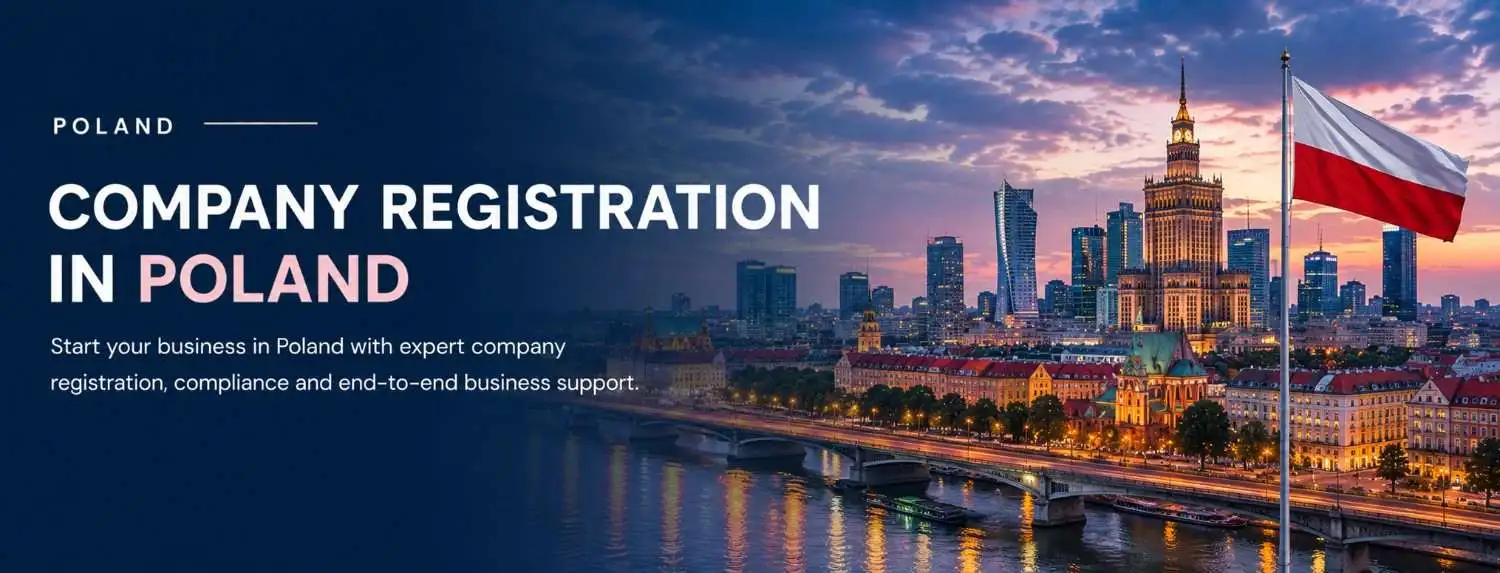
How to Set Up a Company in Poland
Poland can be a strategic base for businesses looking to enter the European Union, establish manufacturing operations, develop distribution networks or serve European customers. Its domestic market and position within Central Europe make it relevant to companies across technology, logistics, trading, engineering and professional services.
For international entrepreneurs, however, the first decision is not simply where to register. It is whether to operate as an individual entrepreneur, establish a Polish limited liability company, or create a local presence for an existing overseas business.
Understanding the legal structure, registration route and responsibilities that follow is essential when planning setting up a company in poland. YKG Global helps international businesses evaluate these decisions and coordinate their Polish market-entry requirements.
Is Poland the Right Base for Your European Operations?
Poland may be worth considering if your business needs a European operating base rather than simply a registered address. The right approach depends on the customers you intend to serve, your supply chain and whether you plan to employ people or maintain physical operations locally.
Potential advantages include:
• Access to the EU market: A Polish entity can support commercial activity within Poland and, where applicable, cross-border business with other European markets. Other countries' tax, customs and regulatory rules may still apply.
• Manufacturing and distribution opportunities: Businesses can assess Poland for production, warehousing, logistics and regional distribution, depending on their industry and location requirements.
• A range of legal structures: Entrepreneurs can choose among several forms of business, each with different ownership, governance and liability implications.
• An established registration framework: The country uses formal business registers and defined registration procedures, allowing companies and counterparties to verify key corporate information.
For a business evaluating starting a business in poland as a foreigner, these advantages should be weighed against local hiring, tax, accounting, licensing and operational requirements.
Choose Your Legal Structure Before Registering
The appropriate structure determines which register you use, what documents you prepare and how the business is governed.
1. Limited Liability Company (spółka z o.o.)
The Polish limited liability company, known as a spółka z ograniczoną odpowiedzialnością or sp. z o.o., is a common choice for foreign-owned businesses.
It is a separate legal entity and generally limits shareholders' liability for company obligations, although directors and shareholders may still face liability in particular circumstances under applicable law.
A standard sp. z o.o. requires minimum share capital of PLN 5,000. It can be suitable for trading, consulting, technology, manufacturing, distribution and other commercial activities.
This structure may be appropriate when the business needs its own contracts, employees, assets or commercial relationships in Poland.
2. Sole Proprietorship
A sole proprietorship is generally simpler to administer than a company, but the owner bears personal responsibility for business obligations.
Eligibility is particularly important for non-EU founders. Citizens of certain countries and people holding qualifying residence statuses may establish a sole proprietorship under rules comparable to those applicable to Polish citizens. Other foreign nationals may face restrictions.
Foreign entrepreneurs should confirm their eligibility before choosing this structure.
3. Branch of a Foreign Company
An overseas business may consider establishing a branch in Poland when it wants to extend its existing operations rather than create a separate subsidiary. Branch registration and permitted activities are subject to applicable requirements.
The decision should reflect how the parent company intends to manage liability, contracts, tax reporting and the Polish operation.
How Company Registration Works in Poland
The registration route depends on the chosen structure. A company such as a sp. z o.o. is entered in the National Court Register, while eligible individual entrepreneurs register through the Central Register and Information on Economic Activity.
When planning company registration in poland, prepare for the following stages.
1. Define the Business Activity
Clarify what the company will do in Poland. This may involve trading, consulting, manufacturing, importing, software services or another activity.
Select the relevant Polish Classification of Activities (PKD) codes and identify whether any licences, permits or sector-specific approvals are needed.
2. Choose the Company Name and Registered Office
Select a name that meets Polish legal requirements and does not conflict with applicable naming rules. Determine the registered office address and ensure the business has an appropriate legal basis for using it.
The registered office is a formal company detail. It does not automatically establish that the company has operational premises, employees or the necessary licences.
3. Prepare the Incorporation Documents
For a sp. z o.o., the documents and process depend on whether the company is formed using the standard online S24 procedure or through a notarial deed.
Preparation may involve the company's articles, shareholder details, share capital, management board appointments and required declarations. Where a foreign company is a shareholder, supporting parent-company documents may also be required.
Foreign documents may need additional formalities, certified translations or other verification depending on their origin and intended use.
4. Submit the Registration Application
Eligible companies can use the S24 electronic system when the standard model documents are suitable. Other cases may require incorporation through a notary and filing through the Court Registers Portal (PRS).
The company becomes a registered legal entity upon entry in the National Court Register, subject to the applicable legal process.
The poland company register is not a single registry for every type of business. The National Court Register (KRS) covers companies and other specified entities, while CEIDG records eligible sole proprietors.
5. Complete Tax and Administrative Formalities
Following registration, review the company's tax identification details, statistical registration information, supplementary data filings, VAT position and social security obligations where relevant.
Registration in KRS does not mean every tax registration, licence or operational requirement has automatically been completed.
Understanding the Polish Commercial Register
The polish commercial register generally refers to the register of entrepreneurs maintained within the National Court Register. It provides important information about registered companies, including their legal status and recorded corporate details.
For a typical limited liability company, registration and administration may involve:
• KRS: The National Court Register, where the company is registered.
• NIP: The tax identification number used for tax administration.
• REGON: The statistical identification number assigned through the relevant statistical registration process.
• VAT registration: Required where applicable under Polish VAT rules; it is not automatic for every business in every circumstance.
Businesses should also plan their accounting method, tax filings, registered address, company records and any required disclosures of beneficial ownership.
What Foreign Founders Should Check Before Launch
A successful company formation in poland plan should address more than incorporation documents. International founders should consider these practical questions before committing to a structure.
• Ownership and management: Who will hold shares, appoint directors and make decisions? Check identification, representation and document-signing requirements.
• Banking and payments: Prepare a clear explanation of the business model, ownership and expected transactions. Bank account approval remains subject to the bank's own due diligence.
• Tax and cross-border transactions: Review Polish corporate tax, VAT and transactions with related overseas entities. Indian or other foreign parent companies may have additional obligations in their home jurisdictions.
• Employment and social security: If the business plans to hire staff, assess employment contracts, payroll, social security and relevant workplace requirements.
• Immigration: Ownership of a Polish company does not automatically grant a foreign founder the right to reside or work in Poland. Immigration status must be reviewed separately.
Planning these issues early can help reduce delays after incorporation and provide a clearer route from registration to commercial operations.
How YKG Global Helps You
YKG Global supports entrepreneurs and international companies planning a Polish market entry. Our assistance focuses on helping clients understand the structure and requirements relevant to their business before coordinating the registration process.
Our support can include:
• Reviewing the suitability of a Polish limited liability company, branch or other eligible structure.
• Coordinating incorporation documentation and registration requirements with appropriate local professionals.
• Helping identify tax registration, accounting and statutory filing obligations.
• Supporting cross-border structuring and coordination between the Polish entity and its overseas parent.
• Helping businesses plan corporate compliance and ongoing administrative responsibilities.
If you intend to register a company in poland, YKG Global can help you approach the process with a structured view of the decisions and requirements involved.
Call us or fill out our contact form to schedule a consultation today.
📧 Email: Rishi@ykgglobal.com
🌐 Website: www.ykgglobal.com
📱 Call/WhatsApp: +91 76782 77665
📍 Offices: Delhi | Mumbai | Dubai | Singapore