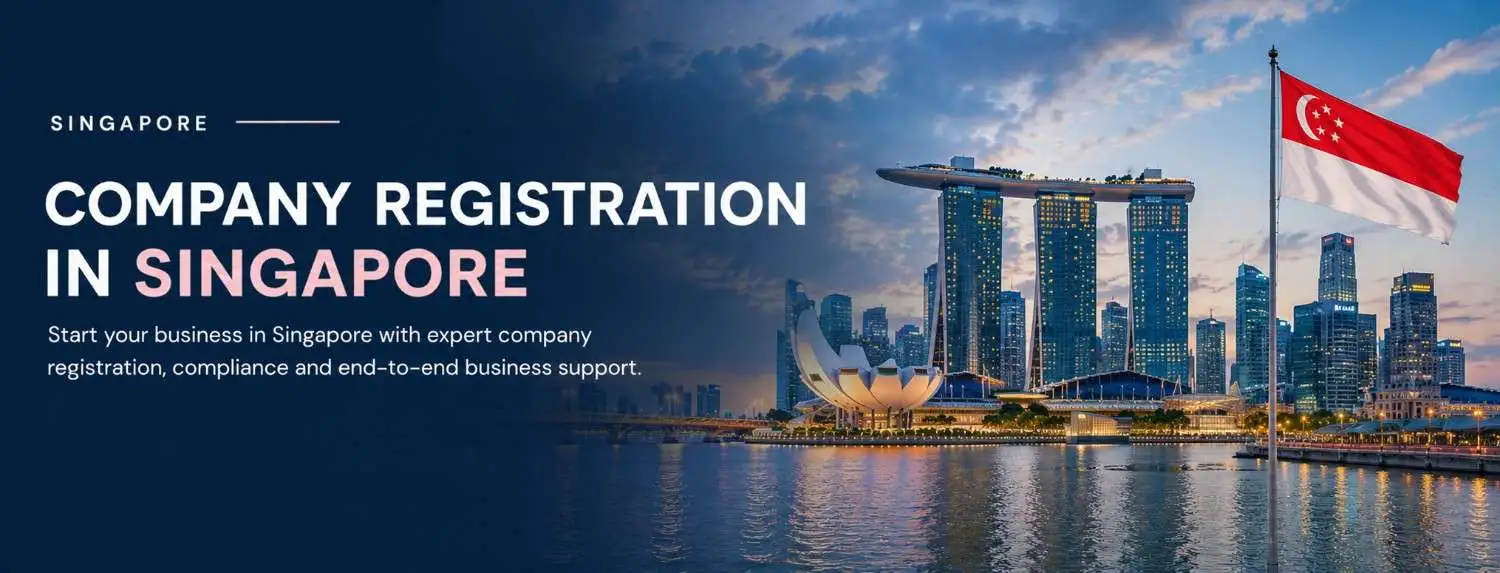
Set Up Your Singapore Company with Full Foreign Ownership
Singapore is an established business destination for international entrepreneurs seeking access to Asian markets, a reliable corporate framework and a location for regional operations. Its connectivity, business infrastructure and regulatory environment make it attractive to companies in technology, trading, consulting, logistics, manufacturing and professional services.
One important advantage is that 100% foreign ownership Singapore is generally permitted for ordinary private limited companies in most sectors. Foreign entrepreneurs can typically own all the shares without appointing a local shareholder. However, ownership and management requirements are different: a Singapore company must have at least one director who ordinarily resides in Singapore.
YKG Global assists international founders and established businesses with Singapore company registration, helping them understand incorporation requirements, documentation, tax registrations and continuing compliance obligations.
Whether you are launching a new venture or establishing a Singapore subsidiary for an existing overseas business, the right structure should reflect your ownership plans, business activities and long-term expansion objectives.
Why Choose Singapore for Business Expansion?
Singapore can offer international businesses several practical advantages:
• International connectivity: Its location and transport infrastructure support regional trade and cross-border operations.
• Foreign ownership flexibility: Many businesses can establish a locally incorporated company with entirely foreign-owned shares.
• Established regulatory framework: The Accounting and Corporate Regulatory Authority (ACRA) administers company registration and corporate filings.
• Regional business presence: A Singapore entity can support relationships with customers, suppliers and partners across Asia-Pacific.
• Corporate tax framework: Singapore's headline corporate income tax rate is 17%, subject to applicable rules, exemptions and incentives.
These advantages do not remove the need to assess industry-specific restrictions, tax residency, banking eligibility and the company's actual business activities.
Step 1: Choose the Appropriate Company Structure
For many international entrepreneurs, a private company limited by shares, commonly known as a Pte. Ltd., is a suitable structure to consider.
A Singapore private limited company is a separate legal entity from its shareholders. It can enter contracts, hold assets and conduct business in its own name, while shareholders generally benefit from limited liability.
This structure may suit:
• Foreign founders launching a new Singapore business.
• Indian companies establishing an overseas subsidiary.
• International trading and consulting businesses.
• Technology businesses developing regional operations.
• Entrepreneurs planning to build a locally incorporated business for long-term growth.
Existing overseas businesses may also consider registering a branch or establishing a representative office where eligible. These arrangements differ from a subsidiary: a branch is an extension of the foreign parent, while a subsidiary is a separate Singapore company.
Step 2: Understand the 100% Foreign Ownership Rule
Foreign shareholders can generally own 100% of a Singapore private limited company in most sectors. A Singapore citizen or permanent resident is not generally required to hold shares solely to satisfy local ownership rules.
However, this does not mean every part of the incorporation process can be completed without local arrangements.
Your company must still meet the applicable requirements for directors, a registered office and a company secretary. Certain regulated activities may have additional licensing or ownership restrictions.
Before proceeding with company incorporation in Singapore, confirm whether your proposed business activities fall under a regulated sector and whether additional approvals are needed.
Step 3: Appoint a Singapore-Resident Director
Every Singapore company must have at least one director who ordinarily resides in Singapore and satisfies the applicable eligibility requirements.
A foreign founder can be a shareholder and may also serve as a director if eligible, but living overseas does not remove the requirement for a locally resident director.
If the founders do not have an eligible person available in Singapore, they may explore a suitable director arrangement through an appropriately engaged corporate service provider. Any proposed director must understand and fulfil their legal duties; the role should not be treated as a purely nominal formality.
This requirement is one of the most important matters to resolve before beginning Singapore company setup.
Step 4: Reserve the Company Name and Prepare Documents
The proposed company name must be submitted for approval through ACRA's Bizfile system. Names that are identical to existing names, restricted or referred to another authority may require further review or may not be approved.
The incorporation preparation process typically involves:
• Approved company name and proposed business activities.
• Details of shareholders and shareholdings.
• Director information and required consents.
• A Singapore registered office address.
• Details of the company secretary arrangements.
• Share capital information and the company's constitution.
• Supporting identity and corporate documents, as applicable.
Foreign corporate shareholders may need to provide additional documentation to establish the identity and authority of the overseas entity and its representatives.
Step 5: Complete ACRA Registration
Foreigners must engage a corporate service provider (CSP) to reserve a name and register a business in Singapore. The registration process is completed through ACRA's Bizfile system.
The usual process involves confirming the company structure, obtaining name approval, preparing the required details, securing the necessary consents and submitting the incorporation application.
Once the application is approved, ACRA issues the company's registration details, including its Unique Entity Number (UEN).
The time required depends on the application, name approval and whether additional review or documentation is needed. Certain names or activities may be referred to other authorities, so incorporation timelines should not be guaranteed before the details are reviewed.
Step 6: Appoint a Company Secretary and Organise Records
A Singapore company must appoint a qualified company secretary within six months of incorporation. The secretary must meet the applicable local residency requirements and cannot be the same person as the sole director.
The company must also maintain its statutory records and comply with applicable filing requirements. Depending on its circumstances, it may need to appoint an auditor within three months of incorporation unless an exemption applies.
Businesses should establish procedures for recording shareholder decisions, maintaining director information, updating company particulars and preparing annual filings.
These arrangements support good governance and help the company meet its legal responsibilities after incorporation.
Step 7: Understand Tax and Banking Requirements
Singapore company registration does not automatically complete every tax or operational requirement.
Depending on the business, you may need to address:
• Corporate income tax: Singapore's headline corporate income tax rate is 17%, with applicable exemptions and incentives subject to eligibility.
• Goods and Services Tax (GST): Registration may be required when the relevant taxable turnover conditions are met; voluntary registration may also be possible in eligible cases.
• Accounting and annual filings: Companies must maintain appropriate records and submit applicable annual returns and financial statements.
• Corporate banking: Banks conduct their own onboarding, identity verification and business-risk assessments. Incorporation does not guarantee account approval.
• Licences and permits: Regulated activities may require separate approvals before operations commence.
Indian-owned companies should also assess cross-border tax, overseas investment and reporting considerations relevant to their ownership and transactions.
How YKG Global Helps You
YKG Global supports international entrepreneurs and businesses planning to establish a Singapore presence. Our assistance can include evaluating the proposed structure, coordinating incorporation documentation, identifying resident director and company secretary requirements, and outlining tax registration and ongoing compliance considerations.
For Indian businesses expanding overseas, we can also help identify cross-border corporate and tax questions that should be reviewed before the Singapore entity begins trading.
Our aim is to help you understand the registration pathway and prepare for the responsibilities that follow incorporation. The final requirements depend on your business activities, ownership structure and applicable Singapore regulations.
Call us or fill out our contact form to schedule a consultation today.
📧 Email: Rishi@ykgglobal.com
🌐 Website: www.ykgglobal.com
📱 Call/WhatsApp: +91 76782 77665
📍 Offices: Delhi | Mumbai | Dubai | Singapore