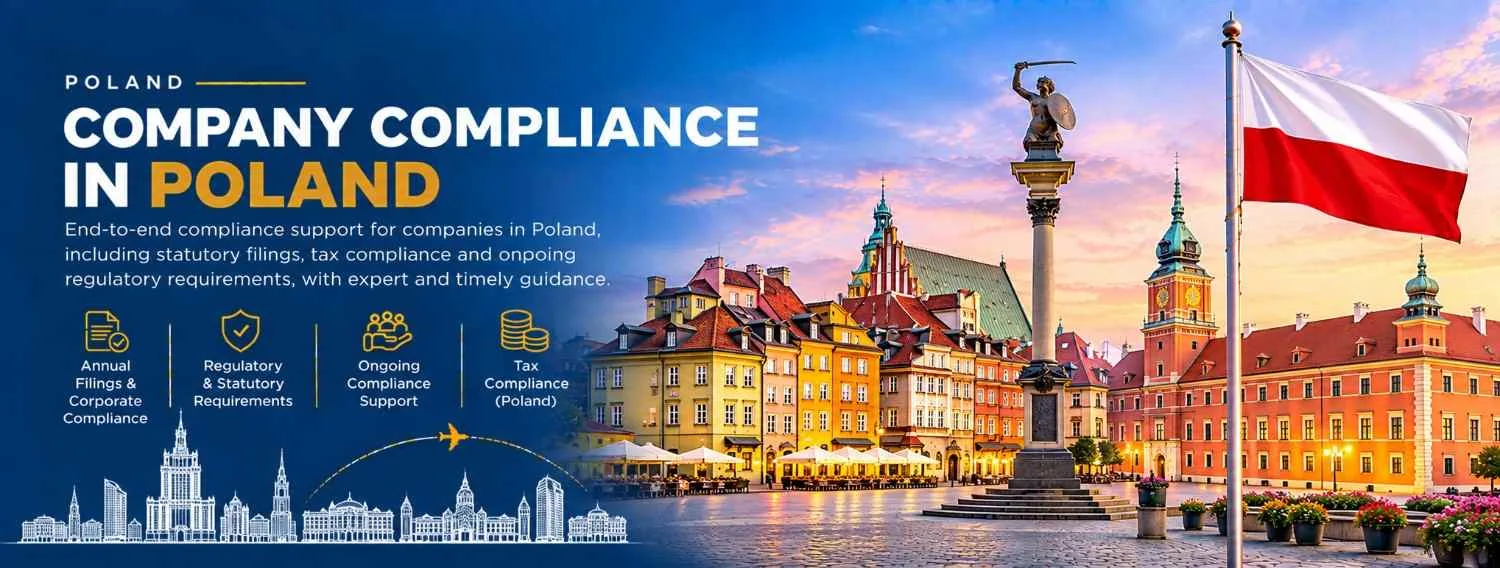
Corporate Compliance Services for Startups in Poland
Poland has become an attractive destination for startups, technology companies and international entrepreneurs seeking access to the European Union market. Cities such as Warsaw, Kraków, Wrocław and Gdańsk offer opportunities in software development, manufacturing, e-commerce and professional services.
However, incorporating a business is only the beginning. Startups must maintain accounting records, submit tax returns, update company information and comply with Polish corporate regulations.
Professional corporate compliance services for startups in Poland help businesses manage these responsibilities while focusing on growth.
This guide explains Poland's corporate filing requirements, taxation, accounting obligations and essential compliance deadlines.
1. Understanding Startup Compliance in Poland
1.1 Corporate Regulatory Framework
Polish companies operate under the Commercial Companies Code and other applicable legislation.
The National Court Register (KRS) maintains official information about registered commercial entities.
1.2 Principal Regulatory Authorities
Startups may interact with several authorities:
• KRS – Company registration and corporate filings.
• KAS – Tax administration.
• ZUS – Social insurance contributions.
• GUS – Statistical reporting.
• CRBR – Beneficial ownership reporting.
1.3 Why Compliance Matters
Effective startup compliance in Poland helps companies avoid penalties, maintain accurate corporate records and support future investment or financing.
2. KRS Registration and Corporate Updates
2.1 Maintaining Company Information
Companies registered with the KRS must report prescribed changes to their corporate information.
These may include:
• Registered office details.
• Management board appointments.
• Articles of Association amendments.
• Share capital changes.
• Other reportable corporate matters.
2.2 Reporting Deadlines
Many changes must generally be reported within seven days of the relevant event, although specific deadlines and exceptions apply.
2.3 Corporate Documentation
Startups should maintain shareholder resolutions, management decisions and other prescribed corporate records.
Proper KRS annual filing Poland planning also involves monitoring financial statement submissions and applicable registry updates.
3. Annual Financial Statements and Accounting
3.1 Accounting Records
Polish limited liability companies generally must maintain full accounting records under the Accounting Act.
Transactions should be recorded accurately and supported by appropriate documentation.
3.2 Annual Financial Statements
Companies generally prepare annual financial statements within three months after the financial year-end.
3.3 Financial Statement Approval
Financial statements generally must be approved within six months after the financial year-end.
3.4 KRS Submission
Companies generally submit approved financial statements to the KRS financial document repository within 15 days after approval.
3.5 Audit Requirements
Certain companies must undergo statutory audits depending on their size, legal classification and applicable thresholds.
These obligations form an important part of Poland company annual compliance.
4. Corporate Income Tax Compliance
4.1 Corporate Income Tax Rates
Poland's standard corporate income tax rate is 19%.
A reduced 9% rate may apply to qualifying small taxpayers and certain new businesses for eligible income, subject to statutory conditions.
4.2 Annual CIT Return
Companies generally file their annual CIT-8 return electronically within three months after the tax year-end.
4.3 Tax Payments
Businesses must calculate and pay applicable corporate income tax, including advance payments where required.
4.4 Related-Party Transactions
Startups conducting transactions with related entities may face transfer pricing documentation and reporting obligations.
Professional corporate tax compliance in Poland helps companies manage tax calculations, deadlines and reporting responsibilities.
5. VAT Registration and Reporting
5.1 VAT Registration
Businesses conducting taxable activities may need to register for Polish VAT.
Eligibility for exemptions depends on the nature and scale of operations.
5.2 VAT Rates
Poland's standard VAT rate is 23%.
Reduced rates and exemptions apply to qualifying goods and services.
5.3 VAT Reporting
Registered businesses generally submit applicable JPK_V7 electronic VAT records and declarations.
5.4 EU Transactions
Companies trading with other EU businesses may require VAT-EU registration and additional reporting.
5.5 Electronic Invoicing
Startups should assess applicable requirements under Poland's National e-Invoicing System (KSeF), including relevant implementation deadlines and exemptions.
6. Beneficial Ownership and Corporate Governance
6.1 CRBR Registration
Companies subject to Poland's Central Register of Beneficial Owners must report prescribed information about their beneficial owners.
6.2 Ownership Changes
Relevant changes to beneficial ownership information must be reported within applicable statutory deadlines.
6.3 Management Responsibilities
Management board members must comply with duties relating to corporate administration, financial reporting and legal obligations.
6.4 Corporate Records
Startups should maintain accurate shareholder information, resolutions and constitutional documents.
These requirements are essential elements of statutory compliance in Poland.
7. Payroll and Employment Compliance
7.1 ZUS Registration
Businesses employing staff generally must complete applicable employer and employee registrations with ZUS.
7.2 Social Insurance Contributions
Employers must calculate and remit applicable social insurance and health insurance contributions.
7.3 Payroll Tax
Employers generally withhold personal income tax from qualifying employment payments.
7.4 Employment Documentation
Businesses must maintain employment agreements, payroll records and applicable personnel documentation.
7.5 Labour Regulations
Startups must comply with relevant Polish labour laws, including working time, leave and workplace requirements.
8. Common Compliance Challenges for Startups
8.1 Missed Filing Deadlines
Late financial statements, tax returns or corporate updates may result in penalties.
8.2 Inaccurate Accounting Records
Incomplete documentation can complicate financial reporting and tax calculations.
8.3 Incorrect VAT Treatment
Cross-border transactions may require special VAT treatment and additional reporting.
8.4 Foreign Shareholder Requirements
International startups may face additional documentation, tax residency and related-party reporting considerations.
8.5 Limited Internal Resources
Early-stage companies often lack dedicated compliance teams.
Professional accounting compliance for Polish startups can support accurate recordkeeping and timely reporting.
9. How YKG Global Helps You
YKG Global provides international corporate advisory and compliance coordination services for startups operating in Poland.
9.1 KRS Compliance Support
Assistance with prescribed company updates, corporate documentation and registry filings.
9.2 Annual Financial Reporting
Coordination of accounting records, financial statements and applicable KRS submissions.
9.3 Corporate Tax Assistance
Support for CIT-8 filing coordination, tax compliance and related reporting requirements.
9.4 VAT Compliance
Guidance on VAT registration, electronic reporting and applicable cross-border obligations.
9.5 Beneficial Ownership Reporting
Assistance with CRBR documentation and prescribed ownership updates.
9.6 Payroll Compliance Coordination
Support for applicable ZUS, payroll and employment-related reporting requirements.
9.7 Ongoing Compliance Monitoring
Helping startups maintain compliance calendars, organise documentation and coordinate with qualified local professionals.
YKG Global helps international entrepreneurs manage Polish corporate obligations through structured processes and professional coordination.
Call us or fill out our contact form to schedule a consultation today.
📧 Email: Rishi@ykgglobal.com
🌐 Website: www.ykgglobal.com
📱 Call/WhatsApp: +91 76782 77665
📍 Offices: Delhi | Mumbai | Dubai | Singapore