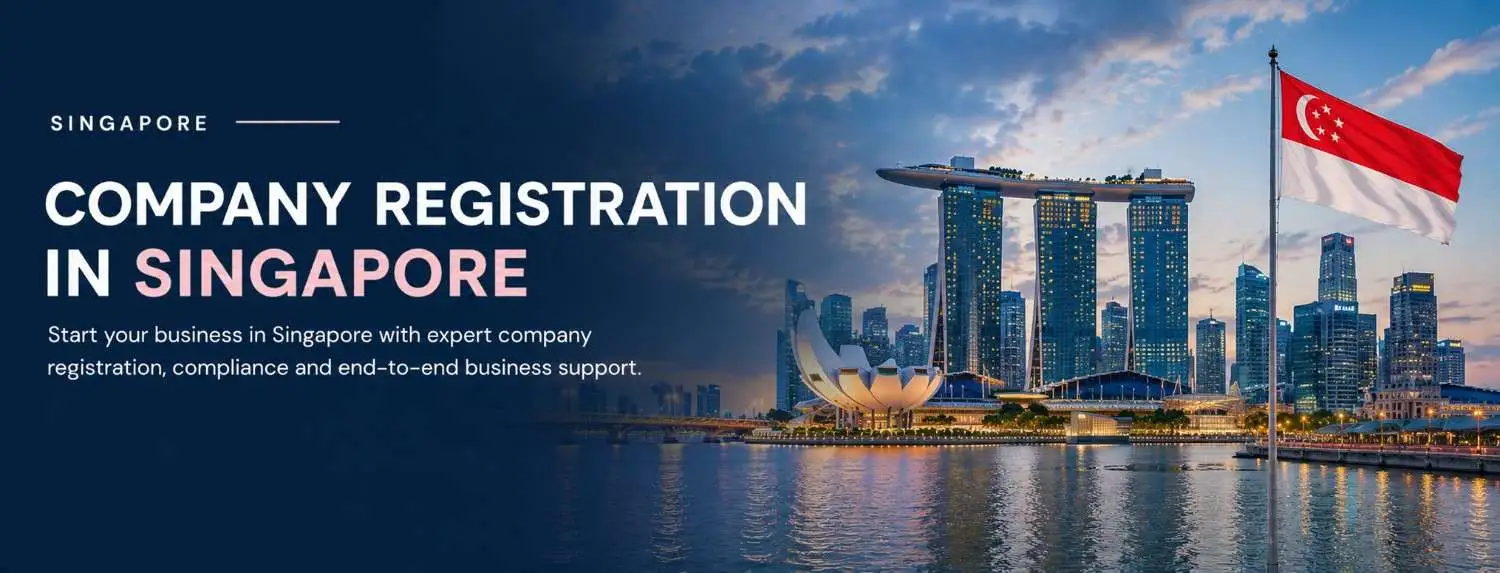
Company Incorporation in Singapore
Singapore is a recognised destination for international businesses seeking access to Asian markets, a well-developed financial system and a stable regulatory environment. Entrepreneurs use Singapore to establish regional headquarters, trading companies, technology businesses, consulting practices and subsidiaries serving customers across multiple countries.
For foreign founders, company incorporation in Singapore requires careful planning around the legal structure, ownership, local director requirements, registered office and tax obligations. Singapore permits foreign ownership of companies, but foreign entrepreneurs must follow the applicable registration and residency rules.
The Accounting and Corporate Regulatory Authority (ACRA) oversees company registration through its Bizfile platform. Foreigners generally need to engage a registered corporate service provider (CSP) to reserve a company name and register the business.
YKG Global helps international entrepreneurs understand the incorporation process and prepare for the regulatory and operational responsibilities of establishing a Singapore business.
Why Consider Singapore for Company Formation?
Singapore can be suitable for businesses seeking a base for regional operations, international trade or cross-border services.
• Regional business access: Singapore's position in Southeast Asia can support businesses serving customers and partners across Asian markets.
• International trade: Its commercial infrastructure is relevant to importers, exporters, distributors and trading businesses.
• Professional services ecosystem: Accounting, legal, banking and corporate services can support businesses at different stages of growth.
• Technology and innovation: Singapore has an established technology and startup ecosystem, making it an option for qualifying digital and innovation-led ventures.
• International ownership: Foreign entrepreneurs can generally own shares in a Singapore company, subject to the applicable rules and any sector-specific restrictions.
The right location and structure should still be determined by the company's actual customers, operating model, management arrangements and compliance needs.
Step 1: Choose the Right Business Structure
Before beginning Singapore company registration, decide how the business will be legally organised.
1. Private Company Limited by Shares (Pte Ltd)
A private limited company is a common choice for entrepreneurs and foreign-owned businesses. It is a separate legal entity, and shareholder liability is generally limited to the amount unpaid on their shares, subject to applicable legal exceptions.
A Pte Ltd can be appropriate for consulting, technology, trading, e-commerce and regional business operations. It can also serve as a subsidiary of an overseas parent company.
2. Branch of a Foreign Company
An existing overseas company may register a Singapore branch if it wants to extend its operations into Singapore. A branch is not a separate legal entity from its foreign parent, so the parent remains responsible for its obligations.
3. Representative Office
A representative office may suit an overseas business that wants to conduct market research or explore the Singapore market before committing to full commercial operations. It is not intended to operate as a revenue-generating business.
For many founders creating a new business, a Pte Ltd is worth evaluating against these alternatives.
Step 2: Understand Foreign Ownership and Local Director Rules
Foreign investors can generally own 100% of the shares in a Singapore company, subject to applicable industry-specific rules. However, ownership and management eligibility are separate considerations.
A Singapore company must have at least one director who ordinarily resides in Singapore. The director must meet the legal eligibility requirements, including age and qualification criteria. A foreign founder living overseas may therefore need an eligible local resident director.
A nominee director arrangement may be available, but a director has real statutory duties and responsibilities. It should not be treated as a purely administrative name-lending arrangement.
Before incorporation, establish:
• Who will own the shares and in what proportions.
• Who will serve as the resident director.
• How company decisions and approvals will be handled.
• Whether the overseas founder intends to relocate to Singapore.
• Whether a work pass or other immigration permission is needed.
Foreigners intending to move to Singapore to run the business must assess the relevant work-pass requirements separately. Incorporating a company does not itself grant a right to live or work in Singapore.
Step 3: Choose and Reserve the Company Name
The company name must comply with ACRA's requirements and be approved before the incorporation application can proceed.
During the name application, founders also identify the company's proposed business activities using the relevant Singapore Standard Industrial Classification (SSIC) codes.
Before submitting the name application:
• Check that the proposed name is suitable and available.
• Ensure the business activity description reflects the intended operations.
• Consider whether the name could conflict with an existing business or protected name.
• Identify any regulated activities that may require additional approvals.
Some names and business activities may require referral to another authority, which can affect processing time.
Step 4: Prepare the Incorporation Information
The next stage in ACRA company registration is preparing the information required to establish the company.
Common requirements include:
• Approved company name.
• Registered office address in Singapore.
• Details of shareholders and their shareholdings.
• Director details and required consents.
• Company constitution.
• Financial year-end selection.
• Business activity information and SSIC codes.
• Required declarations and beneficial ownership information.
A registered office must be a Singapore address that satisfies the applicable requirements for receiving official communications and maintaining company records. It does not necessarily need to be the location where day-to-day business operations occur.
Foreign founders should confirm identity verification and document requirements with their corporate service provider before submitting the application.
Step 5: Submit the Application Through Bizfile
Once the name is approved and the documentation is ready, the company can be registered through ACRA's Bizfile system using the appropriate filing route.
The process generally involves:
- Confirming the entity type and approved name.
- Providing the company and shareholder details.
- Appointing an eligible resident director.
- Providing the registered office address.
- Submitting the required constitution and declarations.
- Paying the applicable registration fees.
After successful registration, retain the company's registration details and Business Profile. These records may be required for banking, tax registration and commercial arrangements.
Registration does not automatically authorise every regulated business activity. Check whether licences or permits are needed before beginning operations.
Step 6: Arrange Corporate Banking and Tax Registration
After incorporation, consider the company's banking arrangements and tax obligations.
Business Bank Account
Banks conduct their own customer due diligence and may request:
• Company registration records and Business Profile.
• Director and shareholder identification.
• Ownership and beneficial ownership information.
• Registered office and business activity details.
• Information about the source of funds and expected transactions.
Foreign founders may face additional checks, and account opening is subject to the bank's approval.
Tax Registration
Singapore companies must understand their obligations with the Inland Revenue Authority of Singapore (IRAS). Depending on the business, these may include corporate income tax filings, estimated chargeable income submissions and GST registration.
GST registration depends on the company's taxable turnover and the applicable rules. A company should assess whether registration is compulsory or whether voluntary registration is appropriate.
The company should also establish accounting procedures, keep supporting documents and monitor tax deadlines from the beginning.
Step 7: Meet Ongoing Compliance Requirements
Following Singapore company formation, the company must maintain its statutory records and comply with applicable filing requirements.
Key responsibilities may include:
• Appointing a company secretary within six months of incorporation.
• Maintaining a registered office and current company information.
• Filing annual returns with ACRA.
• Maintaining accounting records and preparing financial statements as required.
• Filing corporate income tax returns and paying tax when due.
• Meeting beneficial ownership and controller-register requirements.
• Appointing an auditor within three months of incorporation unless the company qualifies for an exemption.
• Obtaining and renewing licences for regulated activities.
ACRA requires every company to have at least one director and one company secretary. The company secretary cannot be the same person as the sole director.
A compliance calendar can help coordinate corporate filings, accounting, tax returns and licence renewals.
How YKG Global Helps You
YKG Global supports foreign entrepreneurs and international businesses planning a Singapore business setup.
Our assistance can include:
• Guidance on choosing between a Pte Ltd, branch or representative office.
• Support with incorporation documentation and the ACRA registration process.
• Guidance on resident director, registered office and company secretary requirements.
• Help identifying tax registration and ongoing compliance responsibilities.
• Coordination of setup planning for overseas shareholders and international businesses.
• Assistance in identifying cross-border tax and regulatory matters that may require specialist advice.
The scope of support depends on the ownership structure, proposed activities and operational requirements. Registration decisions, bank account opening and work-pass approvals remain subject to the relevant authorities and service providers.
Call us or fill out our contact form to schedule a consultation today.
📧 Email: Rishi@ykgglobal.com
🌐 Website: www.ykgglobal.com
📱 Call/WhatsApp: +91 76782 77665
📍 Offices: Delhi | Mumbai | Dubai | Singapore