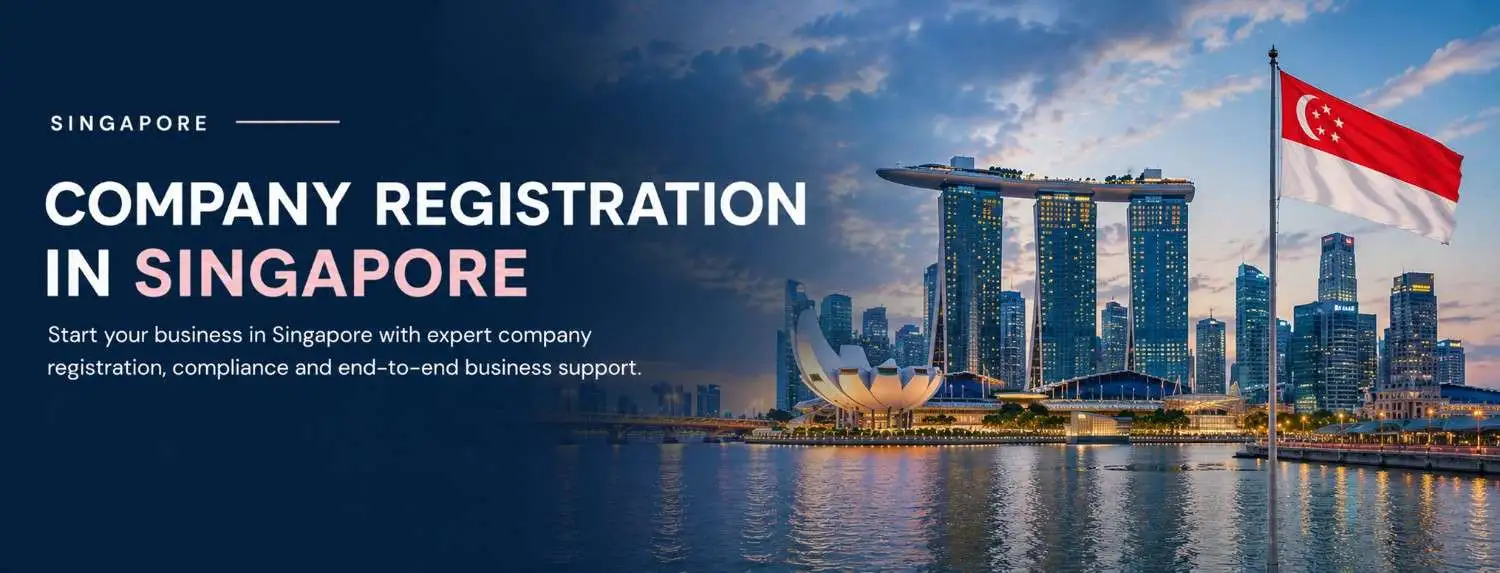
Company Registration in Central Region, Singapore
Singapore's Central Region is an important commercial destination for businesses seeking access to financial institutions, professional services, international networks and regional markets. Areas such as Raffles Place, Marina Bay, Orchard, Downtown and the wider Central Area accommodate businesses across finance, technology, consulting, trading, hospitality and professional services.
Entrepreneurs planning company incorporation singapore should understand that Singapore follows a national company-registration system. Companies are incorporated through the Accounting and Corporate Regulatory Authority (ACRA), regardless of whether their registered office is in the Central Region or another part of the country.
The incorporation process involves choosing an appropriate entity, reserving a name, appointing the required officers, preparing constitutional documents and submitting an application through Bizfile. Foreign investors must also consider local residency requirements and post-incorporation obligations.
1. Establishing a Business in Singapore's Central Region
The Central Region offers different commercial environments depending on the company's operations.
• Raffles Place and Marina Bay: Established financial and corporate districts suited to finance, investment-related services and professional firms.
• Downtown and Tanjong Pagar: Locations used by trading companies, technology businesses, consultancies and international service providers.
• Orchard and Newton: Areas with retail, hospitality, healthcare and professional-service activity.
• Bras Basah and Bugis: Areas supporting education, creative industries, retail and other commercial activities.
When planning to setup company in singapore, founders should consider their customer base, office requirements, staffing arrangements and operating costs before selecting a registered office.
The registered office address is the company's official correspondence address. It does not necessarily have to be the location where daily business activities take place.
2. Selecting the Appropriate Legal Structure
Singapore offers several business structures. The appropriate option depends on ownership, liability, investment plans and administrative requirements.
2.1 Private Company Limited by Shares (Pte. Ltd.)
A private limited company is commonly selected by entrepreneurs and international investors.
Its main characteristics include:
• Separate legal personality.
• Shareholder liability generally limited to unpaid share capital.
• At least one shareholder.
• At least one director who ordinarily resides in Singapore.
• Minimum paid-up share capital of S$1.
• Appointment of a company secretary within six months of incorporation.
This structure is frequently used for subsidiaries, consulting businesses, trading companies and regional headquarters.
2.2 Sole Proprietorship and Partnership
A sole proprietorship is owned by one individual, while a partnership involves two or more partners. These structures do not provide the same separate legal identity and limited-liability protection as a private limited company.
2.3 Branch Office
An overseas company may establish a Singapore branch rather than incorporating a new subsidiary. A branch is an extension of its foreign parent company, which remains responsible for its obligations.
3. ACRA Name Approval and Incorporation
The sg business registration process is administered through ACRA's Bizfile platform.
The incorporation process generally follows these stages:
3.1 Reserve the Company Name
The proposed name must be submitted to ACRA for approval. It should be distinguishable from existing registered names and must comply with applicable naming restrictions.
Names containing regulated words or suggesting activities requiring additional approval may be referred to relevant authorities.
3.2 Determine the Ownership Structure
Before filing, founders should identify:
• Initial shareholders and their shareholdings.
• Proposed directors and their eligibility.
• Company secretary arrangements.
• Registered office address.
• Share capital and currency.
• Financial year-end.
3.3 Prepare the Company Constitution
The constitution establishes the rules governing the company, including shareholder rights, share transfers, director responsibilities and internal administration.
Founders can adopt the applicable model constitution or submit a customised document.
3.4 Submit Through Bizfile
The incorporation application is submitted electronically through ACRA's Bizfile platform, either by an eligible applicant or an appointed corporate service provider.
The prescribed fee must be paid, and the required endorsements and declarations completed. Once approved, the company receives its Unique Entity Number (UEN) and incorporation confirmation.
4. Requirements for Foreign Investors
Setting up company in singapore by foreigner is permitted, subject to Singapore's company-law, residency and sector-specific requirements.
Foreign entrepreneurs can generally own 100% of the shares in a Singapore private limited company. However, the company must still appoint at least one director who meets the local residency requirements.
Foreign founders should consider:
• Passport and identification documentation.
• Shareholder and beneficial ownership information.
• A qualifying locally resident director.
• A Singapore registered office address.
• Company secretary appointment.
• Source-of-funds and banking documentation.
• Relevant work-pass or immigration arrangements if they intend to relocate and work in Singapore.
Foreigners must engage a registered Corporate Service Provider (CSP) to reserve the name and register the business. Owning shares does not automatically grant a right to live or work in Singapore.
5. Tax Registration and Banking Considerations
After incorporation, companies must review their tax and financial arrangements.
Important considerations include:
• Corporate income tax: Singapore companies are generally subject to corporate income tax at the prevailing rate, subject to applicable exemptions and incentives.
• GST: Registration is generally compulsory when taxable turnover exceeds the prescribed threshold, subject to the applicable rules.
• Corporate bank account: Banks conduct their own due diligence and may request incorporation documents, shareholder details, business plans and source-of-funds evidence.
• Employment: Companies employing staff must consider applicable payroll, CPF and employment requirements.
Businesses planning offshore company registration in singapore should understand that Singapore does not provide a separate legal company category simply because the shareholders or customers are overseas. A Singapore-incorporated company remains subject to Singapore's corporate, tax and reporting framework, even when it conducts international business.
6. Ongoing Compliance After Incorporation
A Singapore company must maintain its legal and administrative records after registration.
Its responsibilities generally include:
• Maintaining statutory registers and accurate shareholder information.
• Keeping the Register of Registrable Controllers and other applicable registers.
• Appointing and retaining a qualified company secretary.
• Filing annual returns with ACRA.
• Preparing financial statements and meeting applicable audit requirements.
• Filing corporate income-tax returns with IRAS.
• Updating ACRA when directors, shareholders or registered-office details change.
Most companies must also review their financial reporting and audit obligations based on their size, ownership and applicable exemption criteria.
7. How YKG Global Helps You
YKG Global assists entrepreneurs and international businesses planning to establish operations in Singapore's Central Region. Depending on the agreed scope, support may include:
• Reviewing the proposed company structure and ownership arrangements.
• Coordinating name reservation and ACRA incorporation documentation.
• Assisting foreign shareholders with incorporation requirements.
• Coordinating registered-office and company-secretary arrangements through relevant providers.
• Supporting tax-registration and corporate banking preparation.
• Identifying ongoing accounting and statutory compliance obligations.
Whether you are planning a new venture or a regional subsidiary, YKG Global can help coordinate the incorporation process and clarify the responsibilities that follow registration.
Call us or fill out our contact form to schedule a consultation today.
📧 Email: Rishi@ykgglobal.com
🌐 Website: www.ykgglobal.com
📱 Call/WhatsApp: +91 76782 77665
📍 Offices: Delhi | Mumbai | Dubai | Singapore