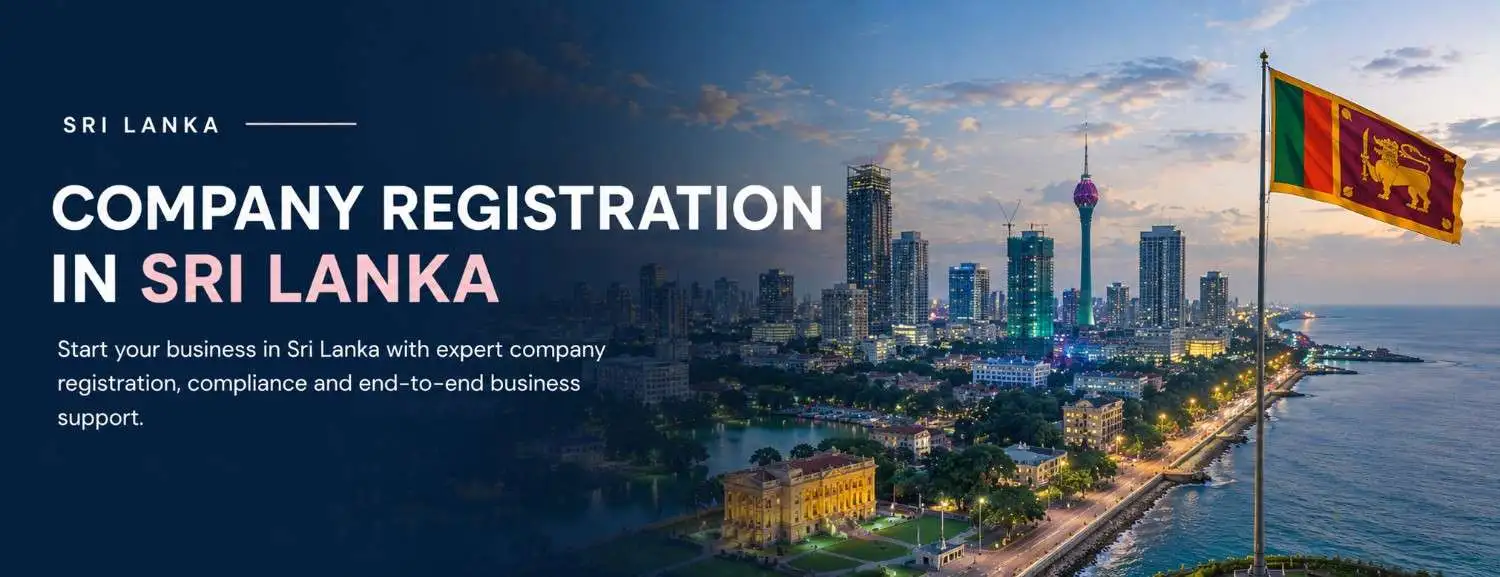
Company Registration in Sri Lanka
Sri Lanka offers business opportunities across manufacturing, apparel, agriculture, tourism, logistics, information technology, trading and professional services. Its strategic position in the Indian Ocean also makes it relevant for international businesses exploring regional distribution, sourcing and investment opportunities.
The business registration in sri lanka process depends on the legal structure selected. A private limited company is incorporated through the Department of the Registrar of Companies (DRC), while an individual business or partnership operating under a business name follows the applicable provincial registration procedure.
These are different legal routes. Understanding the distinction helps entrepreneurs select the appropriate structure, prepare the right documents and identify the authorities responsible for registration and continuing compliance.
1. Understanding Sri Lanka's Registration Framework
Sri Lanka's company incorporation framework is primarily governed by the Companies Act No. 7 of 2007, as amended. The Department of the Registrar of Companies administers company incorporation and maintains the national company register.
Its responsibilities include:
• Incorporating companies and issuing certificates of incorporation.
• Maintaining company particulars and statutory records.
• Processing changes to directors, secretaries and registered offices.
• Receiving annual returns and other statutory filings.
• Providing electronic company-registration and search services.
The company registration in srilanka process is conducted through the national framework, regardless of where the company intends to establish its registered office.
Business-name registration is different. Provincial authorities administer the registration of certain individual businesses and partnerships under the applicable business-name legislation and provincial procedures.
2. Which Legal Structure Should You Choose?
The structure selected determines ownership, liability, governance and reporting responsibilities.
2.1 Private Limited Company
A private limited company is commonly considered by entrepreneurs establishing a separate legal entity for commercial operations.
Its characteristics include:
• Separate legal personality.
• Shareholder ownership through shares.
• Limited shareholder liability, subject to legal exceptions.
• Appointment of directors and a company secretary.
• Statutory accounting and annual filing responsibilities.
This structure may suit trading businesses, manufacturers, technology companies, exporters, consultancies and subsidiaries of foreign businesses.
2.2 Sole Proprietorship
A sole proprietorship is owned and operated by an individual. It may be suitable for small retailers, independent consultants, local service providers and individual traders.
The proprietor and business are not separate legal persons in the same way as a limited company. The owner generally remains personally responsible for business liabilities.
2.3 Partnership
A partnership involves two or more individuals or entities carrying on business together. Partners should establish clear arrangements for capital contributions, profit distribution, management responsibilities and dissolution.
The applicable business-name registration procedure depends on the business location and legal circumstances.
3. Where Are Companies and Businesses Registered?
Entrepreneurs searching for the register of company sri lanka should distinguish between the national company register and provincial business-name registration records.
- Department of the Registrar of Companies: Handles incorporation under the Companies Act and maintains records of registered companies through the national system.
- Provincial business-name authorities: Handle registration of qualifying individual businesses and partnerships under the relevant provincial legislation and administrative procedures.
- Inland Revenue Department: Administers tax identification and applicable tax registrations.
- Local authorities: May issue trade licences and other permissions depending on the business activity and premises.
For example, a sole proprietor operating in the Central Province may need to follow the business-name registration procedure administered through the relevant provincial authority. The process should not be confused with incorporating a private limited company through the DRC.
4. Incorporating a Private Limited Company Through e-ROC
The Department of the Registrar of Companies provides an electronic platform called e-ROC for company-name searches, incorporation and other company-related filings.
The incorporation process generally involves the following stages:
4.1 Reserve the Company Name
The proposed name is submitted through the e-ROC name-search facility. The Registrar reviews it against existing company names and applicable naming requirements. Approval may be granted, or the applicant may be asked to provide clarification or select another name.
4.2 Prepare the Incorporation Information
Applicants generally need to prepare:
• Proposed company name and business activities.
• Registered office address.
• Initial shareholder details and share allocation.
• Director information and consent.
• Company secretary information and consent.
• Articles of Association.
4.3 Submit the Application
The incorporation application and prescribed supporting documents are submitted through the e-ROC system. The filing must satisfy the requirements of the Companies Act and applicable regulations.
4.4 Receive the Certificate of Incorporation
After approval, the Registrar enters the company's details into the national register, assigns a unique company number and issues the Certificate of Incorporation.
New incorporations must also complete the applicable beneficial ownership information submission requirements.
5. Individual Business Registration: A Different Procedure
The individual business registration sri lanka process is relevant to individuals carrying on business under a trading name rather than through a company incorporated under the Companies Act.
The competent authority and supporting documents depend on the province where the business operates.
Depending on the applicable provincial requirements, applicants may be asked to provide:
• Completed business-name registration application.
• National Identity Card, valid passport or other accepted identification.
• Details of the proposed business activity and trading name.
• Evidence of the business premises, such as a deed or lease agreement.
• Grama Niladhari confirmation or other local administrative verification, where required.
• Local authority trade licence or relevant supporting approvals, where applicable.
Applicants should confirm the current forms, deadlines and submission requirements with the relevant provincial Registrar or Divisional Secretariat. Procedures are not necessarily identical across all provinces.
6. Foreign Investors and International Business Structures
Sri Lanka may be considered by overseas entrepreneurs planning to establish a subsidiary, local operating company or investment vehicle.
Foreign participation is possible in many business sectors, but ownership conditions and regulatory approvals depend on the activity and applicable investment rules.
Before incorporation, international investors should assess:
• Whether the proposed business activity has foreign ownership restrictions.
• Whether approval or coordination with the Board of Investment of Sri Lanka is relevant.
• The proposed shareholding and management arrangements.
• Capital contributions and cross-border funding requirements.
• Tax implications in Sri Lanka and the investor's home jurisdiction.
• Banking, identification and beneficial ownership documentation.
Company incorporation does not automatically provide immigration permission or authorisation to undertake a regulated activity.
7. Tax Registration and Post-Incorporation Compliance
Registration establishes the legal or business record, but it does not complete every requirement for operating in Sri Lanka.
After incorporation, a company should assess its obligations with the Inland Revenue Department and other relevant authorities.
These may include:
• Obtaining a Taxpayer Identification Number (TIN).
• Assessing VAT registration requirements.
• Registering for applicable employment and social security obligations.
• Obtaining trade licences and sector-specific approvals.
• Maintaining accounting records and supporting documents.
• Preparing financial statements and arranging audits where required.
• Filing annual returns and reporting changes to company particulars.
Companies must also maintain statutory registers, update beneficial ownership information where required and meet applicable filing deadlines.
8. How YKG Global Helps You
YKG Global assists entrepreneurs and international businesses evaluating Sri Lanka as a location for company establishment and commercial expansion. Depending on the agreed scope, assistance may include:
• Reviewing the proposed legal structure and ownership arrangements.
• Coordinating company-name checks and incorporation documentation.
• Assisting with director, shareholder and company-secretary information.
• Coordinating e-ROC incorporation formalities.
• Supporting provincial business-name registration coordination where applicable.
• Providing guidance on TIN, VAT and other tax-registration requirements.
• Identifying sector-specific licences and regulatory considerations.
• Coordinating accounting and ongoing corporate compliance.
For businesses planning to establish online business registration in sri lanka, YKG Global can help coordinate the registration process and clarify the legal and administrative responsibilities that follow establishment.
Call us or fill out our contact form to schedule a consultation today.
📧 Email: Rishi@ykgglobal.com
🌐 Website: www.ykgglobal.com
📱 Call/WhatsApp: +91 76782 77665
📍 Offices: Delhi | Mumbai | Dubai | Singapore