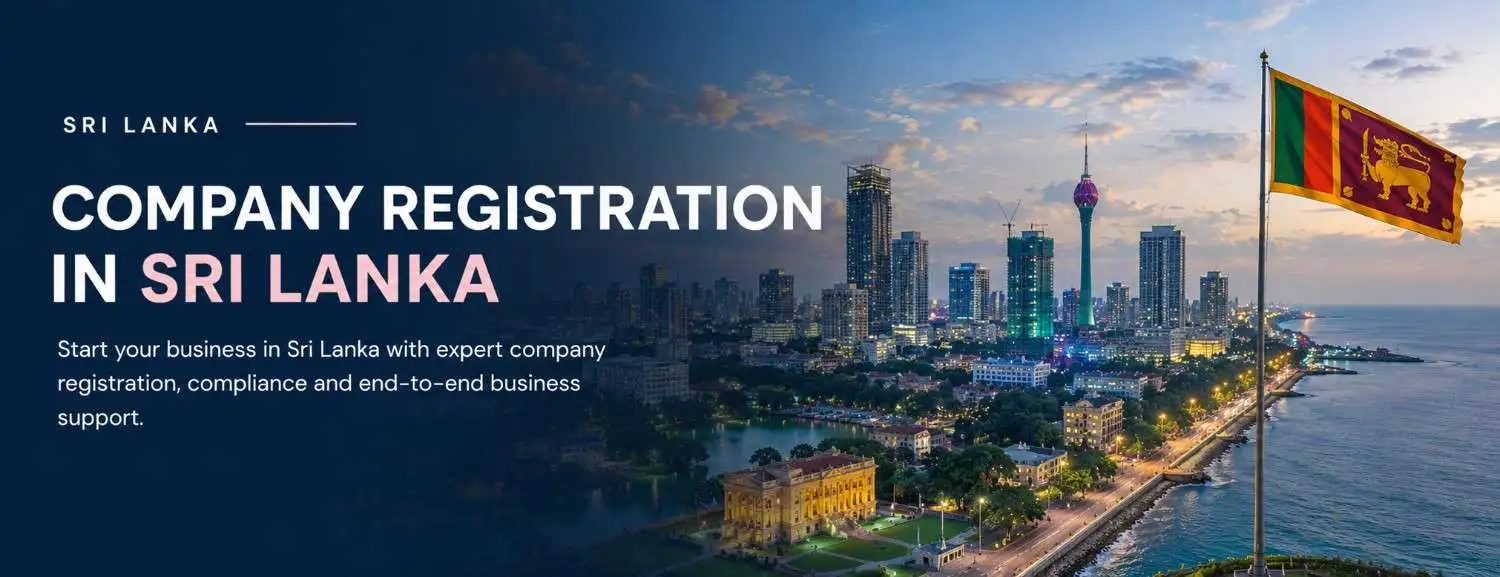
Private Limited Company Registration Sri Lanka
Sri Lanka offers opportunities for entrepreneurs, international investors and companies planning to establish a presence in South Asia. Its business environment includes manufacturing, trading, tourism, logistics, technology, professional services and export-oriented industries.
A private limited company is a commonly considered structure for businesses seeking a separate legal identity and a formal ownership arrangement. Private limited company registration in sri lanka is administered by the Department of the Registrar of Companies under the Companies Act No. 7 of 2007.
The registration process involves reserving a company name, preparing incorporation documents, appointing directors and a company secretary, and submitting the application through the electronic registration system. Understanding these requirements helps local and foreign entrepreneurs plan their establishment process.
1. Why Choose a Private Limited Company in Sri Lanka?
A private limited company offers several advantages for businesses planning long-term operations.
• Separate legal identity: The company is legally distinct from its shareholders and can enter into contracts, own assets and conduct business in its own name.
• Limited liability: Shareholders generally have liability limited to their share contributions, subject to applicable legal exceptions.
• Structured ownership: Shares provide a formal mechanism for allocating ownership among individuals or corporate investors.
• Business credibility: Incorporation provides a recognised corporate structure for dealing with customers, suppliers, financial institutions and commercial partners.
• Expansion opportunities: A company can employ personnel, establish commercial relationships and develop operations in Sri Lanka.
These features make a private limited company suitable for many trading, consulting, manufacturing and service businesses.
2. Requirements for Private Limited Company Registration
Before beginning company registration in srilanka, entrepreneurs should understand the main incorporation requirements under the Companies Act.
2.1 Shareholders
A company may generally have one or more shareholders under the applicable provisions. A private company's articles must restrict public offers of its shares or securities and limit the number of shareholders to 50, subject to statutory exclusions.
2.2 Directors
A private company must have at least one director. Directors must provide the prescribed consent and satisfy applicable eligibility requirements.
2.3 Company Secretary
Every company must appoint a company secretary who meets the applicable qualification and consent requirements.
2.4 Registered Office
A company must maintain a registered office in Sri Lanka for official correspondence and statutory purposes.
2.5 Articles of Association
The Articles of Association establish the company's internal governance framework, including shareholder rights, management and administration.
3. Documents Required for Incorporation
The standard incorporation process generally involves the following documents:
• Form 1: Application for registration of the company.
• Articles of Association: The company's constitutional document.
• Form 18: Consent and certificate of each director.
• Form 19: Consent and certificate of the company secretary.
The Registrar of Companies requires applicants to use system-generated Forms 1, 18 and 19 through the eROC process where applicable.
Additional information or supporting documents may be requested depending on the ownership structure and circumstances. Foreign shareholders should also prepare appropriate identity or corporate documentation.
4. How to Register a Private Limited Company in Sri Lanka
The process to register a business in sri lanka as a private limited company generally follows these steps.
4.1 Reserve the Company Name
Choose a suitable name and conduct a name search through the eROC platform. The proposed name must meet the applicable naming requirements and should not conflict with an existing registered company.
4.2 Finalise Shareholding and Management
Determine the shareholders, share allocation and directors. Select a qualified company secretary and arrange the registered office.
4.3 Prepare Incorporation Documents
Prepare the Articles of Association and the prescribed incorporation forms. Ensure the company details and consent information are consistent.
4.4 Submit Through eROC
The Department of the Registrar of Companies provides an electronic registration platform known as eROC. The application and required documents are submitted through the relevant online process, along with the prescribed fees.
4.5 Receive the Certificate of Incorporation
After the application is reviewed and accepted, the Registrar issues the Certificate of Incorporation and assigns a company registration number.
5. Online Business Registration and Company Search
Online business registration in sri lanka for companies is facilitated through the Registrar of Companies' eROC platform.
The system provides services including:
• Company name searches.
• Company incorporation.
• Company information searches.
• Certain corporate changes and statutory filings.
The register of company sri lanka is maintained by the Department of the Registrar of Companies. Users can search available company information and verify registration details through official services.
The sri lanka business registry is useful for checking company names, registration numbers and publicly available corporate information before entering into commercial relationships.
6. Foreign Ownership and Business Establishment
Foreign investors may establish or invest in Sri Lankan companies, subject to applicable foreign investment rules and restrictions.
Before srilanka company registration, overseas entrepreneurs should assess:
• Whether the proposed business activity is open to foreign investment.
• Any sector-specific ownership restrictions.
• Shareholding and beneficial ownership arrangements.
• Identity and corporate documents required from overseas investors.
• Foreign exchange and investment-related requirements.
• Tax and licensing obligations.
Certain regulated or restricted sectors may have additional conditions. Foreign investors should obtain appropriate local legal and regulatory advice before finalising their investment structure.
7. Private Company vs Individual Business Registration
Business registration in sri lanka does not always mean incorporating a company. Entrepreneurs should distinguish between company incorporation and registering an individual business name.
Individual business registration sri lanka generally applies to sole proprietors and is handled through the relevant provincial or local business-name registration authority.
A private limited company, by contrast, is incorporated nationally through the Department of the Registrar of Companies.
Business-name registration does not create a separate legal entity, whereas incorporation establishes a company with its own legal identity.
Similarly, business registration srilanka may involve different authorities depending on the business structure, location and activities.
8. Post-Incorporation Compliance
After incorporation, companies must establish processes for meeting their continuing legal and administrative responsibilities.
Important obligations include:
• Filing annual returns and maintaining statutory records.
• Updating the Registrar about relevant changes in directors, secretary and registered office.
• Maintaining accounting records and preparing financial statements.
• Obtaining a Taxpayer Identification Number and reviewing applicable tax registrations.
• Assessing VAT and other indirect tax obligations.
• Maintaining beneficial ownership information and completing applicable reporting.
• Meeting employment, payroll and social insurance requirements where applicable.
Companies should also assess whether their business activities require local authority licences, industry approvals or other regulatory permissions.
9. How YKG Global Helps You
YKG Global supports international businesses with company formation, cross-border structuring and corporate compliance advisory services.
Depending on the agreed scope, our assistance may include:
• Entity structure advisory: Evaluating suitable Sri Lankan company structures based on ownership and business objectives.
• Incorporation coordination: Supporting the preparation and coordination of incorporation documents and relevant local professional services.
• Foreign shareholder documentation: Guiding overseas investors on identity documents, corporate records and supporting information.
• Registration support: Coordinating the company registration process and relevant filing requirements.
• Post-incorporation compliance: Assisting with accounting coordination, tax registration planning and ongoing corporate compliance.
• Cross-border business advisory: Coordinating Sri Lankan establishment requirements with the needs of an Indian or international parent company.
Our objective is to help businesses understand the incorporation framework and establish their Sri Lankan operations with appropriate documentation and compliance planning.
Call us or fill out our contact form to schedule a consultation today.
📧 Email: Rishi@ykgglobal.com
🌐 Website: www.ykgglobal.com
📱 Call/WhatsApp: +91 76782 77665
📍 Offices: Delhi | Mumbai | Dubai | Singapore